

Look, I get it.
When fall rolls around, you want salads that actually fill you up. Not those sad desk lunches that leave you hungry an hour later.
This delicata squash salad? It’s become my secret weapon for fall gatherings. And here’s why it works so well.
You’ve got sweet caramelized squash. Jewel-like pomegranate seeds that pop in your mouth. Peppery arugula that wakes everything up.
Here’s how I stumbled onto delicata squash.
Last year at the farmers market, this vendor wouldn’t let me leave without trying it. She kept going on about how it would “change my salad game forever.”
Dramatic much? I thought.
But then I tried it. And honestly? She was right.
The thing is naturally sweet. The skin is edible (yes, you read that right). No more spending 20 minutes peeling butternut squash like some kind of kitchen punishment.
What makes this salad really sing?
Contrasts.
Sweet squash meets tangy balsamic. Creamy feta balances those peppery greens. Every single bite gives you something different.
The pomegranate arils burst with tartness. Toasted pepitas add that satisfying crunch we all crave.
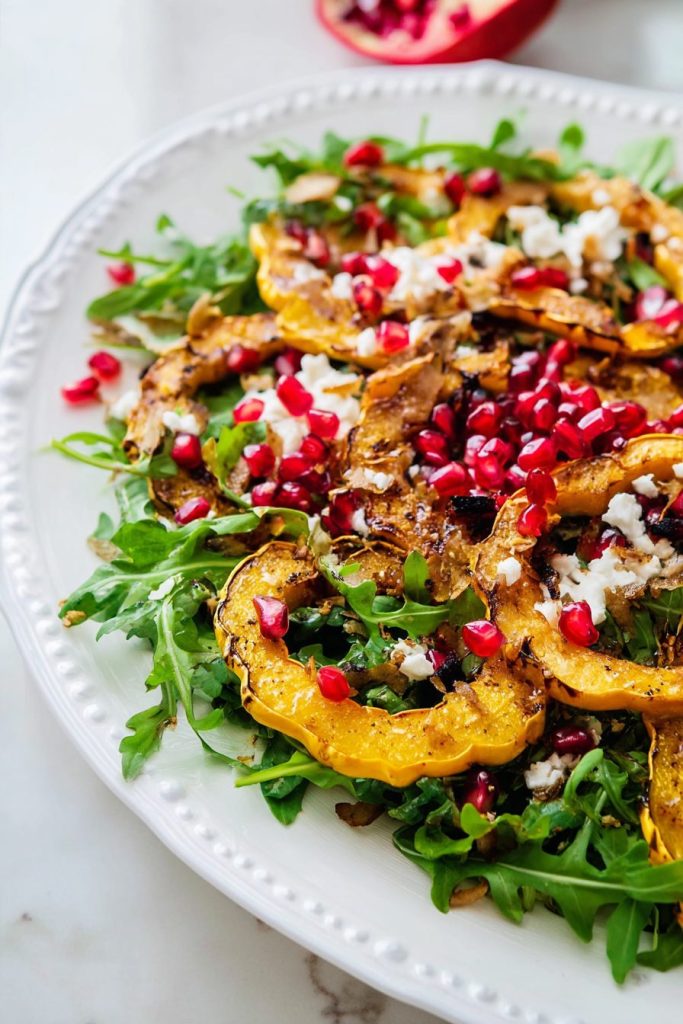
I’ve brought this to Thanksgiving dinners. Weekend potlucks. Even a Tuesday night when I just wanted something special.
People always comment on how pretty it looks before they even taste it.
Golden squash rings. Ruby-red pomegranate. Emerald arugula.
It looks festive without you slaving away in the kitchen for hours.
The best part about delicata squash?
You don’t peel it.
Seriously. Other winter squashes make you work for it. But delicata’s thin skin gets tender and slightly crispy when roasted. That’s 15 minutes of your life back.
Just wash it. Slice it. Roast it.
The oven does the heavy lifting. The natural sweetness intensifies. Those edges caramelize and develop this depth of flavor that’s chef’s kiss.
The maple balsamic vinaigrette pulls everything together. Sweet maple syrup. Sharp vinegar. A little Dijon mustard for that subtle kick.
I’ve made probably a hundred vinaigrettes over the years. This one just works with fall ingredients.
Quick timing tip:
Roast the squash the day before if you’re hosting. Room temperature squash actually works better than hot-from-the-oven. The greens stay crisp instead of wilting.
The dressing? Make it three days ahead and stash it in the fridge.
Last-minute assembly becomes a breeze.
Recipe Timing
Prep Time: 15 minutes | Cook Time: 35 minutes | Total Time: 50 minutes
Servings: 6-8 | Difficulty: Easy
Ingredients Table
| Ingredient | Quantity | Notes |
|---|---|---|
| Delicata squash | 2 medium (2 lbs) | Choose firm squash with bright stripes |
| Extra virgin olive oil (for roasting) | 1 tablespoon | Plus extra for dressing |
| Fine salt (for squash) | Pinch | Plus ¼ tsp for dressing |
| Baby arugula or mixed greens | 5 ounces (5 cups) | Fresh and crisp |
| Pomegranate arils | 1 cup | Or dried cherries/cranberries |
| Pepitas (pumpkin seeds) | ⅓ cup | Or chopped pecans |
| Feta or goat cheese | ¾ cup crumbled | About 3-4 ounces |
| Extra virgin olive oil (dressing) | 3 tablespoons | Best quality available |
| Balsamic vinegar | 1½ tablespoons | Aged works beautifully |
| Maple syrup | 2 teaspoons | Pure, not imitation |
| Dijon mustard | 1 teaspoon | Adds tangy depth |
| Black pepper | To taste | Freshly ground preferred |
Preparing the Squash
First things first. Crank your oven to 425°F.
That high heat? That’s what creates those caramelized edges everyone loves.
While it’s heating up, wash your delicata squash under cool water. Sometimes there’s this weird waxy coating. Give it a good scrub.
Your slicing technique matters more than you think.
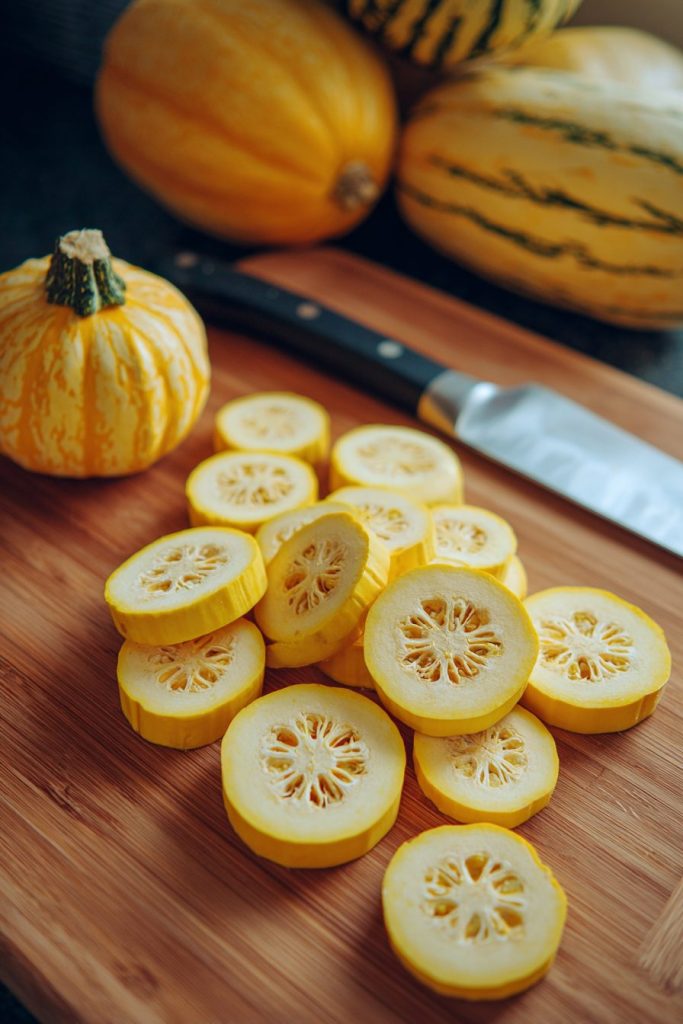
Cut the squash into half-inch rounds. You’ll get these beautiful ring shapes.
Each slice shows off this cool star pattern of seeds in the center. Kind of mesmerizing, honestly.
Grab a small spoon. Scoop out the seeds and that stringy stuff. Takes maybe five minutes for both squashes.
Now here’s where it gets fun.
Drizzle olive oil over those rounds. Sprinkle with salt. And use your hands to coat everything.
I know, I know. Using your hands feels weird at first. But it’s the only way to make sure every surface gets covered.
The oil helps develop that golden color. Stops the squash from sticking to the pan.
Arrange the rounds on a baking sheet. Single layer. No overlapping. Give them space to breathe.
Roasting takes 30 to 35 minutes.
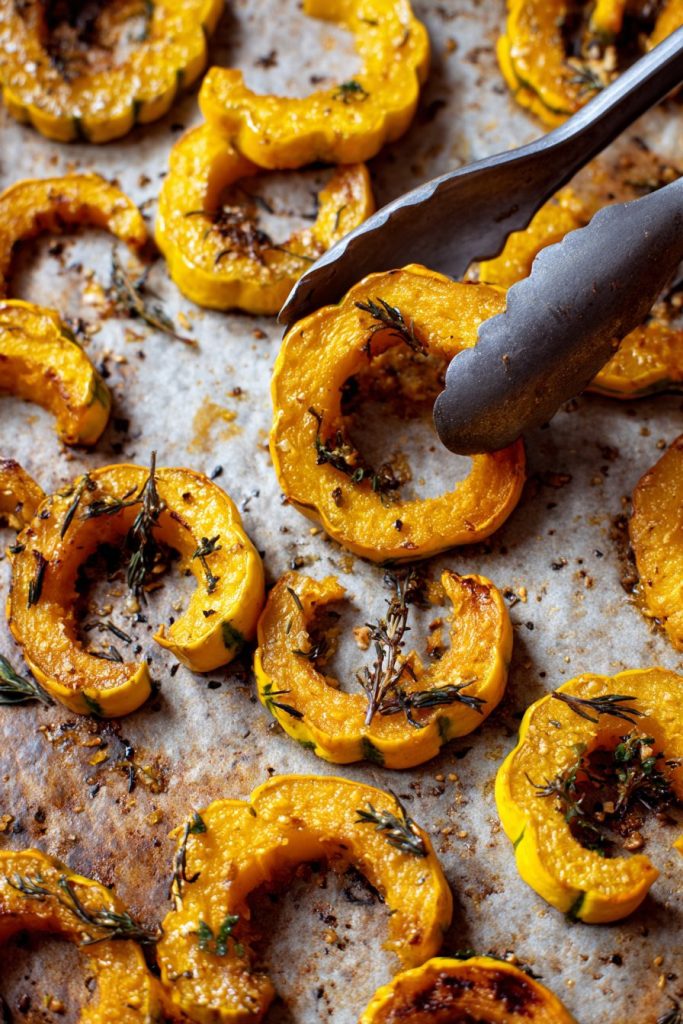
Set a timer for 15 minutes. When it goes off, flip each piece with tongs.
Both sides need that golden-brown love.
How do you know it’s done?
Pierce it with a fork. Should slide right through. The edges should look caramelized (not burnt, there’s a difference).
Some pieces might get darker than others. That’s totally fine. Actually adds character to the final dish.
While the squash roasts, your kitchen will smell incredible. That sweet, nutty fragrance? That’s how you know magic is happening.
Use this time to prep everything else. Multitasking for the win.

Toasting the Pepitas
This step takes pepitas from “meh” to “wow.”
Grab a medium skillet. Put it over medium-low heat. No oil needed.
The seeds have enough natural oils already.
Toss the raw pepitas in. Stir them constantly with a wooden spoon.
Pay attention here.
Pepitas go from perfectly toasted to burnt in like 30 seconds. No joke.
Listen for gentle popping sounds. Watch for the edges to turn light golden. The smell becomes super nutty after 3 to 5 minutes.
Once they smell amazing and show some color?
Get them off the heat immediately. Transfer to a cool plate.
Crafting the Vinaigrette
This dressing comes together fast.
Grab a small bowl. Add balsamic vinegar first. Then maple syrup.
That combo creates this sweet-tart base that’s perfect for fall flavors.
Next up: Dijon mustard and salt.
Here’s the whisking trick.
Whisk everything vigorously before you add the olive oil. Get those ingredients emulsified.
Then drizzle in the olive oil slowly. Keep whisking the whole time.
This creates a smooth, unified dressing instead of oil floating on top of vinegar.
Finally, grind fresh black pepper right into the bowl. Taste as you go.
The dressing should taste balanced. Not too sweet. Not too acidic.
I sometimes put a tiny bit on a piece of arugula to test it.
Too sharp? Add another half teaspoon of maple syrup.
Too sweet? Splash in more vinegar.
Assembly and Presentation
Let the squash cool for a few minutes. Then it’s showtime.
Put your arugula in a large serving bowl. Make sure those greens are dry.
Any moisture on the leaves will water down your dressing.
If you washed them ahead of time, spin them in a salad spinner until they’re bone dry.
Layering makes this salad look restaurant-quality.
Scatter the pomegranate arils throughout. Those ruby gems catch the light so beautifully.
Add the toasted pepitas next. Spread them around evenly.
Sprinkle the crumbled feta on top. Creates these little white clouds against the green.
Now for the squash.
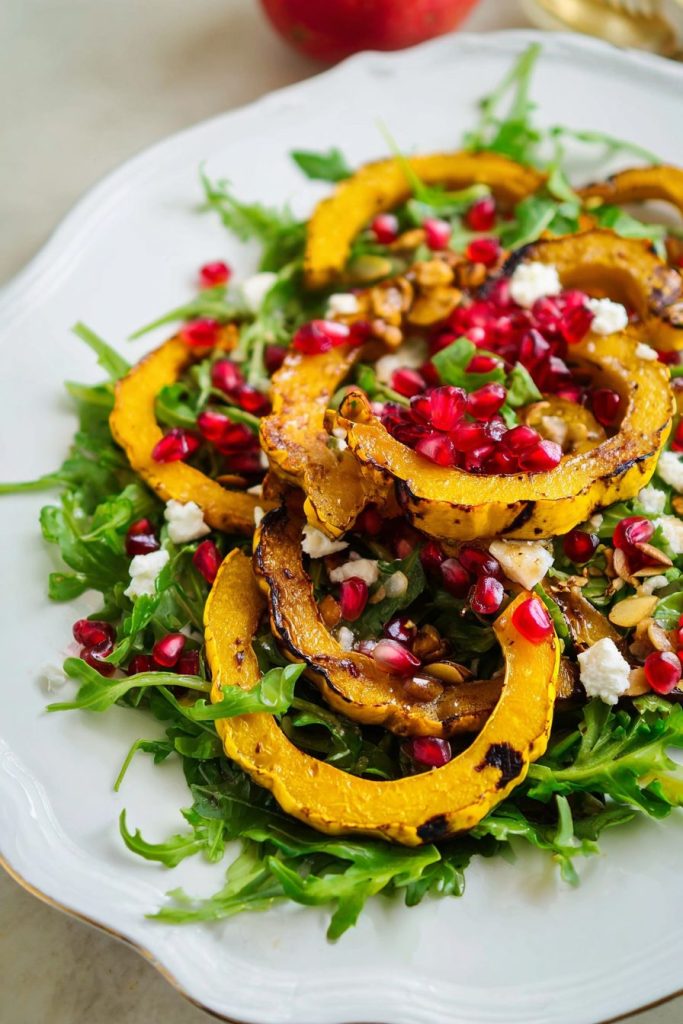
Place some rounds on top for presentation. Mix others gently into the salad.
The warm squash slightly wilts the arugula it touches. I actually like this. Creates textural variety.
Don’t dress the salad until you’re ready to eat.
Keep the vinaigrette in a small pitcher on the side.
This prevents soggy greens if you have leftovers. Guests can add as much or as little as they want.
When it’s go time, toss everything together gently. The dressing should coat the leaves without drowning them.
That first bite?
People’s eyes usually widen a bit.
The sweet squash. Tart pomegranate. Creamy cheese. Peppery arugula.
Everything works together while still tasting distinct. The toasted pepitas add this textural contrast that makes every forkful interesting.
Tips for Success
Hosting a dinner party?
Roast the squash that morning. It sits at room temperature like a champ.
Make the dressing up to three days ahead. Just bring it to room temperature and whisk again before serving.
Out of pomegranates?
Dried cranberries give you similar tartness. Pecans can replace pepitas if that’s what you’ve got.
I’ve mixed baby kale with arugula when I wanted heartier greens. Works great.
Goat cheese lovers can swap it for feta. Both are delicious.
Leftover storage is tricky.
Keep the dressed salad separate from the undressed components.
The greens stay fresh in the fridge for about three days if kept dry. Once dressed, the arugula wilts. Still edible for a day or so, just not as pretty.
The squash? Stays delicious for several days. Add it to grain bowls or eat it as a side dish.
For bigger gatherings, double or triple everything. The proportions scale up perfectly.
Just use multiple baking sheets for the squash. Don’t crowd them.
Crowded squash steams instead of caramelizes. And we want that caramelization.
Temperature is a personal preference thing.
Some people love this with warm squash straight from the oven. Others want everything at room temperature.
I’ve served it both ways. Both work.
The flavors come through regardless. Though I find room temperature lets the subtle notes shine more clearly.
Frequently Asked Questions
Can I use a different type of squash if delicata isn’t available?
Butternut squash works. But you’ll need to peel it first.
Cut it into similar-sized pieces for even roasting. The flavor is slightly different. More traditionally “squashy” and less sweet.
Acorn squash is another option. Again, peeling required.
Cooking time stays about the same.
How do I know when the squash is perfectly roasted?
Pierce it with a fork. Should slide right through easily. Look for golden-brown edges.
Underdone squash feels firm. Looks pale.
Overdone squash gets mushy. Too dark.
Perfect squash holds its shape while being fork-tender. Caramelized edges, not burnt.
What’s the best way to remove pomegranate seeds?
Cut the pomegranate in half. Hold each half cut-side down over a bowl.
Grab a wooden spoon. Firmly tap the back.
The seeds fall out while the white pith stays attached.
Or do the underwater method. Score the skin and break it apart in a bowl of water. Seeds sink. Pith floats.
Can this salad be made vegan?
Absolutely.
Skip the cheese. Or use a plant-based feta alternative.
The salad still tastes amazing without dairy. The other flavors are strong enough that you won’t miss it.
Add extra pepitas for richness. Or sprinkle some nutritional yeast.
How far in advance can I prep the components?
The squash roasts beautifully up to two days ahead. Store it in an airtight container in the fridge. Bring to room temperature before serving.
The dressing keeps for up to five days refrigerated.
Toast the pepitas up to a week ahead.
Just don’t assemble the salad until an hour before serving. Keeps everything fresh.
This salad has earned its spot in my regular rotation.
Whether I’m hosting Thanksgiving or making a simple weeknight dinner, it delivers. The flavors feel special enough for celebrations. Simple enough for Tuesday.
Give it a try. I think you’ll be making this all fall and winter long.
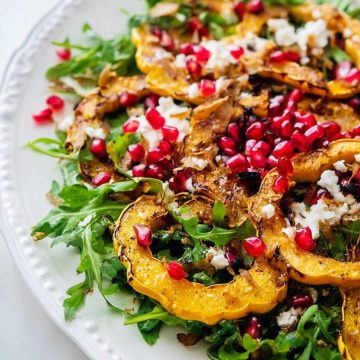
Delicata Squash Salad with Pomegranate and Feta
Ingredients
For the Roasted Squash
- 2 medium delicata squash 2 lbs, firm with bright stripes
- 1 tablespoon extra virgin olive oil for roasting
- pinch fine salt
For the Salad
- 5 ounces baby arugula or mixed greens 5 cups, fresh and crisp
- 1 cup pomegranate arils or dried cherries/cranberries
- 1/3 cup pepitas pumpkin seeds, or chopped pecans
- 3/4 cup feta or goat cheese crumbled, about 3-4 ounces
For the Maple Balsamic Vinaigrette
- 3 tablespoons extra virgin olive oil best quality available
- 1 1/2 tablespoons balsamic vinegar aged works beautifully
- 2 teaspoons maple syrup pure, not imitation
- 1 teaspoon Dijon mustard
- 1/4 teaspoon fine salt
- black pepper to taste, freshly ground preferred
Instructions
- Preheat your oven to 425°F.
- Wash the delicata squash under cool water and scrub off any waxy coating. Cut the squash into half-inch rounds. Using a small spoon, scoop out the seeds and stringy center from each round.
- Arrange the squash rounds on a baking sheet in a single layer with no overlapping. Drizzle with 1 tablespoon olive oil and sprinkle with a pinch of salt. Use your hands to coat each piece evenly on both sides.
- Roast for 30-35 minutes, flipping each piece with tongs after 15 minutes. The squash is done when fork-tender with golden-brown, caramelized edges. Remove from oven and let cool slightly.
- While the squash roasts, toast the pepitas. Place them in a medium skillet over medium-low heat (no oil needed). Stir constantly for 3-5 minutes until they turn light golden and smell nutty. Transfer immediately to a cool plate.
- Make the vinaigrette by combining balsamic vinegar, maple syrup, Dijon mustard, and 1/4 teaspoon salt in a small bowl. Whisk vigorously, then slowly drizzle in the 3 tablespoons olive oil while continuing to whisk. Add freshly ground black pepper to taste.
- In a large serving bowl, add the baby arugula. Make sure the greens are completely dry. Scatter the pomegranate arils, toasted pepitas, and crumbled feta throughout the greens.
- Arrange some roasted squash rounds on top for presentation, and gently mix the remaining squash into the salad. Keep the vinaigrette on the side until ready to serve.
- Just before serving, drizzle the vinaigrette over the salad and toss gently to coat. Serve immediately.
