

This vibrant farro salad combines chewy grains with peppery greens, sweet fruit, and tangy cheese. Perfect for meal prep or as a satisfying lunch that actually keeps you full.
I’ve been obsessed with grain salads lately.
And this farro version? It’s become my weekly staple. There’s something magical about how these hearty grains hold up against bold flavors without getting mushy or boring.
Here’s what drew me to farro initially…
The texture.
Unlike quinoa that can turn to mush or rice that clumps together, farro maintains this satisfying chew. Each grain stays distinct, almost bouncy. When I toss it with ingredients, everything coats evenly. No soggy mess.
This particular combination came together on a crisp autumn afternoon. I had leftover farro from dinner, some wilting arugula that needed using, and half an apple sitting on the counter.
What started as refrigerator cleanup turned into something I now make intentionally.
The contrast between bitter radicchio and sweet dates surprised me. The pecorino added just enough saltiness to tie everything together.
The beauty of this salad?
It improves as it sits. While most leafy salads wilt within hours, this one actually gets better. The grains absorb the dressing, the flavors meld, and you’re left with something even more delicious than when you first made it.

What Makes This Farro Salad Special
Unlike delicate lettuce-based salads, this one travels well.
I pack it for lunch without worrying about sogginess. The sturdy ingredients stand up to dressing. It’s ideal for potlucks or picnics. You can assemble it hours ahead without any degradation in quality or texture.
The nutritional profile impressed me too:
- Farro brings protein and fiber to the table
- Walnuts add healthy fats and omega-3s
- Between the greens, fruit, and cheese, you’re getting a balanced meal in one bowl
It keeps me satisfied for hours without that heavy, sluggish feeling.
I love how adaptable this recipe is to what you have available. No Honeycrisp apples? Grab a Granny Smith or Fuji. Out of pecorino? Parmesan or aged cheddar work beautifully.
The formula stays flexible while the results remain consistently delicious.
Prep Time: 10 minutes | Cook Time: 20 minutes | Total Time: 30 minutes
Servings: 4 | Difficulty: Easy
Understanding Your Ingredients
Cooked farro forms the foundation of this salad.
I cook mine like pasta in plenty of boiling water, then drain it. This method gives you more control over texture than absorption cooking. You want each grain tender but still offering resistance when you bite down.
Think al dente pasta, not porridge.
Farro is an ancient wheat grain with deep roots in Mediterranean cooking. It offers a nutty, slightly sweet flavor that pairs well with both savory and sweet elements. One cup of dry farro yields about three cups cooked. Economical and efficient.

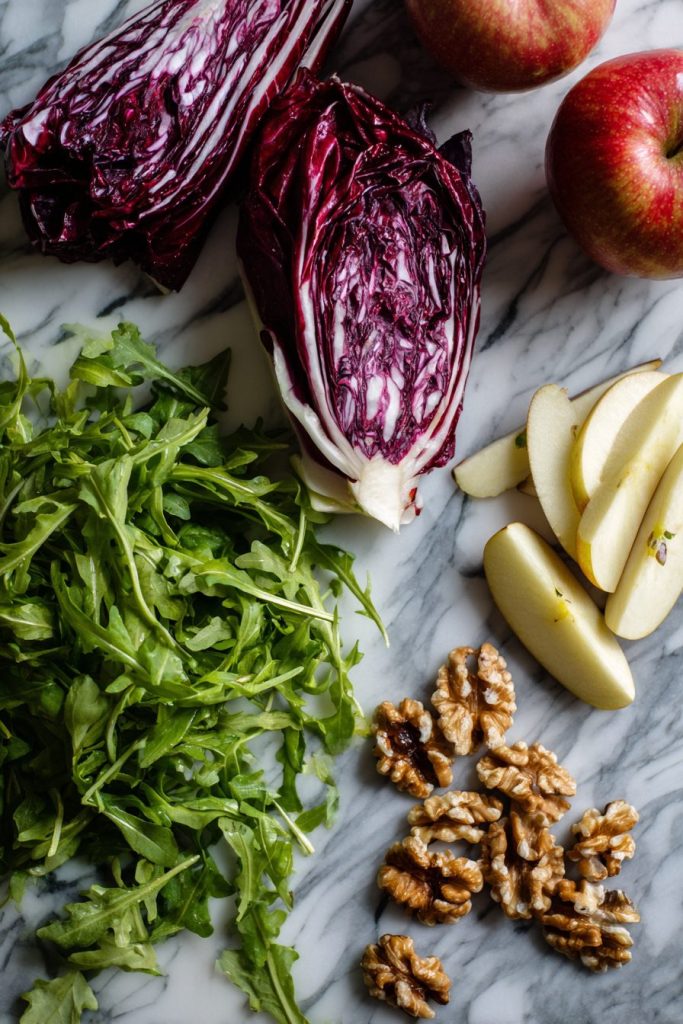
Arugula brings peppery bite to balance the sweet elements.
I prefer baby arugula for its tender leaves and milder flavor. Regular arugula works too, though it has more assertive spice. The slight bitterness plays against the dates and apple beautifully.
Radicchio adds gorgeous color and another layer of bitterness.
Those deep purple leaves make the salad visually stunning. When sliced thin, radicchio’s texture remains crisp while its flavor mellows slightly. It stands up to dressing without wilting like softer lettuces would.
Honeycrisp apple is my top choice here for good reason.
These apples stay crisp and won’t brown quickly after slicing. Their balanced sweet-tart flavor works with the savory elements. The juicy crunch adds textural interest with every bite.
Medjool dates might seem unusual in a savory salad.
But trust me on this.
They provide concentrated sweetness and a wonderful chewy texture. When chopped, they distribute throughout the salad, creating little bursts of caramel-like flavor. They’re nature’s candy, and they belong here.
Walnuts contribute earthy richness and satisfying crunch.
I roughly chop them so you get varied pieces – some larger chunks, some smaller bits. This creates different textural experiences throughout the salad. Toasting them amplifies their flavor, though raw works too.
Shaved pecorino cheese brings the salty, funky element this salad needs.
Those thin ribbons incorporate easily. They melt slightly into the warm farro if you dress it while still warm. The sharp, tangy flavor cuts through the sweeter elements perfectly.
Fresh parsley adds bright, grassy notes.
I chop it fine so it disperses evenly rather than clumping. It makes the entire salad taste fresher and more vibrant.
Don’t skip this – it’s not just garnish.
Fresh thyme leaves contribute subtle herbal complexity.
Just the leaves, not the woody stems. A little goes a long way. The earthy, slightly minty notes complement the other flavors without overpowering them.
Apple cider vinegar dressing ties everything together with bright acidity.
The fruity notes in apple cider vinegar echo the actual apple in the salad. It’s tangy enough to wake up your palate but not harsh.
Sea salt and black pepper are essential finishing touches.
They make flavors pop and add depth. I season conservatively at first, then adjust after tasting.
Ingredients Table
| Ingredient | Quantity | Notes |
|---|---|---|
| Cooked farro | 3 cups | From 1 cup dry; cooked al dente |
| Arugula | 1 cup | Baby arugula preferred |
| Radicchio | 1 cup | Sliced thin |
| Honeycrisp apple | 1 medium | Thinly sliced, can use Fuji |
| Medjool dates | 3 dates | Pitted and chopped |
| Fresh parsley | ½ cup | Finely chopped |
| Walnuts | ½ cup | Roughly chopped |
| Pecorino cheese | ½ cup | Shaved or grated |
| Fresh thyme | 1 tablespoon | Leaves only, no stems |
| Apple cider vinegar dressing | To taste | Store-bought or homemade |
| Sea salt | ¼ teaspoon | Adjust to taste |
| Black pepper | To taste | Freshly ground |
How to Make This Salad
Now that you understand each component, let’s put this salad together.
The process is straightforward. But small details make the difference between good and great.
Preparing Your Farro
Start with your farro preparation.
If you’re cooking it fresh, bring a large pot of salted water to a rolling boil. You want plenty of water – think of cooking pasta. Too little water makes the grains clump together and cook unevenly.
Add your one cup of dry farro to the boiling water. Stir once to prevent sticking, then let it cook uncovered.
Here’s the timing:
- Pearled farro: 15-20 minutes
- Whole grain farro: 25-30 minutes
- Semi-pearled: somewhere in between
Test for doneness starting at the minimum time. Scoop out a few grains and bite into them. You want tender grains with a pleasant chew, not crunchy centers or mushy texture.
The grains should hold their shape but not feel hard.
When ready, drain the farro in a fine-mesh strainer. Don’t rinse it – those surface starches help the dressing cling. Spread the drained farro on a baking sheet in a single layer.
This helps it cool quickly and prevents clumping.
If you’re using pre-cooked farro from the fridge, skip to assembly.
Preparing Other Components
While your farro cools, prepare your other ingredients.
This timing ensures everything comes together at the right temperature. Room temperature farro absorbs dressing better than cold farro straight from the refrigerator.
Wash and thoroughly dry your arugula and radicchio. Any excess water dilutes your dressing and makes the salad watery.
I use a salad spinner, then lay the greens on clean kitchen towels. Pat them dry if needed.
Slice your radicchio into thin ribbons. Remove the core first, then stack the leaves and cut crosswise. Thin slices integrate better into the salad than large chunks. They also offer a more pleasant eating experience.
Slice your apple just before assembly to minimize browning.
Use a sharp knife and aim for thin, uniform slices. I cut the apple into quarters, remove the core, then slice each quarter thinly.
No need to peel – the skin adds color and nutrients.

The Secret to Perfect Dates
Pit your dates if they’re not already pitted.
Slice each date lengthwise first, then chop into smaller pieces. Sticky dates can be challenging to cut.
Here’s my trick…
Lightly oil your knife blade with a paper towel. The oil prevents sticking and makes chopping much easier.
Chop your dates into pieces roughly the size of a raisin. Too large and they dominate certain bites. Too small and they almost disappear. This middle-ground size distributes sweetness evenly throughout the salad.
Preparing Herbs and Nuts
Strip thyme leaves from their stems by running your fingers down each stem from top to bottom.
The leaves come off easily while the woody stem slides through your fingers. Discard the stems.
Chop your parsley finely using a sharp knife. Dull knives bruise herbs rather than cutting them cleanly. This releases too much moisture and makes them turn dark.
A sharp knife gives you bright green parsley that stays fresh-looking.
Roughly chop your walnuts into varied sizes. I like some halves, some quarters, and some smaller pieces. This variety creates interesting texture – you might get a big nutty crunch in one bite and subtle nuttiness in another.
Want to toast your walnuts?
Do it now. Spread them on a dry skillet over medium heat. Shake the pan frequently and watch them carefully. They go from perfect to burnt quickly.
When fragrant and slightly darker, remove them from heat immediately.
Shaving the Cheese
For shaved pecorino, use a vegetable peeler or cheese plane.
Hold the cheese wedge firmly and draw the peeler across the surface. You’ll get thin, delicate ribbons that distribute beautifully through the salad.
If your cheese is too cold, it might crumble rather than shave. Let it sit at room temperature for fifteen minutes first.
If shaving isn’t working, grating works too. The pieces will be smaller but still delicious.
Assembly Time
Transfer your cooled farro to a large mixing bowl.
You want plenty of room to toss everything without ingredients flying out. A bowl that seems too big is actually just right.
Add your arugula, radicchio, apple slices, chopped dates, parsley, walnuts, cheese, and thyme leaves.
Don’t toss yet – just pile everything in there. This makes it easier to control how much dressing you add initially.
Pour half your dressing over the ingredients. Start conservative – you can always add more, but you can’t take it away. Add your quarter teaspoon of salt and several generous grinds of black pepper.
Now toss everything together.
I prefer using clean hands – you can feel when everything is evenly coated without overdressing. Lift from the bottom and fold over the top. Rotate the bowl and repeat until everything is combined.
Taste and adjust seasoning.
Does it need more salt? Add a pinch.
Want more tang? Drizzle more dressing.
More pepper? Grind away.
This tasting step is crucial – it’s your chance to make the salad perfect for your palate.
Serving and Timing
You can serve this salad immediately.
But it’s actually better after sitting for ten to fifteen minutes. The farro absorbs some dressing, flavors meld, and everything settles into harmony. Just give it a quick toss before serving.
If you’re making this ahead, assemble everything except the apple and dressing. Store in the refrigerator up to two days. Add apple slices and dressing just before serving for best results.
The apple stays crisper, and the greens don’t wilt.
For packed lunches, keep dressing separate until eating time. Those small containers work perfectly. The salad stays fresh and crisp, ready to dress and enjoy.
Pro Tips for Success
Let your farro cool completely before adding greens.
Warm farro wilts arugula and radicchio, destroying their crisp texture. Patience here makes a noticeable difference.
Don’t overdress initially.
Start with half the dressing, toss, taste, then add more if needed. Over-dressed salad becomes soggy and the individual flavors get lost.
Use fresh, high-quality ingredients.
Since this salad is simple, each component matters. Tired arugula or mealy apples will disappoint. Fresh, crisp ingredients shine.
Toast your walnuts if you have time.
Those few extra minutes of toasting intensify their flavor dramatically. The difference between raw and toasted is remarkable.
How to Serve This Farro Salad
This salad works beautifully as a complete lunch on its own.
The combination of grains, nuts, cheese, and vegetables creates a balanced meal. I often pack it in containers for work, and it keeps me satisfied until dinner.
As a side dish, it pairs wonderfully with grilled proteins. I’ve served it alongside:
- Roasted chicken
- Grilled salmon
- Even steak
The fresh, tangy flavors complement rich meats perfectly. It cuts through heaviness and adds brightness to the plate.
For vegetarian meals, serve it with soup or roasted vegetables.
A simple tomato soup becomes more substantial with this hearty salad. Roasted sweet potatoes or cauliflower steaks make excellent partners too.
This salad shines at potlucks and gatherings. It travels well, looks beautiful, and appeals to varied palates. I’ve brought it to countless parties, and it disappears quickly.
People appreciate something hearty that isn’t mayo-based.
During holidays, consider this as a fresh contrast to heavy traditional dishes.
Thanksgiving tables need brightness, and this salad delivers. It balances rich casseroles and provides a lighter option among indulgent choices.
Storage and Make-Ahead Tips
Store leftover salad in an airtight container for up to three days.
The greens soften slightly, but the overall salad remains tasty. If anything, the flavors deepen as it sits.
For meal prep, cook your farro on Sunday and store it separately. Throughout the week, you can quickly assemble fresh salads. The cooked grains keep for five days refrigerated.
Make dressing in larger batches and store in the fridge. It keeps for a week and works on other salads too. Having it ready makes assembly even faster.
If freezing cooked farro for future use, portion it into freezer bags. Press out air, seal, and freeze up to three months. Thaw overnight in the refrigerator before using.
Creative Variations to Try
Seasonal fruit swaps:
Replace apples with pears in fall, or try sliced peaches in summer. Dried cranberries work beautifully during winter months. Fresh figs in late summer create an elegant version.
Protein additions:
Toss in chickpeas for plant-based protein. Grilled chicken turns this into a heartier main course. Crispy bacon bits add smoky richness. Canned tuna makes a quick Mediterranean-inspired lunch.
Cheese alternatives:
Crumbled goat cheese brings creamy tanginess. Feta offers salty brightness. Sharp white cheddar provides familiar comfort. Each cheese creates a slightly different flavor profile.
Nut variations:
Swap walnuts for toasted almonds, pecans, or pistachios. Sunflower seeds work for nut-free versions. Each brings unique flavor and texture.
Green options:
Try spinach instead of arugula for milder flavor. Add kale for extra heartiness. Fresh herbs like basil or mint change the character completely.
Grain substitutes:
Use wheat berries, barley, or wild rice if farro isn’t available. Quinoa works for gluten-free needs. Each grain brings slightly different texture and flavor.
Pairing Suggestions
| Meal Type | Best Pairings |
|---|---|
| Soups | Butternut squash soup, tomato bisque, lentil soup |
| Proteins | Herb-roasted chicken, baked salmon, grilled pork chops |
| Roasted Vegetables | Brussels sprouts, sweet potatoes, cauliflower |
| Sandwiches | Works as a side for almost any sandwich |
The hearty grains complement smooth, creamy soups beautifully. The fresh flavors balance rich, savory meats. The combination with roasted vegetables creates a satisfying vegetarian meal.
Frequently Asked Questions
Can I use a different type of grain instead of farro?
Absolutely.
Wheat berries offer similar chewiness and take about the same cooking time. Barley works wonderfully and cooks slightly faster.
For gluten-free options?
Try wild rice or brown rice. The texture will differ slightly, but the salad remains delicious. Quinoa works too, though it has a softer texture.
Cook any substitute grain according to package directions, then follow the same assembly process.
How do I prevent my apple slices from browning?
Slice your apple just before assembling the salad – that’s the simplest solution.
If you need to prep ahead, toss apple slices with a little lemon juice or orange juice. The citric acid prevents oxidation.
Another trick?
Soaking slices briefly in cold water with a pinch of salt. Drain and pat dry before adding.
For packed lunches, keep apple slices separate and add them just before eating.
Can I make this salad vegan?
Yes.
Simply omit the pecorino cheese or replace it with nutritional yeast for cheesy flavor. Vegan parmesan substitutes work well too.
The salad remains delicious and satisfying without cheese. You might want to add extra nuts or seeds for richness. A drizzle of tahini-based dressing adds creaminess that mimics cheese.
What if I can’t find Medjool dates?
Regular dates work perfectly fine, though they’re slightly smaller and less sweet. You might want to add one or two extra.
Dried apricots, chopped into date-sized pieces, provide similar chewy sweetness. Dried figs offer a different but delicious flavor.
Even raisins or dried cranberries work in a pinch. Any dried fruit adds that concentrated sweetness the salad needs.
How far in advance can I prepare this salad?
You can cook the farro up to five days ahead and refrigerate it.
Prepare all other components – chop nuts, wash greens, shave cheese – the day before. Store each element separately in airtight containers.
Assemble the complete salad up to four hours before serving, but add apple slices and dressing at the last minute.
For best texture and flavor?
Dress the salad no more than one hour before eating. This prevents wilting and keeps everything crisp and fresh.
Final Thoughts
This farro salad has become one of my reliable go-to recipes.
It’s healthy without tasting like diet food. It’s fancy enough for company but simple enough for weeknight dinners. The ingredients are accessible, the technique is straightforward, and the results are consistently excellent.
What I love most is how it adapts to what I have available.
No walnuts? Pecans work.
Out of radicchio? Extra arugula is fine.
This flexibility makes it a recipe I actually use rather than one I make once and forget.
The combination of textures keeps every bite interesting. Chewy grains, crisp apple, tender greens, crunchy nuts – there’s always something happening. The flavors balance beautifully without any single element dominating.
Try this salad once, and I bet it becomes part of your regular rotation.
It’s that good, that versatile, and that satisfying.
Enjoy!
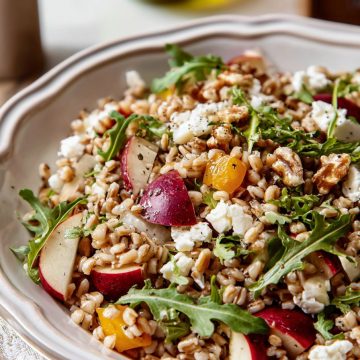
Farro Salad with Apple, Dates and Arugula
Ingredients
- 3 cups cooked farro from 1 cup dry; cooked al dente
- 1 cup arugula baby arugula preferred
- 1 cup radicchio sliced thin
- 1 medium Honeycrisp apple thinly sliced, can use Fuji
- 3 Medjool dates pitted and chopped
- 1/2 cup fresh parsley finely chopped
- 1/2 cup walnuts roughly chopped
- 1/2 cup pecorino cheese shaved or grated
- 1 tablespoon fresh thyme leaves only, no stems
- apple cider vinegar dressing to taste, store-bought or homemade
- 1/4 teaspoon sea salt adjust to taste
- black pepper to taste, freshly ground
Instructions
Prepare the Farro
- Bring a large pot of salted water to a rolling boil. Add 1 cup of dry farro and stir once to prevent sticking.
- Cook uncovered for 15-20 minutes for pearled farro or 25-30 minutes for whole grain farro. Test for doneness – grains should be tender with a pleasant chew, not crunchy or mushy.
- Drain the farro in a fine-mesh strainer (don’t rinse). Spread on a baking sheet in a single layer to cool completely. This prevents clumping and helps it absorb dressing better.
Prepare Other Components
- Wash and thoroughly dry arugula and radicchio using a salad spinner. Pat dry with clean kitchen towels if needed.
- Remove the core from radicchio, stack the leaves, and slice crosswise into thin ribbons.
- Slice the apple into quarters, remove the core, then slice each quarter thinly. Do this just before assembly to minimize browning.
- Pit the dates if needed. Lightly oil your knife blade, then slice each date lengthwise and chop into raisin-sized pieces.
- Strip thyme leaves from stems by running your fingers down each stem from top to bottom. Discard stems.
- Finely chop the parsley with a sharp knife. Roughly chop walnuts into varied sizes. Optional: toast walnuts in a dry skillet over medium heat until fragrant, shaking frequently.
- Shave pecorino cheese using a vegetable peeler or cheese plane, creating thin ribbons. If the cheese is too cold and crumbles, let it sit at room temperature for 15 minutes first.
Assemble the Salad
- Transfer cooled farro to a large mixing bowl. Add arugula, radicchio, apple slices, chopped dates, parsley, walnuts, cheese, and thyme leaves.
- Pour half the dressing over the ingredients. Add 1/4 teaspoon salt and several generous grinds of black pepper.
- Toss everything together using clean hands or salad tongs, lifting from the bottom and folding over the top until evenly combined.
- Taste and adjust seasoning. Add more dressing, salt, or pepper as needed. Let sit for 10-15 minutes before serving to allow flavors to meld. Give a quick toss before serving.
