

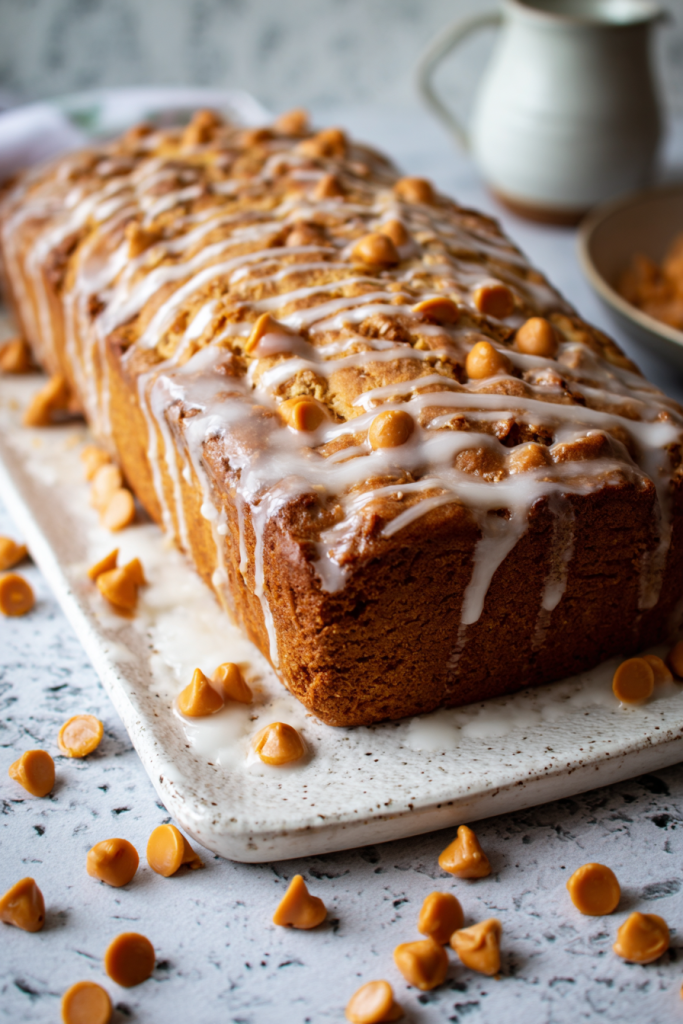
This Butterscotch Bread will transform your morning routine into something extraordinary! Each slice delivers perfect moisture, tender crumb, and rich butterscotch flavor. The secret ingredient is instant butterscotch pudding mix, which creates an incredibly soft texture. A sweet vanilla glaze with butterscotch chip topping adds the finishing touch.
Why This Butterscotch Bread Works
I’ve been baking this bread for years, and it never disappoints. The pudding mix technique is genius because it infuses butterscotch flavor throughout without complicated steps. You’ll get bakery-quality results using simple pantry ingredients. My family requests this recipe constantly, especially for weekend brunch.
Perfect for any occasion. Serve this butterscotch bread warm for breakfast or as a sweet dessert option. The sweetness level works beautifully either way, making it incredibly versatile for your menu.
Simple customization options. I love experimenting with different icing flavors to create variety. Try maple extract instead of vanilla, or swap butterscotch chips for white chocolate. Small changes create completely new taste experiences.
Always a crowd-pleaser. I’ve served this butterscotch pudding bread at countless gatherings and family dinners. Everyone raves about the tender texture and rich butterscotch taste. It disappears quickly every single time.
What Makes This Recipe Special
The combination of butterscotch pudding mix with sour cream creates exceptional moisture. Most quick breads dry out quickly, but this one stays tender for days. The double leavening from both baking powder and baking soda gives you perfect rise. You’ll achieve a light, fluffy crumb that melts in your mouth.
Ingredients You’ll Need
This recipe uses common baking ingredients you probably already have at home. Everything is readily available at any grocery store, making last-minute baking easy and convenient.
For the Bread:
- Butterscotch pudding mix: Use instant pudding for rich butterscotch flavor without extra preparation. Don’t make the pudding according to package directions. Add the dry mix directly to your flour mixture.
- All-purpose flour: This creates the perfect bread structure and texture. I haven’t tested alternative flours, so stick with all-purpose for best results.
- Baking powder and baking soda: Both leaveners work together for optimal rise and fluffy texture. Using both ensures your bread reaches perfect lightness.
- Salt: Just a small amount balances sweetness and enhances overall flavor. Don’t skip this essential ingredient.
- Granulated sugar: This adds sweetness and helps create tender crumb texture. It also contributes to the golden-brown crust.
- Unsalted butter: Let it soften at room temperature for about 30 minutes before starting. Softened butter creams properly with sugar for best texture.
- Large eggs: These provide structure, richness, and help bind ingredients together. Room temperature eggs incorporate more smoothly into batter.
- Vanilla extract: Pure vanilla extract offers the best flavor, though imitation works fine. Vanilla enhances butterscotch notes beautifully.
- Milk: This thins the batter to proper consistency for easy pouring. Whole milk works best, but 2% is perfectly acceptable.
- Sour cream: The acidity keeps bread incredibly moist and tender without adding tanginess. This is my secret ingredient for perfect texture.
For the Icing:
- Powdered sugar: This dissolves smoothly into liquid for perfect glaze consistency. Granulated sugar would create an unpleasant gritty texture.
- Milk: A few tablespoons thin the icing to ideal drizzling consistency. Add gradually until you reach desired thickness.
- Vanilla extract: Pure extract adds wonderful flavor, but imitation works in a pinch. Use the same type you used in the bread.
- Butterscotch chips: These amplify butterscotch flavor and add visual appeal. Sprinkle generously over the glazed bread for maximum impact.
Recipe Timing & Servings
| Prep Time | Cook Time | Total Time | Servings | Difficulty |
|---|---|---|---|---|
| 15 minutes | 55 minutes | 70 minutes | 12 slices | Easy |
Instructions & Cooking Process
Ingredients Table
| Ingredient | Quantity | Notes |
|---|---|---|
| Instant butterscotch pudding mix | 3.4 oz (1 box) | Use dry mix, don’t prepare |
| All-purpose flour | 1½ cups | Spoon and level for accuracy |
| Baking powder | 1 tsp | Ensures proper rise |
| Baking soda | ½ tsp | Works with baking powder |
| Salt | ¼ tsp | Balances sweetness |
| Granulated sugar | ¾ cup | For sweetness and texture |
| Unsalted butter | ½ cup | Softened to room temperature |
| Large eggs | 2 | Room temperature preferred |
| Vanilla extract | 1 tsp | Pure extract recommended |
| Milk | ⅔ cup | Whole or 2% milk |
| Sour cream | 2 Tbsp | Full-fat works best |
| Powdered sugar | ½ cup | For icing |
| Milk (for icing) | 2-3 Tbsp | Adjust for consistency |
| Vanilla extract (for icing) | ¼ tsp | Enhances glaze flavor |
| Butterscotch chips | ¼ cup | For topping |
Step-by-Step Instructions
Step 1: Prepare Your Oven and Pan Preheat your oven to 350°F to ensure even baking temperature. Spray a 9×5-inch loaf pan generously with nonstick cooking spray. Make sure to coat the corners and sides thoroughly to prevent sticking.
Step 2: Mix the Dry Ingredients Grab a large mixing bowl and whisk together flour, butterscotch pudding mix, baking powder, baking soda, and salt. Whisk for about 30 seconds until everything is evenly distributed. This ensures even flavor throughout your bread.

Step 3: Cream Butter and Sugar In a separate bowl, use an electric mixer to beat softened butter and granulated sugar together. Mix on medium speed for 2-3 minutes until light, fluffy, and pale yellow. This creaming process incorporates air for tender texture.
Step 4: Add Eggs and Vanilla Beat in the eggs one at a time, mixing well after each addition. Add vanilla extract and continue beating until smooth and well combined. The mixture should look creamy and uniform in color.
Step 5: Combine Wet and Dry Ingredients Now comes the crucial mixing step that requires a gentle hand. Add about one-third of your dry ingredient mixture to the butter mixture. Mix on low speed just until barely combined. Add half of the milk and sour cream mixture, then mix briefly. Continue alternating dry ingredients and milk mixture, ending with dry ingredients. Mix only until you no longer see flour streaks. Overmixing creates dense, tough bread instead of tender crumb.
Step 6: Transfer Batter and Bake Pour the batter into your prepared loaf pan, spreading it evenly with a spatula. The batter will be thick but pourable. Place in the preheated oven and bake for 50-60 minutes. Check doneness by inserting a toothpick into the center. It should come out clean or with just a few moist crumbs attached.
Step 7: Cool the Bread Remove the pan from the oven and let it sit for 10 minutes. This resting time allows the bread to set properly. Run a butter knife around the edges, then turn the bread out onto a wire rack. Let it cool completely before adding icing, about 45-60 minutes.
Step 8: Prepare the Vanilla Glaze While the bread cools, whisk together powdered sugar, milk, and vanilla extract in a small bowl. Start with 2 tablespoons of milk and add more if needed. You want a thick but pourable consistency that will drizzle nicely.

Step 9: Glaze and Serve Drizzle the vanilla icing over the completely cooled bread using a spoon. Work in a zigzag pattern for attractive presentation. Immediately sprinkle butterscotch chips over the wet glaze so they stick. Let the glaze set for 10 minutes before slicing. Cut into thick slices and serve.
Expert Tips for Perfect Results
Don’t skip the sour cream. This ingredient is crucial for achieving tender, moist texture. The acidity reacts with baking soda to create extra lift. It also adds richness without making the bread heavy.
Room temperature ingredients matter. Cold eggs and butter don’t incorporate smoothly into batter. Let eggs sit on the counter for 30 minutes before baking. Softened butter should indent easily when pressed but not be melted.
Use fresh leavening agents. Baking powder and baking soda lose potency over time. Check expiration dates before using them. Old leavening results in dense bread that doesn’t rise properly.
The toothpick test is essential. Start checking at 50 minutes to avoid overbaking. The toothpick should have a few moist crumbs but no wet batter. Overbaked bread becomes dry and loses that perfect tender texture.
Cool completely before glazing. Warm bread will melt the icing and make it run off. Be patient and let it cool fully for best presentation. The wait is worth it.
Measure flour correctly. Spoon flour into your measuring cup and level it off with a knife. Scooping directly from the bag packs flour, resulting in too much. Excess flour makes bread dry and dense.
Customization Ideas
Make it chocolate butterscotch bread. Add ½ cup of chocolate chips to the batter along with butterscotch chips on top. The chocolate and butterscotch combination is absolutely delicious.
Try different glazes. Swap vanilla extract for maple, almond, or butter extract in the icing. Each variation creates a unique flavor profile that complements butterscotch beautifully.
Add nuts for crunch. Fold in ½ cup of chopped pecans or walnuts to the batter. The nuts add wonderful texture contrast to the tender bread.
Create a cream cheese frosting. Instead of simple glaze, beat cream cheese with powdered sugar and milk. Spread this richer frosting on cooled bread for decadent variation.
Storage, FAQs & Final Tips
How to Store Butterscotch Bread
Room Temperature Storage: Keep leftover bread in an airtight container at room temperature for up to 2 days. The glaze holds up well, though the bread stays freshest within the first day.
Refrigerator Storage: Store in an airtight container or wrap tightly in plastic wrap for up to 5 days. Refrigeration extends shelf life significantly. Bring to room temperature or warm slightly before serving for best texture.
Freezer Storage: Wrap the bread tightly in plastic wrap, then aluminum foil for double protection. Freeze for up to 2 months for optimal quality. I recommend freezing without the glaze for best results. Thaw overnight in the refrigerator or at room temperature for several hours. Add fresh glaze after thawing if desired.
Pro tip for freezing: Slice the bread before freezing for easy single-serving portions. Wrap individual slices in plastic wrap, then place in a freezer bag. This allows you to thaw only what you need.
Frequently Asked Questions
Can I use cook-and-serve pudding instead of instant? Instant pudding mix works best because it incorporates directly into dry ingredients. Cook-and-serve pudding has different properties and won’t provide the same texture. Stick with instant butterscotch pudding for this recipe.
Why is my butterscotch bread dense? Dense bread usually results from overmixing the batter or measuring flour incorrectly. Mix only until ingredients are just combined. Also, make sure your baking powder and baking soda are fresh. Expired leavening agents won’t provide proper rise.
Can I make this without the glaze? Absolutely! The bread is delicious on its own without icing. Skipping the glaze reduces overall sweetness and makes it more suitable for breakfast. The bread also freezes better without glaze applied.
What can I substitute for sour cream? Plain Greek yogurt works as a 1:1 substitute for sour cream. Both provide acidity and moisture for tender texture. Avoid using low-fat or nonfat versions, as they contain too much water.
How do I know when the bread is done? Insert a toothpick into the center of the bread at the 50-minute mark. It should come out clean or with just a few moist crumbs. If wet batter sticks to the toothpick, continue baking and check every 5 minutes.
Can I double this recipe? Yes, you can double all ingredients and bake in two loaf pans. Keep the same oven temperature and baking time. Check both loaves at 50 minutes for doneness, as they may finish at slightly different times.
What size loaf pan should I use? Use a standard 9×5-inch loaf pan for best results. Smaller pans will cause overflow, while larger pans create flat bread. The pan size directly affects baking time and final texture.
Serving Suggestions
This butterscotch bread shines in many different serving situations. Here are my favorite ways to enjoy it:
Classic breakfast option. Serve warm slices with hot coffee or tea for a sweet morning treat. The butterscotch flavor pairs wonderfully with rich, bold coffee.
Afternoon snack. Pack slices in lunchboxes or enjoy with a glass of cold milk. Kids absolutely love this bread for after-school snacks.
Dessert with ice cream. Warm a slice slightly and top with vanilla ice cream. The temperature contrast and flavor combination is absolutely heavenly.
Brunch centerpiece. Arrange slices on a platter with fresh fruit for brunch gatherings. The presentation looks impressive with minimal effort.
Gift giving. Wrap the cooled, unglazed bread in cellophane with a ribbon. Include icing ingredients and instructions separately for a thoughtful homemade gift.
Troubleshooting Common Issues
Bread sinks in the middle: This happens when the batter is undermixed or oven temperature is too low. Make sure your oven is fully preheated to 350°F. Also, check that your leavening agents are fresh and active.
Crust is too dark: If the top browns too quickly, tent aluminum foil loosely over the pan. Do this around the 40-minute mark to prevent burning while the center finishes baking.
Bread sticks to pan: Always spray your pan generously with nonstick spray, including corners. You can also line the bottom with parchment paper for extra insurance. Let bread cool 10 minutes before removing from pan.
Glaze is too thin: Add more powdered sugar, one tablespoon at a time, until you reach desired consistency. The glaze should coat the back of a spoon but still drizzle easily.
Glaze is too thick: Whisk in additional milk, one teaspoon at a time, until pourable. Be patient and add liquid gradually to avoid making it too thin.
Why This Recipe Stands Out
I’ve tried countless quick bread recipes over the years, and this butterscotch version remains my absolute favorite. The pudding mix technique is so simple yet incredibly effective for flavor. You don’t need fancy ingredients or complicated techniques to achieve bakery-quality results.
The texture stays moist for days, which is rare for quick breads. Most dry out quickly, but the sour cream and pudding combination keeps this one tender. I love that it works equally well for breakfast, dessert, or anytime snacking.
Making this bread has become a weekly tradition in my home. The house smells amazing while it bakes, and everyone gathers in the kitchen. That’s the magic of homemade baking – it brings people together.
Final Thoughts
This Butterscotch Bread delivers everything you want in a quick bread recipe. It’s simple to make with common ingredients you probably have on hand. The flavor is rich and satisfying without being overly sweet. Most importantly, it consistently produces tender, moist results every single time.
Whether you’re new to baking or an experienced baker, this recipe will become a staple. The straightforward instructions make it approachable for beginners. Meanwhile, experienced bakers will appreciate the reliable results and customization possibilities.
I hope you enjoy this butterscotch bread as much as my family does. It’s brought joy to countless breakfasts, celebrations, and everyday moments in our home. Now it’s your turn to create delicious memories with this wonderful recipe. Happy baking!

Butterscotch Bread
Ingredients
- For the Bread:
- 3.4 oz 1 box instant butterscotch pudding mix (use dry mix, don’t prepare)
- 1½ cups all-purpose flour spooned and leveled
- 1 tsp baking powder
- ½ tsp baking soda
- ¼ tsp salt
- ¾ cup granulated sugar
- ½ cup unsalted butter softened to room temperature
- 2 large eggs room temperature preferred
- 1 tsp vanilla extract pure extract recommended
- ⅔ cup milk whole or 2% milk
- 2 Tbsp sour cream full-fat works best
- For the Icing:
- ½ cup powdered sugar
- 2-3 Tbsp milk adjust for consistency
- ¼ tsp vanilla extract
- ¼ cup butterscotch chips for topping
Instructions
- Preheat your oven to 350°F. Spray a 9×5-inch loaf pan generously with nonstick cooking spray, coating corners and sides thoroughly.
- In a large mixing bowl, whisk together flour, butterscotch pudding mix, baking powder, baking soda, and salt for about 30 seconds until evenly distributed.
- In a separate bowl, use an electric mixer to beat softened butter and granulated sugar on medium speed for 2-3 minutes until light, fluffy, and pale yellow.
- Beat in the eggs one at a time, mixing well after each addition. Add vanilla extract and continue beating until smooth and well combined.
- Add about one-third of the dry ingredient mixture to the butter mixture and mix on low speed just until barely combined. Add half of the milk and sour cream mixture, then mix briefly. Continue alternating dry ingredients and milk mixture, ending with dry ingredients. Mix only until flour streaks disappear. Do not overmix.
- Pour the batter into prepared loaf pan, spreading evenly with a spatula. Bake for 50-60 minutes. Check doneness by inserting a toothpick into the center – it should come out clean or with just a few moist crumbs.
- Remove from oven and let sit for 10 minutes. Run a butter knife around the edges, then turn the bread out onto a wire rack. Let cool completely, about 45-60 minutes.
- While bread cools, whisk together powdered sugar, milk, and vanilla extract in a small bowl. Start with 2 tablespoons milk and add more if needed for thick but pourable consistency.
- Drizzle the vanilla icing over completely cooled bread in a zigzag pattern. Immediately sprinkle butterscotch chips over wet glaze so they stick. Let glaze set for 10 minutes before slicing. Cut into thick slices and serve.
Notes
Room temperature ingredients incorporate more smoothly. Let eggs sit on counter for 30 minutes and ensure butter is softened but not melted.
Use fresh baking powder and baking soda. Check expiration dates as old leavening results in dense bread.
Measure flour correctly by spooning into measuring cup and leveling with a knife. Don’t scoop directly from bag as this packs flour.
Cool completely before glazing or warm bread will melt the icing.
Store at room temperature in airtight container for up to 2 days, refrigerate for up to 5 days, or freeze (wrapped tightly) for up to 2 months.
For variations: add ½ cup chocolate chips to batter, swap vanilla for maple extract in icing, or fold in ½ cup chopped pecans or walnuts.
