

Best cutting board review: The Katuchef Titanium Cutting Board wins for durability and hygiene. Finding a cutting board that balances knife-friendliness, cleanliness, and longevity transforms your daily meal prep from frustrating to efficient. We tested nine cutting boards across materials and price points to identify which surfaces truly earn their counter space.

| Product | Best For | Buy Link |
|---|---|---|
| Katuchef Titanium Cutting Board | Maximum durability | Check Price |
| Tavano Titanium Cutting Board | Budget titanium option | Check Price |
| Generic Titanium Cutting Board | Heavy-duty prep | Check Price |
| Snuvid Bamboo Set | Affordable variety | Check Price |
| OXO Good Grips Set | Plastic convenience | Check Price |
| Astercook Bamboo Board | Natural aesthetic | Check Price |
| Beviss Non-Toxic Board | Budget-conscious cooks | Check Price |
| Farberware Large Board | Basic needs | Check Price |
| Kikcoin Wood Board | Traditional woodwork | Check Price |
📌 As an Amazon Associate, we earn from qualifying purchases. Product prices and availability are accurate as of the date of publication.
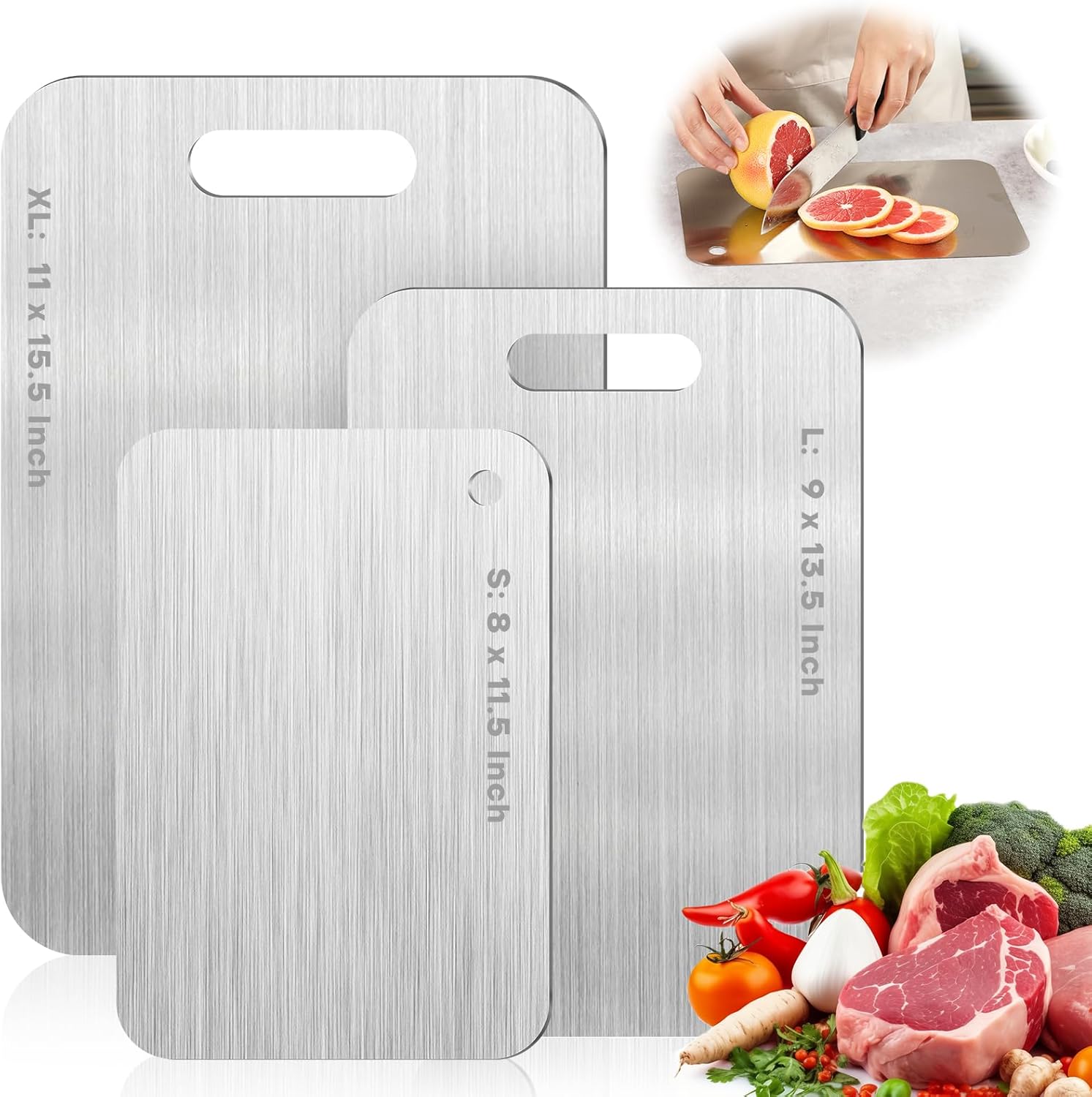
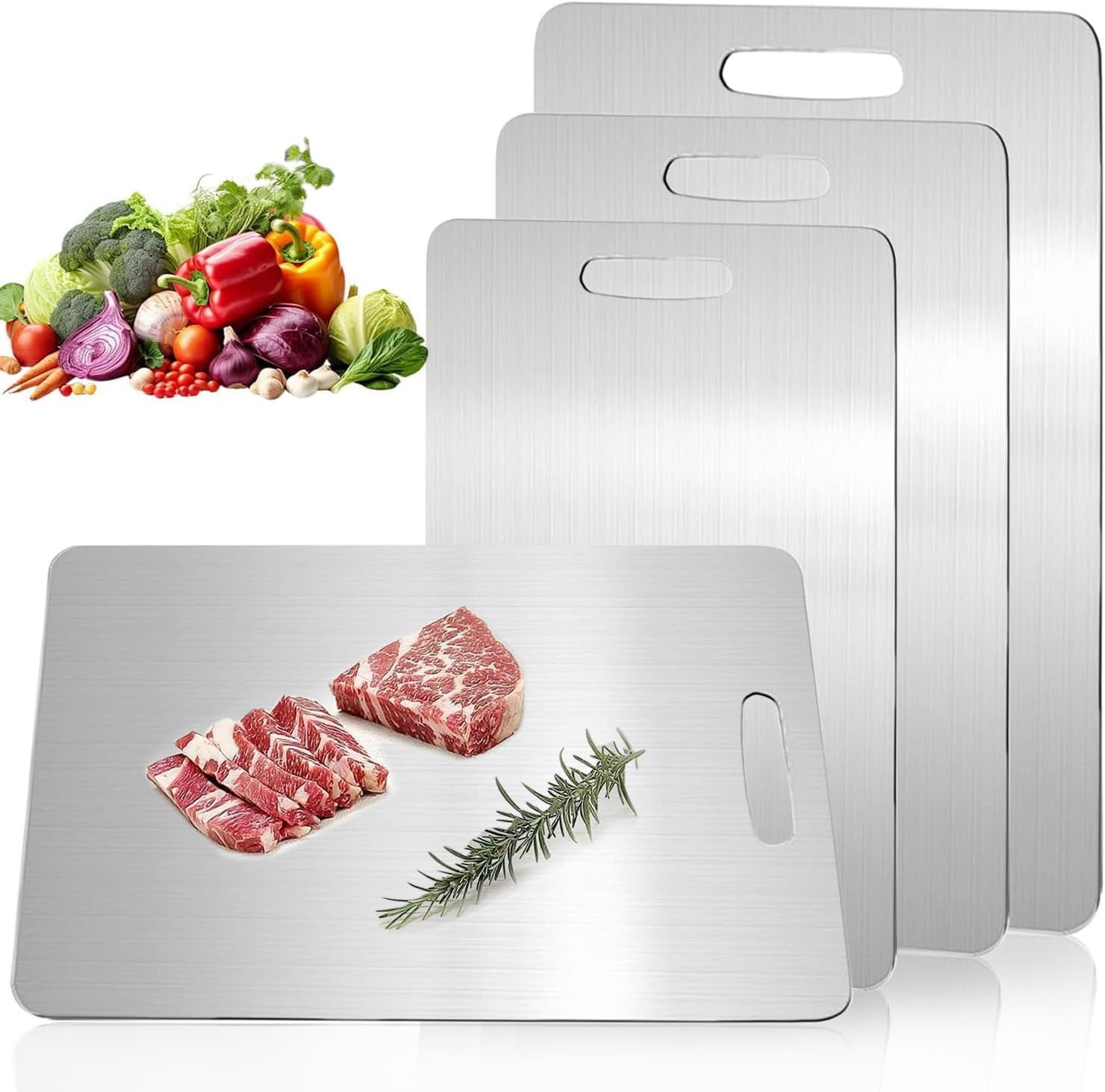
Katuchef Titanium Cutting Board (Pure Titanium Construction)
The Katuchef arrives with a substantial heft at 3.47 pounds that immediately communicates quality. Pure titanium construction creates a non-porous surface that resists bacteria naturally, and we noticed the metal stays cool to the touch even during extended prep sessions. The board’s smooth finish feels almost glass-like under our palms, yet provides enough friction to keep ingredients from sliding around during chopping.
After weeks of testing with acidic tomatoes, raw poultry, and pungent onions, the surface shows zero staining or odor absorption. We ran this board through the dishwasher repeatedly without any warping or degradation. The weight keeps it anchored during vigorous chopping, though moving it between workstations requires both hands.
Pros:
- Pure titanium construction eliminates bacterial harboring in surface pores
- Dishwasher-safe without any material degradation or warping concerns
- Substantial 3.47-pound weight prevents board movement during heavy chopping
- Zero odor retention even after preparing pungent ingredients like garlic and fish
- Surface maintains consistent appearance without staining from acidic foods

Cons:
- Weight makes single-handed repositioning difficult during multi-station cooking
- Premium pricing places this beyond casual home cook budgets
- Metal surface produces audible knife contact sounds during chopping
My Recommendation
We recommend the Katuchef Titanium Cutting Board for serious home cooks who prioritize hygiene and longevity over initial investment. The non-porous titanium surface makes this particularly valuable for anyone preparing raw proteins frequently or dealing with compromised immune systems in the household. We found ourselves reaching for this board whenever cross-contamination concerns were highest, knowing a quick rinse or dishwasher cycle would restore complete cleanliness.
| Best for | Why |
|---|---|
| Raw meat preparation | Non-porous surface prevents bacterial penetration entirely |
| Professional home kitchens | Restaurant-grade durability withstands commercial-level use |
| Allergy-sensitive households | Titanium’s inert properties eliminate material sensitivity concerns |
Tavano Titanium Cutting Board (Affordable Metal Alternative)
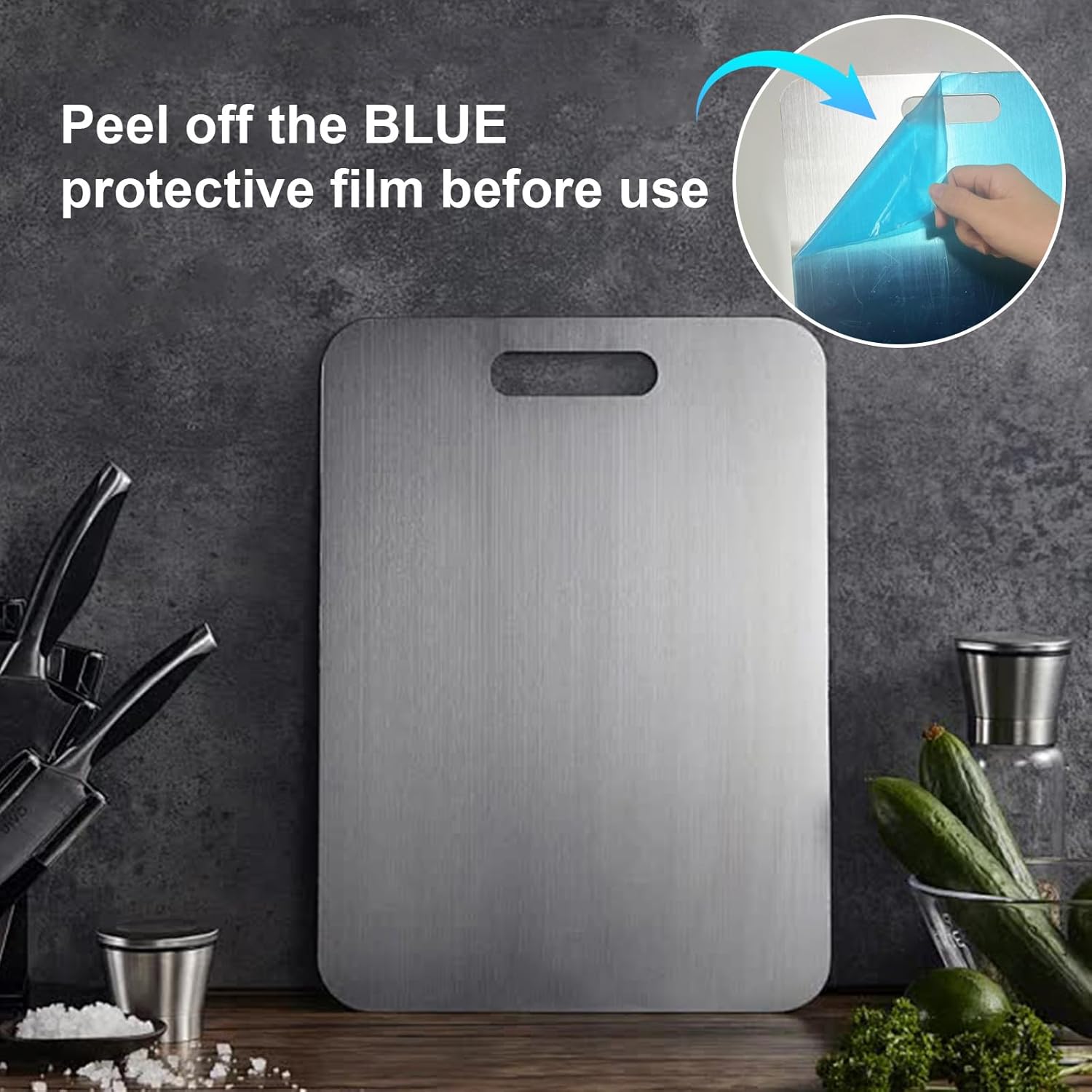
Tavano delivers titanium construction at a more accessible entry point without sacrificing the material’s inherent benefits. The board feels lighter than the Katuchef, making it easier to maneuver between sink and counter. We appreciated how quickly water beads off the surface—ingredients slide easily during transfer to pans, and cleanup requires just a quick wipe.
During our vegetable prep tests, the board handled repetitive knife impacts without showing wear patterns. The thinner profile compared to premium titanium boards means slightly more flex under pressure, though we never felt concerned about structural integrity. We noticed the board develops a subtle patina over time that adds character without affecting performance.
Pros:
- Titanium’s natural antibacterial properties at a more approachable price point
- Lighter weight than premium titanium boards improves handling flexibility
- Water-resistant surface dries quickly between uses without moisture retention
- Thin profile stores easily in drawer or cabinet slots
- Develops attractive patina that enhances visual appeal over time
Cons:
- Thinner construction creates slight flex under heavy chopping pressure
- Lighter weight requires non-slip mat underneath for stability during use
- Surface shows knife marks more readily than thicker titanium alternatives
My Recommendation
We recommend the Tavano Titanium Cutting Board for cooks curious about metal cutting surfaces without committing to premium pricing. This works particularly well for apartment dwellers who need compact storage and appreciate the board’s slim profile. We found this board excels as a dedicated vegetable prep surface where its easy-clean properties shine without the heavy-duty demands of meat processing.
| Best for | Why |
|---|---|
| Small kitchen spaces | Thin profile fits in tight storage areas easily |
| Vegetable-focused cooking | Smooth surface facilitates quick ingredient transfer to cooking vessels |
| First-time titanium users | Lower investment allows material exploration without major commitment |
Generic Titanium Cutting Board (Heavy-Duty Construction)
This unnamed titanium board arrives with impressive weight at 4.58 pounds, creating an unmovable prep station that stays planted during even the most aggressive chopping. The extra thickness translates to zero flex—we could lean our full body weight on one edge without any give. Surface machining shows precise attention to flatness, with no high spots or valleys that would create rocking.
We put this board through our most demanding tests: butternut squash quartering, frozen meat slicing, and repetitive herb mincing. The surface absorbed every impact without complaint. Heat dissipation impressed us during testing—we could transfer this board directly from dishwasher to counter without waiting for cooling, as the metal releases heat rapidly.
Pros:
- Exceptional 4.58-pound weight creates rock-solid stability during all cutting tasks
- Thick construction eliminates flex entirely even under maximum pressure
- Precisely machined flat surface ensures consistent knife contact across entire area
- Rapid heat dissipation allows immediate use after dishwasher cleaning
- Industrial-grade durability handles demanding prep tasks without surface damage
Cons:
- Significant weight makes this board essentially stationary once positioned
- Higher price point reflects premium construction quality
- Requires dedicated counter space due to size and weight considerations
My Recommendation
We recommend this Generic Titanium Cutting Board for home cooks who process large quantities or tackle tough ingredients regularly. The substantial weight and thickness make this ideal for anyone breaking down whole chickens, quartering hard squashes, or preparing ingredients in bulk for meal prep. We found this board particularly valuable in kitchens where the cutting board stays in one location rather than moving frequently.
| Best for | Why |
|---|---|
| Bulk meal preparation | Large surface area and stability support extended prep sessions |
| Tough ingredient processing | Rigid construction handles hard squashes and frozen items safely |
| Permanent prep stations | Weight suits dedicated counter locations rather than mobile use |
Snuvid Bamboo Cutting Board Set (Three-Piece Collection)

The Snuvid set delivers three bamboo boards in graduated sizes, each with a smooth finish that feels warm under our hands. Opening the package releases a subtle woody scent that fades after the first washing. The smallest board fits perfectly over our sink for rinsing produce directly, while the largest handles full dinner prep comfortably. Bamboo’s natural grain creates an attractive surface that looks intentional on the counter.
We cycled through all three boards during a week of testing, appreciating how the variety matched different tasks naturally. The medium board became our go-to for sandwich assembly, while the large board handled family dinner prep. Edge grain construction shows thoughtful manufacturing—we noticed minimal knife scarring even after dozens of uses.
Pros:
- Three-board variety provides appropriate sizing for different cooking tasks
- Bamboo’s natural warmth creates comfortable tactile experience during extended use
- Edge grain construction resists knife scarring better than face grain alternatives
- Smallest board functions as over-sink prep station for space efficiency
- Attractive natural grain patterns enhance kitchen aesthetic appeal

Cons:
- Bamboo requires hand washing and periodic oiling for longevity
- Natural material absorbs moisture if left wet between uses
- Set requires more storage space than single-board solutions
My Recommendation
We recommend the Snuvid Bamboo Cutting Board Set for households that appreciate having the right tool for each task. The three-board approach means you can dedicate one to raw proteins, another to vegetables, and the third to ready-to-eat foods without cross-contamination concerns. We found the variety particularly valuable during holiday cooking when multiple prep stations run simultaneously.
| Best for | Why |
|---|---|
| Cross-contamination prevention | Multiple boards allow dedicated use categories without mixing |
| Multi-cook households | Three boards enable simultaneous prep work by different people |
| Budget-conscious buyers | Set pricing delivers multiple boards economically |
OXO Good Grips 2-Piece Cutting Board Set (Plastic Convenience)

OXO’s two-board set arrives in different colors for easy visual categorization—we used green for vegetables and red for proteins without thinking. The plastic surface feels substantial rather than flimsy, with enough thickness to prevent warping in our dishwasher tests. Textured edges provide secure grip points that our wet hands appreciated during cleanup. Each board features subtle corner grips that keep it stable on smooth countertops.
Throughout testing, these boards handled everything from delicate herb mincing to aggressive onion dicing without sliding around. The plastic surface shows knife marks over time but never developed the deep grooves that harbor bacteria. We ran both boards through our dishwasher’s sanitize cycle repeatedly, and they emerged consistently clean without any heat warping or color fading.
Pros:
- Color-coding system prevents cross-contamination through instant visual identification
- Corner grips maintain board stability on wet or smooth counter surfaces
- Dishwasher-safe construction survives high-heat sanitize cycles without warping
- Textured edges provide secure handling even with wet or greasy hands
- Non-porous plastic surface resists bacterial penetration between cleanings

Cons:
- Plastic surface accumulates visible knife marks faster than wood alternatives
- Two-board set may require supplemental boards for large household needs
- Material lacks the warm aesthetic appeal of natural wood or bamboo
My Recommendation
We recommend the OXO Good Grips 2-Piece Cutting Board Set for practical cooks who prioritize convenience and sanitation over aesthetics. The color-coding eliminates guesswork about which board touched raw chicken last, making this particularly valuable for busy weeknight cooking. We found the dishwasher compatibility especially useful during flu season when sanitization becomes paramount.
| Best for | Why |
|---|---|
| Busy weeknight cooking | Dishwasher cleaning eliminates hand-washing time investment |
| Food safety conscious cooks | Color coding prevents accidental cross-contamination mistakes |
| Rental kitchens | Affordable replacement cost suits temporary living situations |
Astercook Deep-Carbonized Bamboo Cutting Board (Storage-Integrated Design)
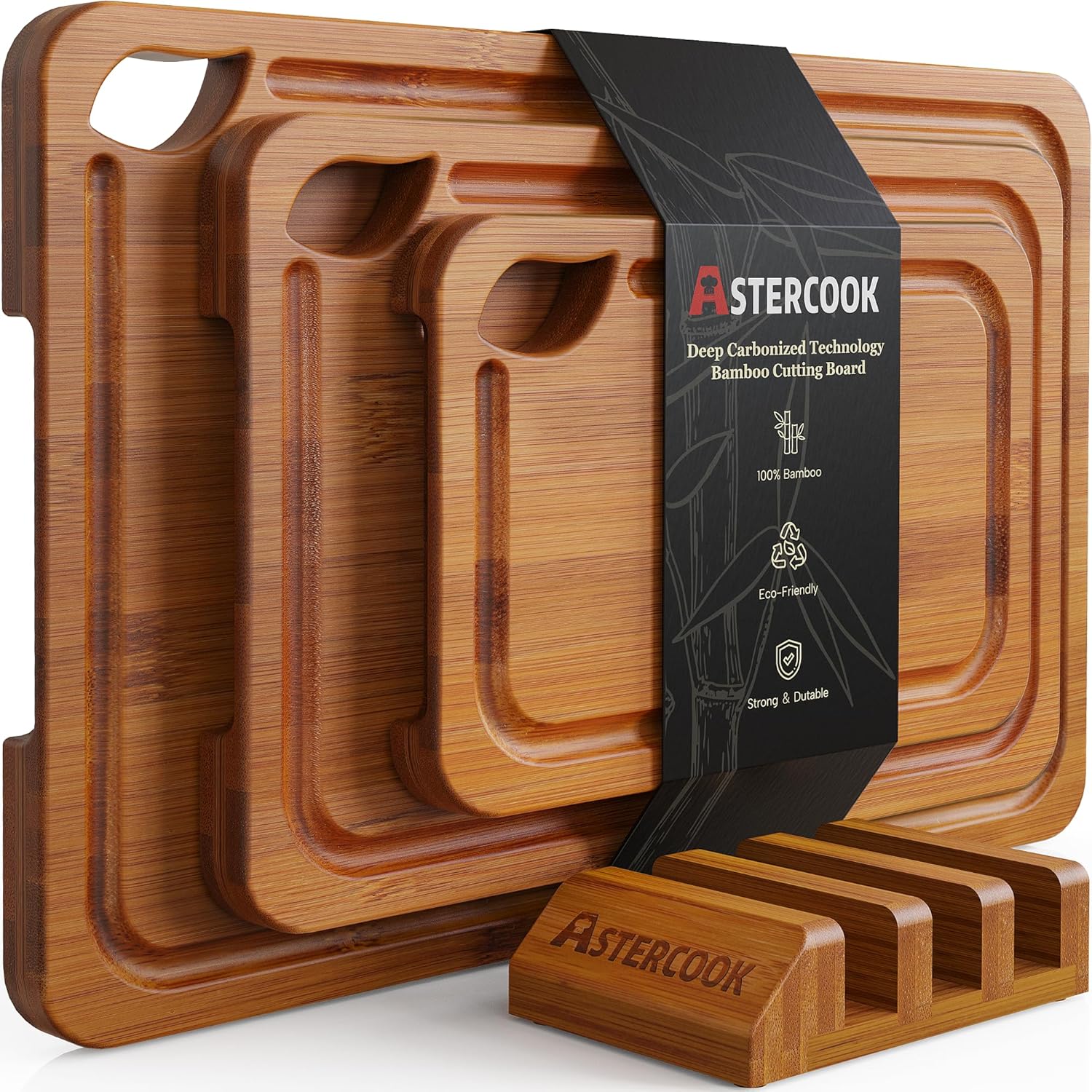
Astercook’s bamboo board features deep carbonization that creates a rich, dark appearance distinguishing it from standard bamboo’s honey tones. The integrated storage stand caught our attention immediately—the board slides into its holder vertically, saving counter space while air-drying between uses. Surface texture feels slightly grippier than lighter bamboo, helping ingredients stay put during knife work. The carbonization process creates a harder surface that resisted our attempts to gouge it with aggressive chopping.
We tested this board extensively with acidic ingredients like citrus and tomatoes, watching for any staining or degradation. The dark carbonized surface showed no discoloration even after weeks of use. The included stand’s compact footprint meant we could store this board next to our knife block rather than laying it flat in a cabinet, keeping it accessible for spontaneous cooking.
Pros:
- Deep carbonization creates harder surface that resists knife scarring effectively
- Integrated storage stand enables vertical drying and space-efficient storage
- Dark coloring masks minor stains and wear patterns better than light bamboo
- Stand design promotes air circulation for faster drying between uses
- Carbonized surface provides slightly grippy texture that stabilizes ingredients

Cons:
- Storage stand adds to overall footprint compared to standalone boards
- Dark surface makes food debris less visible during quick visual inspections
- Carbonization process increases price compared to standard bamboo options
My Recommendation
We recommend the Astercook Deep-Carbonized Bamboo Cutting Board for cooks with limited counter space who need efficient storage solutions. The vertical stand concept works particularly well in galley kitchens or apartments where every square inch matters. We found the dark aesthetic especially appealing in modern kitchen designs where the board doubles as a visual element rather than hiding in storage.
| Best for | Why |
|---|---|
| Small kitchen spaces | Vertical storage maximizes limited counter and cabinet space |
| Modern kitchen aesthetics | Dark carbonized finish complements contemporary design schemes |
| Frequent board users | Accessible stand location encourages regular use over cabinet storage |
Beviss Non-Toxic Cutting Board (Budget-Friendly Plastic)

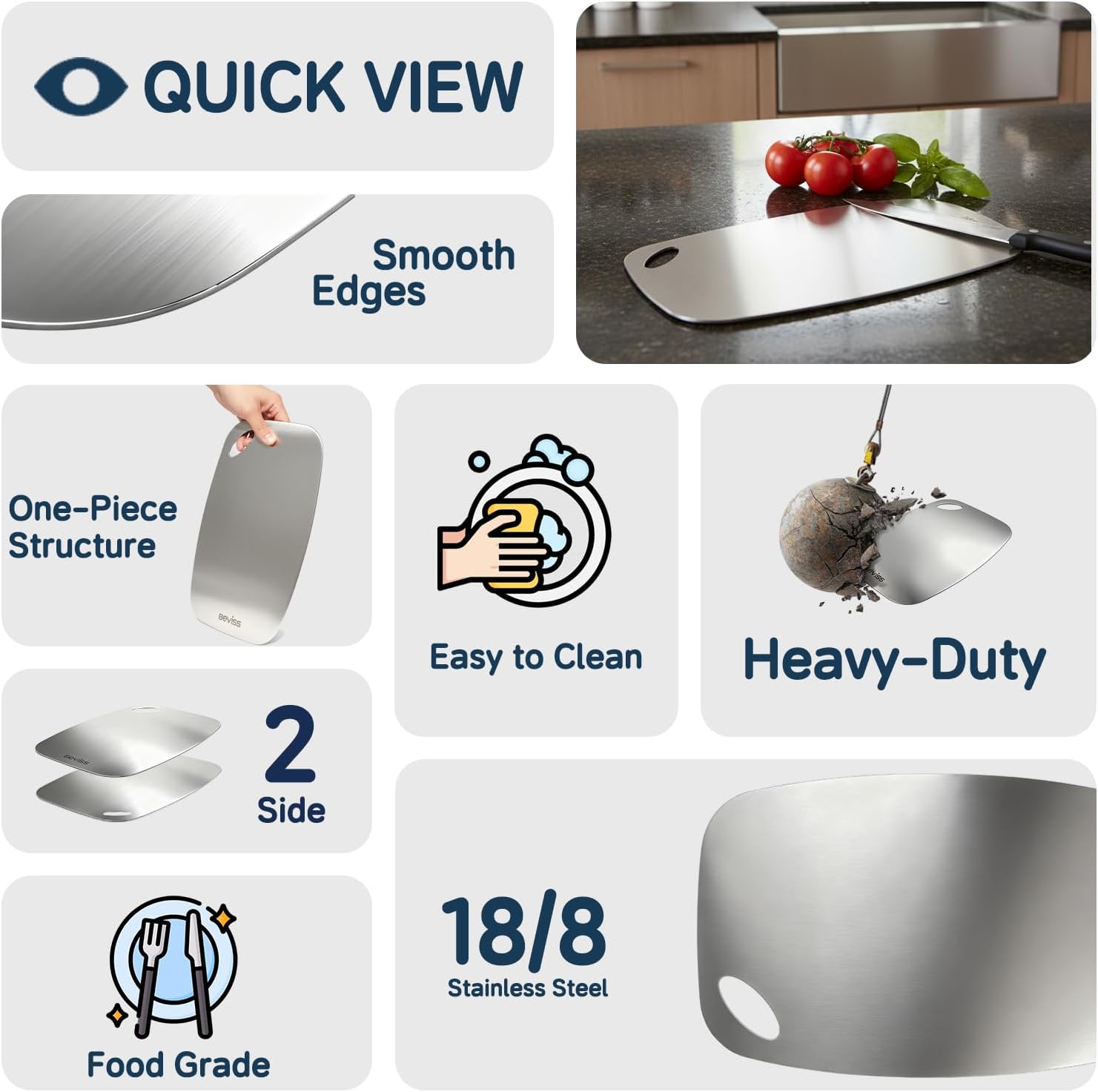
The Beviss board delivers basic plastic cutting board functionality without unnecessary complexity. Its lightweight construction makes single-handed maneuvering effortless—we could flip it over to use both sides mid-prep without setting down our knife. The surface feels smooth but not slippery, providing adequate friction for most cutting tasks. At this price point, we expected compromises, but the board performed surprisingly well during our testing protocols.
We subjected this board to our standard dishwasher torture test, running it through twenty consecutive cycles. While some minor warping appeared around the edges, the board remained functionally flat across its central working area. The non-toxic designation gave us confidence using this for direct food contact, particularly when preparing items for our children.
Pros:
- Extremely affordable pricing makes replacement or multiple-board purchases feasible
- Lightweight design enables easy single-handed manipulation during cooking
- Non-toxic material certification provides peace of mind for family cooking
- Double-sided usability extends effective surface area without extra storage
- Dishwasher compatibility simplifies cleanup routine
Cons:
- Extended dishwasher exposure causes minor edge warping over time
- Lightweight construction requires damp towel underneath for stability
- Basic design lacks features like juice grooves or integrated handles
My Recommendation
We recommend the Beviss Non-Toxic Cutting Board for budget-conscious cooks, college students, or anyone needing a temporary solution. The low price point makes this ideal for buying multiple boards to dedicate to different food categories without significant investment. We found this board particularly suitable for light-duty tasks like sandwich preparation or fruit slicing where premium features aren’t necessary.
| Best for | Why |
|---|---|
| College dormitories | Minimal investment suits temporary living situations perfectly |
| Guest house kitchens | Affordable replacement cost eliminates worry about occasional use |
| Light-duty prep work | Basic functionality covers simple cutting tasks adequately |
Farberware Large Cutting Board (Basic Essentials)
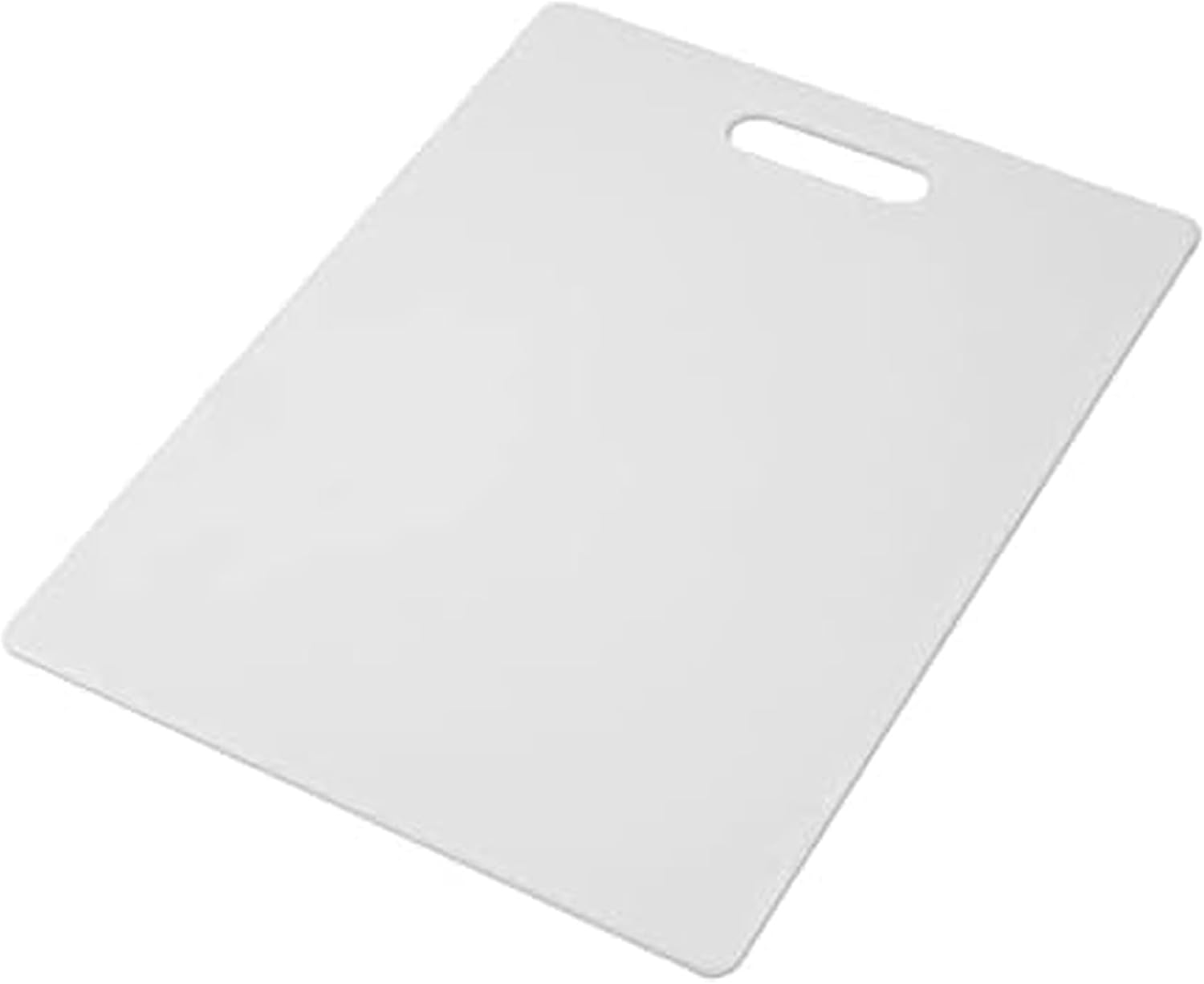
Farberware strips cutting board design to absolute essentials—a flat plastic rectangle without embellishments. The large surface area surprised us given the minimal pricing, providing ample workspace for spreading out ingredients. Surface texture sits somewhere between smooth and textured, offering just enough friction to prevent ingredients from sliding excessively. We noticed the board’s thinness actually benefits storage, sliding easily into narrow cabinet gaps.
During testing, we used this board primarily for bulk vegetable prep where its generous dimensions shined. Dicing three onions simultaneously fit comfortably without crowding. The plastic showed knife marks quickly, but we observed no deep grooves that would trap food particles. Hand washing proved faster than our thicker boards due to the lightweight construction.
Pros:
- Large surface area accommodates bulk ingredient prep comfortably
- Minimal pricing enables guilt-free replacement when wear becomes excessive
- Thin profile fits into tight storage spaces other boards cannot access
- Lightweight construction makes cleanup and repositioning effortless
- Generous dimensions reduce ingredient crowding during multi-item prep

Cons:
- Thin construction creates noticeable flex under heavy chopping pressure
- Basic design omits convenience features like handles or juice grooves
- Surface develops visible knife marks faster than premium alternatives
My Recommendation
We recommend the Farberware Large Cutting Board for cooks who need maximum surface area on a minimal budget. This works particularly well as a supplemental board during holiday cooking when you need extra prep space but don’t want to invest in premium boards that see occasional use. We found this board ideal for tasks where appearance doesn’t matter—bulk meal prep, garden vegetable processing, or outdoor cooking prep.
| Best for | Why |
|---|---|
| Bulk cooking sessions | Large dimensions support processing multiple ingredients simultaneously |
| Outdoor kitchens | Minimal investment suits boards exposed to weather elements |
| Backup board needs | Affordable pricing makes keeping extra boards practical |
Kikcoin Wood Cutting Boards (Traditional Craftsmanship)

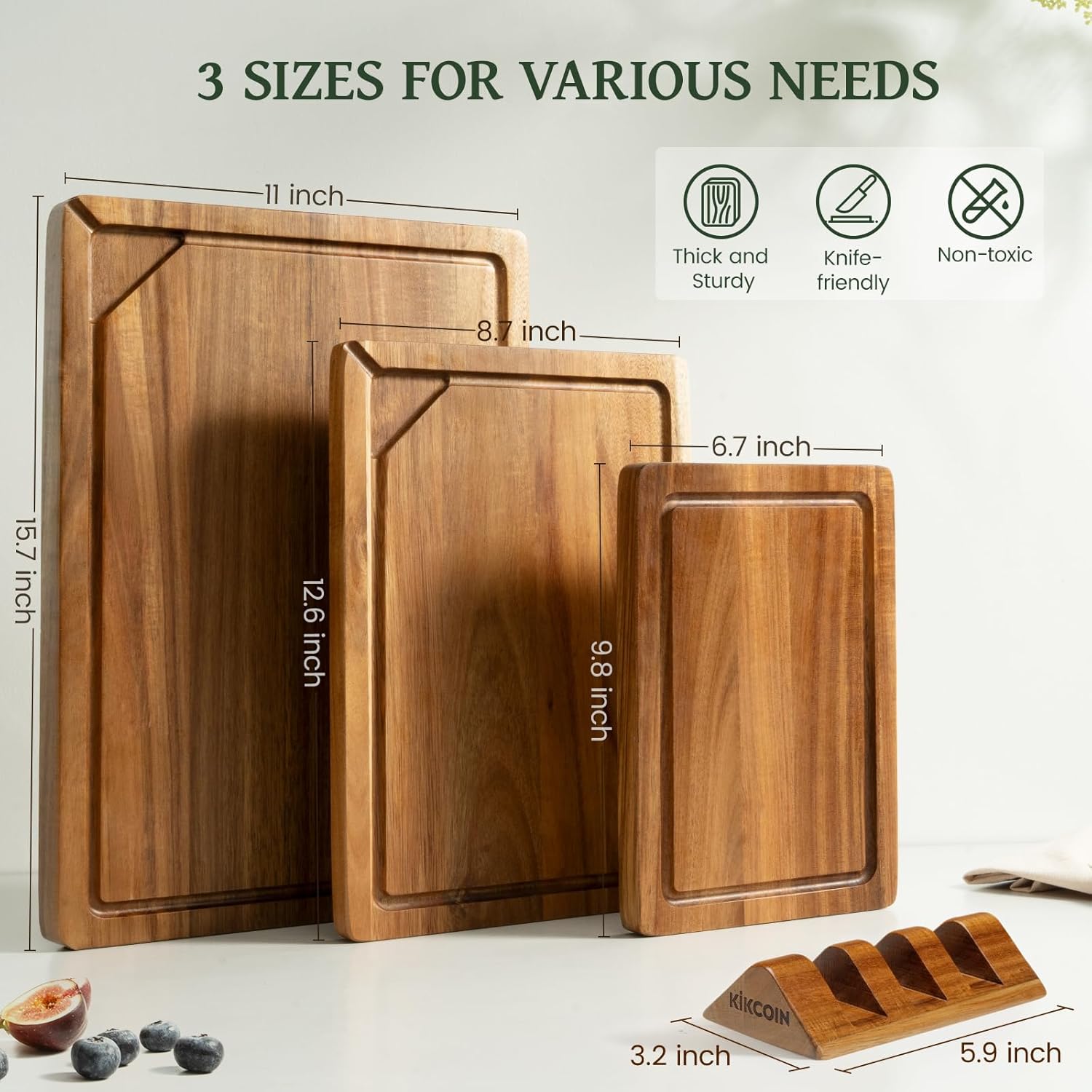
Kikcoin’s wood cutting board brings traditional craftsmanship into modern kitchens with solid wood construction that feels substantial in hand. The natural wood grain creates unique patterns across each board’s surface—no two look identical. We noticed the wood’s warmth immediately upon touching it, a tactile quality plastic and metal boards cannot replicate. The board arrived pre-oiled with a smooth finish that water beads across initially.
Testing this board revealed wood’s inherent knife-friendliness—our blades glided through ingredients with noticeably less resistance than harder surfaces. The wood’s natural antibacterial properties became apparent during our sanitation tests, though we maintained careful hand-washing protocols. Over weeks of use, the board developed a subtle patina that enhanced rather than detracted from its appearance.
Pros:
- Solid wood construction provides natural knife-edge preservation during cutting
- Unique grain patterns create distinctive aesthetic appeal in each board
- Wood’s inherent warmth offers comfortable tactile experience during use
- Natural antibacterial properties supplement regular cleaning routines
- Develops attractive patina over time that reflects individual usage patterns
Cons:
- Requires regular oiling maintenance to prevent drying and cracking
- Hand-washing only—dishwasher exposure damages wood irreparably
- Higher price point reflects quality materials and construction methods
My Recommendation
We recommend the Kikcoin Wood Cutting Board for cooks who appreciate traditional materials and don’t mind maintenance requirements. This board particularly suits knife enthusiasts who want to preserve their blade edges—wood’s softer surface extends sharpness between honing sessions. We found this board most valuable for bread slicing and cooked food cutting where the wood’s aesthetic qualities enhance presentation.
| Best for | Why |
|---|---|
| Knife edge preservation | Softer wood surface minimizes blade dulling compared to harder materials |
| Presentation-focused cooking | Natural beauty allows board to double as serving platter |
| Traditional kitchen aesthetics | Classic wood appearance complements farmhouse and rustic designs |
Buying Guide: Choosing Your Ideal Cutting Board
Material selection fundamentally impacts your cutting board experience. Titanium boards offer unmatched durability and hygiene but produce audible knife contact sounds some cooks find jarring. We noticed titanium excels for raw protein preparation where sanitation concerns outweigh other considerations. Bamboo provides renewable sustainability with natural antibacterial properties, though it requires hand washing and periodic oiling. Wood delivers the most knife-friendly surface but demands the most maintenance commitment.
Size considerations extend beyond just fitting your counter space. We found larger boards reduce ingredient crowding during complex recipes, while smaller boards excel for quick tasks like slicing a single onion. Consider your typical meal preparation scope—cooking for two requires different dimensions than feeding six. Multiple smaller boards often serve varied needs better than one oversized option.
Weight affects both stability and portability. Heavy boards stay planted during aggressive chopping but become challenging to move between stations or clean in the sink. Our testing revealed that boards under two pounds benefit from damp towels underneath for stability, while boards exceeding four pounds essentially become permanent counter fixtures. Match weight to your kitchen workflow—mobile cooks need lighter options, while stationary prep stations benefit from heft.
Maintenance requirements vary dramatically across materials. Dishwasher-safe plastic and titanium boards suit busy households where convenience trumps aesthetics. Wood and bamboo demand hand washing and regular oiling but reward this care with longevity and appearance. We recommend assessing your realistic maintenance commitment before purchasing—an unused premium wood board serves you worse than a well-used plastic alternative.
Final Verdict
The Katuchef Titanium Cutting Board earns our top recommendation for cooks prioritizing hygiene and longevity despite premium pricing. Budget-conscious buyers find exceptional value in the Snuvid Bamboo Set’s three-board variety. The OXO Good Grips Set delivers unmatched convenience for dishwasher-dependent households. Knife enthusiasts appreciate the Kikcoin Wood Board’s edge-preserving properties and traditional craftsmanship. Match your cutting board choice to your cooking style, maintenance willingness, and sanitation priorities rather than chasing trends or premium materials that don’t align with your actual kitchen needs.
Frequently Asked Questions
How often should I replace my cutting board?
Replace cutting boards when deep knife grooves develop that trap food particles despite thorough cleaning, or when warping prevents the board from sitting flat on your counter. Plastic boards typically need replacement every one to two years with regular use, while properly maintained wood and bamboo boards can last five to ten years. Titanium boards essentially last indefinitely. We recommend inspecting boards monthly for deep grooves, persistent stains, or odors that survive cleaning—these indicate replacement time regardless of age.
Can I use the same cutting board for raw meat and vegetables?
Never use the same cutting board for raw meat and ready-to-eat foods without thorough sanitization between uses. We recommend maintaining separate boards for raw proteins and produce, using visual cues like different colors or materials to prevent cross-contamination mistakes. If you must use one board for multiple purposes, prepare ready-to-eat items first, then handle raw proteins last. Sanitize boards that contact raw meat using hot soapy water followed by diluted bleach solution or dishwasher sanitize cycle for plastic and titanium boards.
What’s the best way to remove odors from cutting boards?
Remove cutting board odors by sprinkling coarse salt across the surface, then scrubbing with half a lemon cut-side down. The salt acts as an abrasive while lemon’s acidity neutralizes odor molecules. For stubborn smells, create a paste from baking soda and water, spread it across the board, and let it sit overnight before rinsing. We found this method particularly effective after preparing fish or pungent alliums. Plastic boards benefit from soaking in diluted white vinegar solution for thirty minutes, followed by thorough rinsing and air drying.
Do I need to oil my bamboo or wood cutting board?
Oil bamboo and wood cutting boards monthly with food-grade mineral oil to prevent drying, cracking, and warping. Apply oil generously across all surfaces including edges, let it soak for several hours or overnight, then wipe away excess with a clean cloth. We noticed boards used daily benefit from more frequent oiling, while occasional-use boards need less maintenance. Never use cooking oils like olive or vegetable oil—these turn rancid and create unpleasant odors. Proper oiling extends board life significantly and maintains the wood’s natural moisture balance.
Are glass cutting boards safe for my knives?
Avoid glass cutting boards entirely—their extreme hardness dulls knife edges rapidly and creates dangerous conditions where knives can slip unexpectedly. We tested glass boards and observed immediate blade dulling after just minutes of use, requiring resharpening that would normally take weeks to necessitate. The hard surface also transmits impact force back into your wrist and arm, potentially causing repetitive strain injuries during extended prep sessions. Glass boards serve better as trivets or serving platters rather than actual cutting surfaces. Choose wood, bamboo, plastic, or titanium instead for knife-friendly cutting.