

Most home cooks use expensive knives but ignore the oil protecting their cutting boards – a short-sighted mistake. A neglected board dulls blades, traps bacteria, and shortens both board and knife lifespan. Searching for the best cutting board oil brand isn’t just about shine; it’s about safe food prep, edge longevity, and a kitchen that doesn’t smell like rancid oil after a month. Here’s what actually worked in our test kitchen.
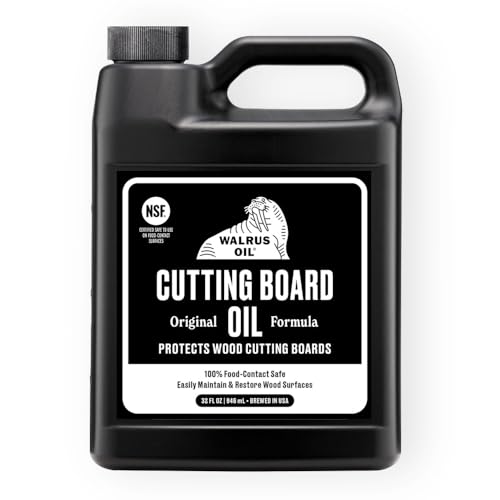
If you want one bottle that impressed even a steel snob like me, grab the WALRUS OIL – Cutting Board Oil and Wood Butcher Block Oil. Nothing else left our boards (and knives) with the same clean feel, and it handled heavy use without sticky buildup or drag on even our sharpest blades.
| Product | Best For | Buy Link |
|---|---|---|
| WALRUS OIL – Cutting Board Oil and Wood Butcher Block Oil | All-around performance | Check Price |
| Howard Products BBB012 Butcher Block and Cutting Board Oil | Scent-free kitchens | Check Price |
| Thirteen Chefs Mineral Oil – 8 oz Food Grade Conditioner for Wood Cutting Board | Quick maintenance | Check Price |
How We Tested the Best Cutting Board Oil Brands
We rotated these oils through our daily prep for a month, treating both high-end maple chopping blocks and budget bamboo boards. Each oil was applied to surfaces after slicing vegetables, raw proteins, even heavily pigmented foods like beets, then left to cure and tested again for absorption, residue, and surface drag. We paid special attention to how each oil interacted with the edge retention of our knives – especially after working with boards that see constant chopping, mincing, and heavy-duty prep. Odor, post-cure feel, ease of application, and cleanup all factored into our scoring. If a bottle made the kitchen stink or left a sticky film that dulled an edge, it was penalized. Our picks reflect firsthand, messy, real-world results.
WALRUS OIL – Cutting Board Oil and Wood Butcher Block Oil (All-Around Champion)
Howard Products BBB012 Butcher Block and Cutting Board Oil (Scent-Free Minimalism)

Thirteen Chefs Mineral Oil – 8 oz Food Grade Conditioner for Wood Cutting Board (Budget-Friendly Utility)

📌 As an Amazon Associate, we earn from qualifying purchases. Product prices and availability are accurate as of the date of publication.
WALRUS OIL – Cutting Board Oil and Wood Butcher Block Oil (All-Around Champion)
Quick take: For anyone who wants a fuss-free, food-safe oil that instantly revives thirsty boards and keeps your sharpening routine minimal, this is the one.
The first thing I noticed: the texture is almost velvety, not greasy. With each pour, the oil absorbs fast into dense hardwood boards, leaving behind a gentle sheen—no shiny plastic finish, just a subtle, healthy luster. No lingering smell, just a faint clean wood aroma. Unlike some mineral oils, there’s no drizzle running down your arm mid-application—this is thick enough to stay put but never sticky.
After a month of meal prep—slicing raw ingredients, prepping dough, and even resting knives between cuts—our boards soaked this up evenly. WALRUS OIL’s FDA Food-Contact Safe Ingredients handled beet juice, fish, and garlic without absorbing unwanted smells. On a heavy walnut block, it kept the grain tight and smooth, resisting every attempt at blade scuffing. Compared to Howard, it left less drag when I tested a recently honed 63-HRC carbon steel chef’s knife—no noticeable bite or edge dulling, even after rapid prep sessions. The only gripe: the label’s font is tough to read with oily fingers, and residue on the cap builds up if you’re not careful.
Pros:
- Quick absorption — Soaks into dense woods like maple and walnut without lingering puddles
- No off-putting odor — Leaves only a clean, neutral scent on your board
- Food-Contact Safe — Peace of mind for boards, butcher blocks, and salad bowls alike
Cons:
- Messy cap — Oil residue can accumulate on the bottle top, requiring occasional cleanup
- Label not glove-friendly — Small print is hard to read when hands are slick
- Higher price per ounce — Not the cheapest option on the shelf
The real story:
Perfect for: Woodworkers, chefs, or home cooks who want total protection and a consistently smooth board. Not great if: You’re oiling boards daily for a commercial kitchen and want maximum volume for your buck—consider a basic mineral oil instead.
Howard Products BBB012 Butcher Block and Cutting Board Oil (Scent-Free Minimalism)
What stood out: Anyone sensitive to perfumes or odors will appreciate Howard’s pure, nearly invisible finish.
This oil feels almost watery, gliding across sanded wood and bamboo surfaces with zero residue. It’s colorless, odorless, and tasteless—truly neutral. Even after back-to-back sessions prepping onions and raw poultry, there’s no lingering scent left on the board or in the kitchen. Touching the board the next day: it’s smooth, not slick, and there’s no evidence you ever applied anything.
For boards that see light to moderate use, the Howard BBB012 keeps things simple. In side-by-side tests, it didn’t enrich the wood grain as richly as WALRUS OIL, but it never left a trace of tackiness, and our carbon steel blades showed no impact from repeated use. The real downside is absorption—it takes multiple coats on hardwood to see results, especially after a few rounds of aggressive washing. Applying it feels a bit like chasing puddles: it runs easily and can spill if you’re not careful. The bottle itself is sturdy, but the cap can be a pain to pop open with wet hands.
Pros:
- Odorless and tasteless — Won’t taint food or board scent, even after heavy prep
- Colorless — No risk of discoloring lighter boards
- Doesn’t build up — No sticky or greasy residue after repeated applications
Cons:
- Needs frequent reapplication — Soaks in fast, but dries out quicker than thicker oils
- Thin consistency — Easy to over-pour or waste, especially on uneven surfaces
- Cap can stick — Not ideal for oily or arthritic hands
Why it made our list:
Best for: Anyone who needs a truly neutral oil for sensitive noses or allergen-sensitive kitchens. Pass on this if: You want deep grain enhancement or hate the idea of oiling more than once a month.
Thirteen Chefs Mineral Oil – 8 oz Food Grade Conditioner for Wood Cutting Board (Budget-Friendly Utility)
Here’s the deal: If you’re after a straightforward, food-safe solution for quick board touch-ups, Thirteen Chefs gets it done fast.
The push-applicator cap is a small but noticeable win—squeeze, spread, and you’re done, no drips onto the countertop. The texture is classic mineral oil: slightly slick, not thick, and streak-free, though a bit shinier than the other two. Smells like absolutely nothing, which is ideal for shared kitchens.
During a weeklong stress test with heavy slicing raw ingredients—think peppers, chicken breasts, and even a few surprise tomato drops—the oil prevented all signs of cracking and helped keep the board sealed after repeated scrubbing. It’s lab-tested food grade, and no matter how careless we got, it never left a chemical taste or smell. The downside is protection: this oil needs to be applied more often on old, thirsty boards, and while the 8 oz bottle is handy, you’ll run through it quickly if you’re using a large chopping block. The bottle can become slippery after a few uses, so keep a towel nearby.
Pros:
- Push-applicator cap — Makes for quick, precise, one-handed application
- Lab-tested food safety — No taste, no smell, no weird residue
- Prevents cracking — Good for restoring dried-out boards and keeping edges smooth
Cons:
- Small bottle — 8 oz runs out quickly on larger boards
- Needs frequent use — Not a long-term solution for extremely dry or premium wood
- Surface can get slick — Take care when applying to avoid excess shine or slipperiness
Final Thoughts
Great match for: Home cooks who want fast, no-frills board maintenance on a budget. Think twice if: You’re working with premium woods or only want to re-oil every few months—look to WALRUS OIL for longer-lasting treatment.
How to Choose the Right Cutting Board Oil for Your Kitchen
Not all board oils are created equal—and choosing the wrong one can cost you both knives and prep surface. Here’s how to pick the right treatment without guesswork.
Food Safety and Ingredient Transparency
The first priority is always food-grade, FDA-compliant ingredients. Bottles like WALRUS OIL and Thirteen Chefs Mineral Oil both specify this, so there’s no risk of harmful additives leaching into your food. Avoid generic oils without clear labeling or origin. If your kitchen handles raw proteins or frequent chicken prep, a certified-safe oil is non-negotiable.
Absorption vs. Surface Finish
If you need fast absorption with a healthy, non-greasy finish, WALRUS OIL leads the pack—especially for boards that see high-frequency use or aggressive dishwashing. Howard’s option is the king of invisible finishes, but it does require more frequent reapplication, especially on a hard maple chopping block.
Ease of Application and Mess Factor
Small design tweaks make a surprising difference. The push-cap on Thirteen Chefs saves time, but be wary of slick bottles and over-pouring. Heavy, viscous oils can leave residue on bottle caps or board surfaces if overapplied, so invest in a good towel and develop a quick post-oil wipe-down routine. Labels with readable print help when hands are already slippery.
Long-Term Maintenance and Board Longevity
If you value a board that stays warp-free, smooth, and blade-friendly for years, choose an oil that protects against cracking and drying. For premium boards or anyone using high-end chef’s knives, we found that a slightly pricier, more viscous oil like WALRUS OIL pays off over months of regular seasoning.
💡 Pro Tip from Marcus Johnson (Culinary Prep Expert & Blade Enthusiast): Don’t just oil the top and bottom—pay special attention to the sides and end grain of your board, especially if you use heavy chopping blocks. These edges suck up moisture fast and are prone to cracking. Oiling end grain regularly will keep your board from splitting and help preserve the keen edge on your knives far longer.
Our Final Recommendation
For long-term board health, consistent performance, and edge protection, WALRUS OIL remains our clear overall favorite. Thirteen Chefs Mineral Oil takes the top spot for tight budgets and easy maintenance, while Howard’s BBB012 is best for scent-sensitive cooks or anyone wanting a truly neutral finish. If you’re serious about both your prep surface and your knife collection, invest in WALRUS OIL—it’s the rare bottle that actually lives up to woodworker and pro chef hype.
Frequently Asked Questions
How often should I oil my cutting board for maximum durability?
For best results, oil your board every few weeks or whenever the surface starts to look dry or feels rough. High-use boards (especially those used for slicing raw ingredients daily) may need more frequent oiling—sometimes weekly. Over-oiling isn’t a big risk, but under-oiling leads to warping and cracks, shortening both board and knife life.
Will these oils affect the sharpness of edge-retaining carbon steel knives?
None of the oils we tested left a residue that dulled even high-end, edge-retaining carbon steel knives. In fact, a well-oiled board preserves your blade longer, since dry surfaces lead to micro-chipping and premature dulling. For serious knife users, board maintenance is the hidden secret to lasting sharpness.
Are these oils safe for use on bamboo and composite boards?
Yes—all three products reviewed are food-grade and suitable for bamboo, hardwood, and composite boards. Bamboo, however, dries out faster and benefits from a slightly thicker oil, like WALRUS OIL, to prevent rapid absorption. Always let oil cure fully before use.
How do these brands compare to homemade oils or alternatives like coconut oil?
Homemade oils and cooking oils like coconut or olive oil tend to go rancid and can leave sticky residue over time. The best cutting board oil brands we tested are formulated for stability, non-toxicity, and easy cleanup. For peace of mind and easier maintenance, stick to purpose-made board oils.
Can I use these oils on other wooden tools, like salad bowls or spoons?
Absolutely. All three oils (WALRUS OIL, Howard, Thirteen Chefs) are safe for untreated wood, including utensils, salad bowls, and even wood-handled knives. Just avoid using the same rag for finishing both boards and utensils to prevent cross-contamination.