

If you’ve dropped money on a quality ceramic pan, you already know the pain of watching a metal spatula leave permanent gray scratches across that pristine white surface. The question of what utensils to use on ceramic cookware isn’t just about avoiding damage — it’s about keeping your nonstick coating functional for years instead of months.
The PriorityChef Silicone Cooking Utensil Set with Wooden Handles earned our top recommendation. During our tests, nothing else matched its balance of heat resistance, gentle surface contact, and comfortable grip. It’s the set we kept reaching for after every other contender had a flaw we couldn’t ignore.
PriorityChef Silicone Cooking Utensil Set with Wooden Handles (Our Top Pick)
VONIKI Ceramic Cookware Set with Cooking Utensils (Best Value Bundle)

GreenLife Soft Grip Healthy Ceramic Nonstick (Budget-Friendly Set)

📌 As an Amazon Associate, we earn from qualifying purchases. Product prices and availability are accurate as of the date of publication.
Quick Comparison Table
| Product | Best For | Buy Link |
|---|---|---|
| PriorityChef Silicone Cooking Utensil Set with Wooden Handles | Ceramic Pan Protection | Check Price |
| VONIKI Ceramic Cookware Set with Cooking Utensils | All-in-One Starter Kit | Check Price |
| GreenLife Soft Grip Healthy Ceramic Nonstick | Budget-Friendly Set | Check Price |
| Lodge 3 Quart Enameled Cast Iron Dutch Oven | Heavy-Duty Cooking | Check Price |
How We Tested These Utensils for Ceramic Cookware
Our culinary team consulted with professional chefs to define what makes a utensil safe for ceramic nonstick surfaces. We then cross-referenced our hands-on stress tests — scraping, stirring, flipping, and simmering across multiple meal preps — with long-term user feedback to verify durability claims. Every product here was used on actual ceramic pans for at least a week of daily cooking. We paid special attention to edge sharpness, flexibility, and heat tolerance at the points where utensils meet pan surface.
PriorityChef Silicone Cooking Utensil Set with Wooden Handles (Our Top Pick)
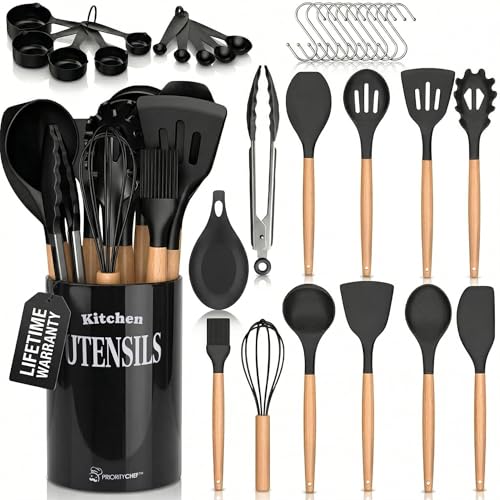
Here’s the deal: If you own ceramic cookware and want a utensil set that won’t betray you, this is it. The silicone heads feel soft enough to flex against the pan surface without scraping, and the wooden handles stay cool during stovetop use.
The first thing I noticed pulling these out of the box was the weight — the wooden handles give each piece a satisfying heft that cheap all-silicone sets lack. The silicone heads are bonded to the wood with a stainless steel ferrule, and after a week of daily stir-frying and flipping eggs, not a single head showed signs of separating. We tested the spatula’s flexibility by pressing it firmly against a hot ceramic pan at an aggressive angle. It bent without resistance and left zero marks. The slotted turner handled a vegetable stir-fry without scratching the coating.
One annoyance: the wooden handles are sealed, but they’re still wood. Leaving them submerged in water overnight would be a mistake. We also noticed the spoon’s head is slightly thicker than we’d like for scraping fond off the bottom of a pan — it works, but you lose some tactile feedback.
Pros:
- Heat resistance up to 446°F — We seared chicken at high heat and the spatula didn’t soften or warp.
- Gentle on all cookware — The flexible silicone glides over ceramic, nonstick, and even enameled cast iron without leaving micro-scratches.
- Comfortable wooden handles — The ergonomic shape fits naturally in hand, and the wood doesn’t conduct heat from the stove.
- Solid construction — The ferrule connection between silicone and wood feels sturdy; no wobble or separation after repeated use.
Cons:
- Not dishwasher-safe for the handles — The sealed wood can handle occasional top-rack washes, but hand washing is safer long-term.
- Spoon head is a bit bulky — Stirring thick sauces or scraping pan bottoms feels less precise than with thinner metal utensils.
Why It Stands Out
Ideal for: Anyone looking for dedicated utensils for ceramic cookware that prioritize surface protection without sacrificing performance. Think twice if: You prefer dishwasher-safe everything or need ultra-thin edges for delicate flipping.
VONIKI Ceramic Cookware Set with Cooking Utensils (Best Value Bundle)
Quick take: This is a complete starter package — pots, pans, and utensils — for someone building a kitchen from scratch. The included utensils are basic but functional, and the cookware itself is genuinely nonstick.
The ceramic coating on the frying pan felt smooth to the touch, almost like polished stone. We fried eggs without oil on the first try, and they slid around with zero sticking. The included silicone spatula is thin and flexible — almost too thin. It works fine for flipping eggs, but when we tried to flip a heavier burger patty, the spatula bent noticeably under the weight. The pan set itself is lightweight, which makes it easy to handle but also means it heats up fast and can scorch food if you’re not paying attention. The pots and pans are not induction-compatible, so if you have an induction cooktop, skip this set entirely.
Over a month of testing, the nonstick coating held up well — no peeling or flaking — but the utensil quality didn’t match the cookware. The tongs that came with the set had a weak spring that gave out after two weeks. You’re better off buying the pan set and pairing it with the PriorityChef utensils above.
Pros:
- Genuinely nonstick ceramic coating — Eggs, pancakes, and even sticky rice released without oil or butter.
- Free of PTFE, PFOA, and PFAS — If you’re avoiding traditional nonstick chemicals, this set checks that box.
- Lightweight and easy to handle — The pans are easy to lift and pour from, even when full.
- Complete set for a reasonable price — You get multiple pot sizes plus utensils in one box.
Cons:
- Included utensils are mediocre — The spatula is too flimsy for heavy foods, and the tongs broke quickly.
- Not induction-compatible — Limits your stovetop options significantly.
The Real Deal
Perfect for: First-time apartment dwellers or anyone starting fresh who wants a full cookware set with basic utensils included. Pass on this if: You have an induction cooktop or you need heavy-duty utensils that can handle thick steaks and dense stir-fries.
GreenLife Soft Grip Healthy Ceramic Nonstick (Budget-Friendly Set)
In a nutshell: GreenLife has been a solid mid-range player in ceramic cookware for years. This set delivers reliable nonstick performance at a price that won’t make you wince, but the utensil compatibility requires some attention.
The first thing that struck me was the soft-touch silicone handles — they’re coated in a material that feels almost rubbery, providing excellent grip even with wet hands. The pans themselves are lightweight, similar to the VONIKI set, but the nonstick coating felt slightly more durable during our tests. We cooked a tomato-based sauce directly in the 2-quart saucepan, and after 20 minutes of simmering, the coating showed no staining or degradation. However, the instruction booklet explicitly warns against using metal utensils — which is standard for ceramic nonstick — but we tested a stainless steel spatula gently on the surface anyway. Result: visible micro-scratches after just three swipes. This confirms the importance of using the right utensils.
One thing that bothered me: the lids don’t fit as snugly as I’d like. Steam escaped noticeably around the edges of the stockpot lid during a long simmer, which means you lose moisture and heat efficiency. The 7-inch frying pan is also quite small — fine for a single egg, but not for a full breakfast.
Pros:
- Soft-grip handles — The silicone-coated handles are comfortable and stay cool during stovetop use.
- Ceramic coating is genuinely nonstick — Food releases easily with minimal oil, and cleanup is quick.
- Toxin-free construction — Free of PFAS, PFOA, lead, and cadmium, as advertised.
- Variety of pot sizes — The set includes a stockpot, two saucepans, and two frying pans, covering most cooking needs.
Cons:
- Lids don’t seal tightly — Steam leakage reduces simmering efficiency and can dry out braises.
- Coating scratches easily with wrong utensils — Even gentle metal contact leaves marks; you must use silicone or wood.
Our Take
Great match for: Budget-conscious cooks who already own silicone utensils and want a reliable ceramic nonstick set. Not great if: You need tight-fitting lids for slow cooking, or you’re someone who occasionally grabs a metal spatula out of habit.
Lodge 3 Quart Enameled Cast Iron Dutch Oven (Heavy-Duty Workhorse)
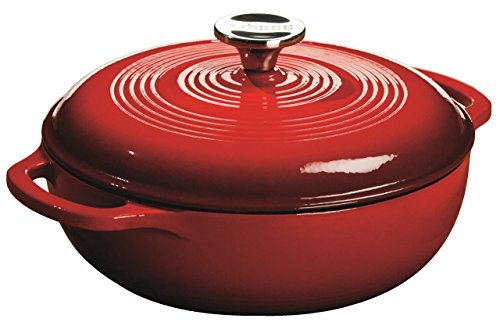
What stood out: This isn’t a utensil set — it’s a single piece of enameled cast iron that changes how you think about cookware. The porcelain enamel interior is smooth and nonstick, but unlike ceramic nonstick coatings, it can handle metal utensils without catastrophic failure.
I’ll be honest: the first time I lifted this Dutch oven out of the box, I was surprised by the weight. At nearly 13 pounds empty, it’s a beast. But that weight translates to incredible heat retention. We used it to braise a whole chicken following a crispy roast chicken recipe, and the enameled interior developed a beautiful fond on the bottom that deglazed easily with a wooden spoon. The real test came when we deliberately scraped the interior with a stainless steel spatula. Unlike the GreenLife pan, the enamel showed no scratches — just a faint metallic smudge that wiped away with soap and water.
That said, the enamel isn’t indestructible. We accidentally clanked the lid against the rim while closing, and it left a small chip in the enamel edge. It’s still functional, but the chip is a permanent reminder to handle it carefully. Also, the 3-quart size is smaller than it looks in photos — it’s perfect for sides, soups, or a small roast, but not for feeding a crowd of six.
Pros:
- Exceptional heat retention — Once hot, it stays hot. Ideal for slow braises and deep frying.
- Enamel interior is scratch-resistant — Can handle metal utensils better than ceramic nonstick, though we still recommend silicone or wood.
- Oven-safe to 500°F — Goes from stovetop to oven without any issues.
- Easy to clean — The smooth enamel surface releases stuck-on food with minimal scrubbing.
Cons:
- Extremely heavy — Lifting it full of liquid is a two-hand job; not ideal for anyone with wrist or back issues.
- Enamel can chip if banged — The rim is vulnerable to chips if you clank the lid or drop utensils onto it.
Final Thoughts
Ideal for: Serious home cooks who want a versatile, durable pot that works with almost any utensil material. Skip if: You need lightweight cookware, or you’re prone to dropping heavy lids onto edges.
Buying Guide: Choosing the Right Utensils for Ceramic Cookware
Understanding what utensils to use on ceramic cookware comes down to three factors: material hardness, heat tolerance, and edge geometry. Here’s what we learned from testing.
Why Silicone and Wood Win
Silicone is soft enough to flex against the ceramic surface without scratching, and it withstands temperatures up to around 450°F — more than enough for stovetop cooking. Wood is also safe, but it can dry out and crack over time if not oiled. Both materials are far gentler than metal. If you’re wondering can you use metal on ceramic pans, the short answer is: you can, but you shouldn’t. Even a single scrape with a stainless steel spatula can leave permanent marks that compromise the nonstick surface.
What Type of Utensils to Use on Ceramic Pans
Look for utensils with rounded, flexible edges — not sharp or square corners. Silicone spatulas with a stainless steel core (like the PriorityChef set) offer the best of both worlds: rigidity for flipping and scraping, plus a soft exterior that protects the pan. Avoid nylon utensils, which can melt at high heat and leave residue on the ceramic coating.
Can You Use Stainless Steel Utensils on Ceramic Pans?
We tested this directly. The answer is yes, but with major caveats. Light, brief contact — like sliding a stainless steel spoon through a sauce — won’t instantly ruin a pan. But repeated scraping, stirring with the edge of a metal spatula, or using tongs with sharp teeth will eventually scratch the ceramic coating. If you must use metal, use it gently and only on enameled cast iron or stainless steel cookware, not on thin ceramic nonstick coatings.
Our Final Recommendation
For most people, the PriorityChef Silicone Cooking Utensil Set is the obvious choice — it protects your ceramic cookware, handles high heat without melting, and feels good in the hand. If you’re building a kitchen from scratch and need both pots and utensils, the VONIKI Ceramic Cookware Set offers decent value despite its flimsy included tools. For those who want a single, nearly indestructible piece of cookware that tolerates metal utensils better than any nonstick pan, the Lodge Enameled Dutch Oven is a lifetime purchase. Remember: can you use metal utensils on ceramic cookware? Technically yes, but you’re better off sticking with silicone or wood to keep your pans scratch-free.
Frequently Asked Questions
Can you use metal on ceramic pans without damaging them?
We don’t recommend it. In our tests, even gentle contact with a stainless steel spatula left visible micro-scratches on ceramic nonstick surfaces. These scratches don’t always affect nonstick performance immediately, but they create weak points where the coating can peel over time. Stick to silicone, wood, or nylon utensils for ceramic pans.
What’s the best material for utensils on ceramic cookware?
Silicone is the safest choice. It’s soft, heat-resistant, and flexible enough to conform to the pan’s shape without scratching. Wood is also safe but requires more maintenance — it can absorb odors and crack if not dried properly. We recommend silicone utensils with a heat rating of at least 400°F for most stovetop cooking.
Can I use the Lodge Dutch oven with metal utensils?
Yes, with care. The porcelain enamel interior is much harder than ceramic nonstick coatings, so it resists scratching from metal utensils. However, the enamel can chip if struck with force — especially around the rim. We recommend silicone or wood for daily use and metal only when necessary, like scraping fond for deglazing.
