

I’ll be honest with you. There are some recipes I make once and forget. Then there are recipes that just stay with you. This Sweet Potato, Chickpea and Spinach Coconut Curry is firmly in the second category.
It’s the kind of meal that makes your whole kitchen smell incredible. The kind where someone walks in mid-cook and immediately asks, “What are you making?” It’s warming, filling, and deeply satisfying. And somehow, it still manages to be really easy to put together.
No fancy gadgets. No obscure ingredients. Just one pot, simple pantry staples, and about 35 minutes of your time.
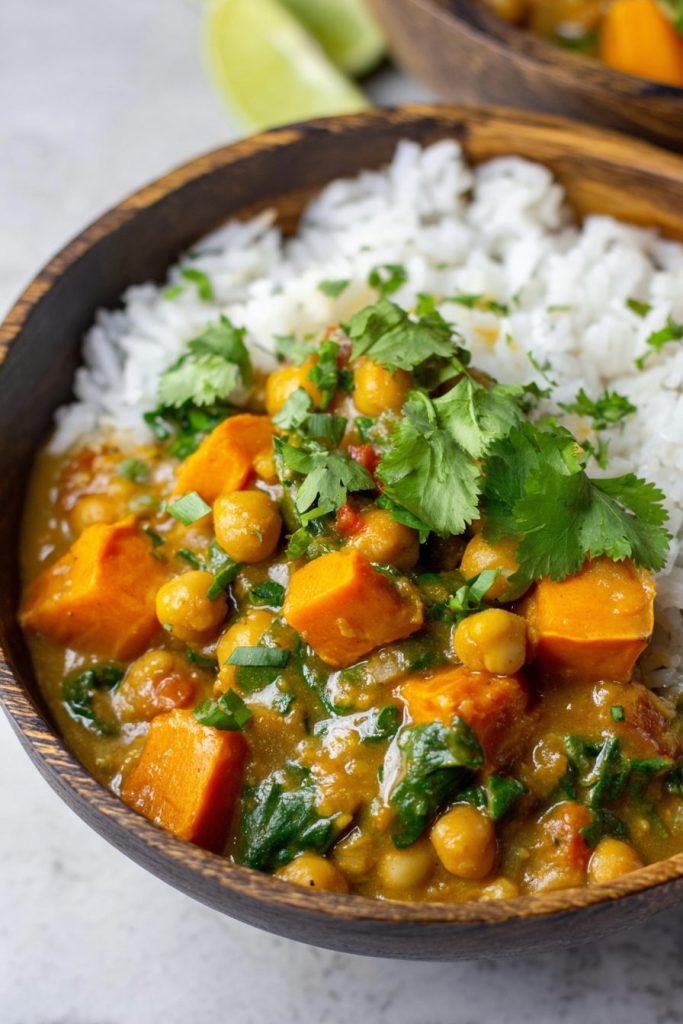
Why This Curry Tastes So Good
Here’s the thing about curry. The secret isn’t in one magical ingredient. It’s in how you build the flavors, one layer at a time.
This recipe starts with whole cumin seeds toasted in a hot pan. That single step alone fills your kitchen with this nutty, smoky fragrance that tells you something good is coming. From there, you sweat the onions low and slow until they’re soft and almost sweet. Then the dry spices go in and bloom in the heat, releasing oils that would otherwise stay locked inside the powder.
By the time you add the coconut milk and vegetables, you’ve already built a seriously rich base.
The sweet potato brings a natural earthiness. The chickpeas add bulk and a satisfying bite. The coconut milk pulls it all together into something creamy and smooth. And the baby spinach? Stirred in right at the end, it stays bright green and adds just enough freshness to balance the richness of the sauce.
Then you finish with a squeeze of lime. Trust me on this one. Don’t skip it.

What You’ll Need
Good news. The ingredients list here is short and simple. If you cook regularly, there’s a strong chance most of this is already in your pantry or fridge right now.
| Prep Time | Cook Time | Total Time | Servings | Difficulty |
|---|---|---|---|---|
| 10 minutes | 25 minutes | 35 minutes | 4 to 6 | Easy |
| Ingredient | Quantity | Notes |
|---|---|---|
| Virgin coconut oil | 4 tsp (20ml) | Swap with water for a completely oil-free version |
| Cumin seeds | 1 tbsp (15ml) | Whole seeds only, toast until fragrant |
| Onion | 1 medium (about 2 cups / 500ml) | Finely chopped |
| Garlic | 3 large cloves | Freshly minced |
| Fresh ginger | 4 tsp (20ml) | Grated; ground ginger works if that’s what you have |
| Ground turmeric | 1 tsp (5ml) | Earthy flavor and beautiful golden color |
| Ground coriander | 1 tsp (5ml) | Warm, slightly citrusy spice |
| Red pepper flakes | 1/4 tsp (or to taste) | Adjust based on how much heat you like |
| Sweet potato | 1 medium/large (about 3 cups / 750ml) | Peeled, cut into 1/4 to 1/2 inch dice |
| Chickpeas | 1 can (14 oz / 398ml) | Drained and rinsed; or 1.5 cups cooked from scratch |
| Diced tomatoes | 1 can (14 oz / 398ml) | Keep all the juices, don’t drain |
| Light coconut milk | 1 can (14 oz / 400ml) | Use full-fat for a richer, thicker sauce |
| Baby spinach | 1 package (5 oz / 142g) | Fresh; goes in right at the end |
| Freshly ground black pepper | To taste | Season at the finish |
| Cooked basmati rice, quinoa, millet, or sorghum | As needed | For serving |
| Fresh cilantro | To taste | Optional garnish |
| Unsweetened shredded coconut flakes | To taste | Optional garnish |
| Lime wedges | As desired | Highly recommended, adds real brightness |
Oil or No Oil? Your Call
I’ve made this recipe both ways and honestly? The water version works just as well for day-to-day cooking. You get the same softened onion, the same bloomed spices, and nearly the same result in the bowl.
That said, if you want that subtle richness and you don’t mind the extra fat, the 4 teaspoons of virgin coconut oil adds a gentle creaminess to the base that’s hard to argue with.
Light Coconut Milk vs. Full-Fat
Light coconut milk gives you a saucy, slightly thinner result. Still creamy, still delicious, but a little lighter on the palate.
Full-fat coconut milk? That’s for the nights you want something truly indulgent. The sauce gets richer, thicker, and almost velvety. Both work. It just depends on what you’re going for.
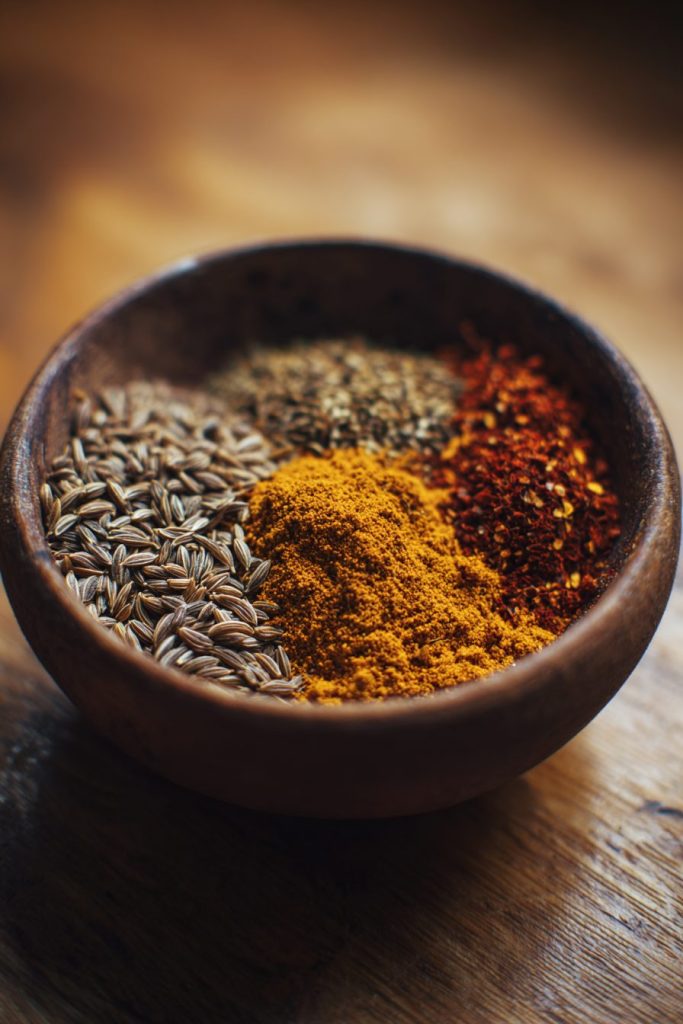
How to Make It: Step by Step
Once your ingredients are prepped and ready to go, this curry moves fast. I mean it. You do not want to be mid-chop when the cumin seeds are toasting. They go from golden and fragrant to burnt in about thirty seconds.
So do yourself a favor. Chop everything first. Measure your spices. Open your cans. Then turn on the heat.
Here’s exactly how it goes:
- Warm a large saucepan over medium heat. Add your water or coconut oil and let it heat through. Drop in a single cumin seed to test. If it sizzles on contact, you’re ready to go.
- Add all the cumin seeds to the pan. Toast them for about one minute, stirring now and then, until they darken slightly and smell nutty and aromatic. Watch them closely.
- Immediately add the finely chopped onion and a pinch of salt. Stir to coat, then cook for three to five minutes over medium heat until the onion softens and turns translucent.
- Add the minced garlic, grated ginger, ground turmeric, ground coriander, and red pepper flakes. Stir everything together and cook for two minutes until the garlic softens and the spice mixture smells deeply fragrant.
- Add the diced sweet potato, drained chickpeas, diced tomatoes with all their juices, and the light coconut milk. Stir well until everything is combined and coated in the sauce.
- Cover the pan and simmer over medium heat for 20 to 30 minutes, until the sweet potato is completely soft and a fork slides through with zero resistance.
- Optional but worth it: Take a potato masher and mash roughly one-third of the curry right there in the pot. This thickens the sauce naturally. No flour, no cornstarch. Just the starch from the potato and chickpeas doing the work.
- Add the baby spinach and stir gently. Cook for one to two minutes until the spinach is wilted and still bright green.
- Season with freshly ground black pepper and salt to taste.
- Ladle the curry over your cooked grain of choice. Top with fresh cilantro, a pinch of shredded coconut if you like, and offer lime wedges on the side.
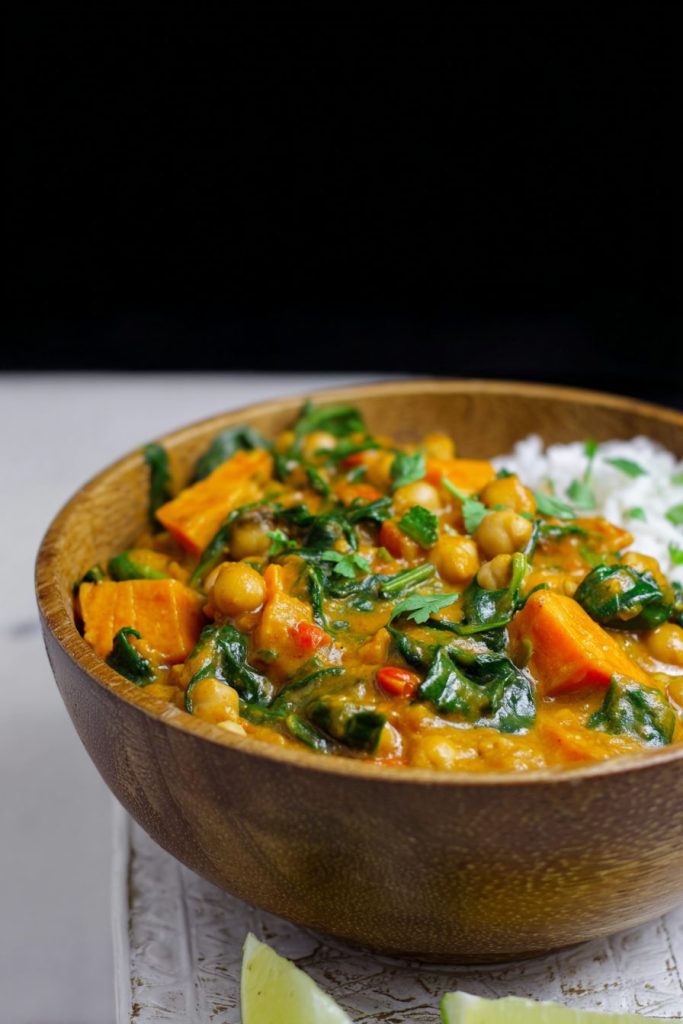
Tips That Actually Make a Difference
I’ve made this curry enough times to know what separates a good batch from a great one. Here’s what I’ve learned:
Prep everything before you cook. Seriously, this is the one non-negotiable rule. The recipe moves quickly once you start, and you cannot afford to be scrambling for your garlic while cumin seeds are burning in the pan. Set everything out like a cooking show host. It makes the process calm and enjoyable.
Cut the sweet potato small. Aim for 1/4 to 1/2 inch dice. Smaller pieces cook through properly in the 20 to 30 minute window. Bigger chunks often stay firm in the center even when the outside feels soft. Nobody wants that surprise.
Don’t skip the lime. A squeeze of fresh lime at the end is not decoration. It cuts through the fat in the coconut milk and makes every single flavor in the pot taste sharper and more alive. It’s a small step with a noticeable difference.
Mash for thickness. If your sauce feels too thin, grab that potato masher before reaching for any thickening powder. Mashing one-third of the curry creates the perfect consistency using nothing but what’s already in the pot.
Leftovers taste better. I’ve tested this many times. The curry the next day is richer and more deeply flavored than the night it’s made. The spices settle, the sauce tightens slightly, and everything just tastes more developed. Make extra on purpose.
Swaps and Variations Worth Trying
This recipe is forgiving. If you don’t have something, there’s almost always a reasonable substitute. Here are the ones I’ve personally tried:
- Oil-free version: Use water or vegetable broth instead of coconut oil. Works perfectly every time.
- Greens swap: Kale or Swiss chard can stand in for baby spinach. Add them a couple of minutes earlier since they need longer to soften.
- Butternut squash: Swap it for the sweet potato. Same dice size, similar cooking time, slightly nuttier flavor.
- Extra protein: Add firm tofu cubes along with the chickpeas for more substance.
- More heat: Double the red pepper flakes, or add a pinch of cayenne when you add the dry spices.
- Sweetness balance: If the heat feels too sharp, a small amount of coconut sugar stirred in at the end smooths everything out beautifully.
How to Serve It
This curry is thick and hearty. Think stew-like, not soup-like. So it needs a good base underneath it.
Basmati rice is the classic choice. Its light, slightly floral quality is a perfect match for a bold, spiced sauce. Quinoa adds protein and a nutty flavor. Millet is mild and gentle, letting the curry do all the talking. Sorghum has a chewy texture that pairs especially well with a thick, rich sauce like this one.
For the toppings, fresh cilantro is basically essential. It adds color, fragrance, and a fresh note that the dish really benefits from. Unsweetened shredded coconut adds a little sweetness and texture. And the lime wedge? Keep it on the side so everyone can squeeze to their own preference.
Storage
Refrigerator: Cool the curry completely before storing it in an airtight container. It keeps well for four to five days. Reheat gently on the stovetop or in the microwave. If it thickens up overnight, just add a small splash of water when reheating.
Freezer: This curry freezes well. Portion it into freezer-safe containers and store for up to one month. Thaw overnight in the fridge, then reheat slowly over medium-low heat, stirring often.
Important: Always store your cooked grains separately from the curry. If you combine them before storing, the grains absorb too much liquid and turn mushy by the next day.
Frequently Asked Questions
Can I use canned chickpeas directly, or do I need to cook them first?
Canned chickpeas go straight in, no pre-cooking needed. Just drain them and rinse under cold water. They’ll continue cooking during the simmer and absorb all the flavors in the sauce. If you’re starting from dried chickpeas, cook them fully before adding.
My curry sauce came out too thin. What do I do?
Go for the potato masher first. Once the sweet potato is tender, mash about one-third of the curry right in the pot. The starch does the thickening naturally. If it still feels too loose, remove the lid for the last five to ten minutes and let it reduce over medium heat.
Can I make this ahead of time?
Yes, and I’d actually encourage it. The curry tastes noticeably better the next day. The spices deepen, the sauce thickens slightly, and everything melds together in a way that fresh-cooked curry just doesn’t quite achieve. Make a full batch, store it in the fridge, and you have dinner sorted for several days.
What can I use instead of spinach?
Kale is the go-to substitute. It holds its shape better and has a slightly heartier, more robust flavor. Swiss chard, collard greens, or even finely shredded cabbage also work. Just remember: heartier greens need a minute or two longer to soften, so add them earlier than you would baby spinach.
Is this curry freezer-friendly?
It is. Let it cool fully, then portion into freezer-safe containers. Keeps well for up to one month. Always freeze it separately from any cooked grains for the best texture. Thaw overnight in the refrigerator, then reheat gently on the stovetop or in the microwave.
This Sweet Potato, Chickpea and Spinach Coconut Curry is one of those recipes that earns its place in your regular rotation quickly. It’s filling without feeling heavy. Complex in flavor but simple to make. And it genuinely gets better with time.
Make it once and you’ll understand why it keeps showing up on weeknight dinner tables everywhere. Don’t forget the lime. And enjoy every single bite.
Sweet Potato, Chickpea and Spinach Coconut Curry
Ingredients
Curry Base
- 4 tsp virgin coconut oil or swap with water for oil-free version
- 1 tbsp cumin seeds whole seeds only
- 1 medium onion finely chopped (about 2 cups)
- 3 cloves garlic freshly minced
- 4 tsp fresh ginger grated
- 1 tsp ground turmeric
- 1 tsp ground coriander
- 1/4 tsp red pepper flakes adjust to taste
Vegetables & Sauce
- 1 medium/large sweet potato peeled, cut into 1/4 to 1/2 inch dice (about 3 cups)
- 1 can (14 oz) chickpeas drained and rinsed
- 1 can (14 oz) diced tomatoes with all juices, do not drain
- 1 can (14 oz) light coconut milk use full-fat for a richer sauce
- 1 package (5 oz) baby spinach fresh
- freshly ground black pepper to taste
- salt to taste
For Serving
- cooked basmati rice or quinoa, millet, or sorghum
- fresh cilantro optional garnish
- unsweetened shredded coconut flakes optional garnish
- lime wedges highly recommended
Instructions
- Prep all ingredients before turning on the heat — chop the onion, mince the garlic, grate the ginger, dice the sweet potato, and open all cans.
- Warm a large saucepan over medium heat. Add the coconut oil (or water) and let it heat through. Drop in a single cumin seed — if it sizzles immediately, the pan is ready.
- Add all the cumin seeds and toast for about 1 minute, stirring frequently, until they darken slightly and smell nutty and aromatic. Watch closely — they burn fast.
- Add the finely chopped onion and a pinch of salt. Stir to coat and cook over medium heat for 3 to 5 minutes until softened and translucent.
- Add the minced garlic, grated ginger, ground turmeric, ground coriander, and red pepper flakes. Stir and cook for 2 minutes until the garlic softens and the spices smell deeply fragrant.
- Add the diced sweet potato, drained chickpeas, diced tomatoes with all their juices, and the coconut milk. Stir well until everything is combined and coated in the sauce.
- Cover the pan and simmer over medium heat for 20 to 30 minutes, until the sweet potato is completely tender and a fork slides through with no resistance.
- Optional but recommended: Use a potato masher to roughly mash one-third of the curry directly in the pot. This naturally thickens the sauce without any flour or starch.
- Add the baby spinach and stir gently. Cook for 1 to 2 minutes until just wilted and still bright green.
- Season with freshly ground black pepper and salt to taste. Serve over your grain of choice and top with fresh cilantro, shredded coconut, and a squeeze of fresh lime.
