

There’s nothing worse than a plastic pitcher that cracks after six months, or a blade assembly that starts smelling like burnt rubber mid-smoothie. We’ve been there — which is why we spent a full month living with six of the most promising steel blenders on the market. The goal: find the ones that actually earn their spot on your countertop, not just in your Instagram feed.
If you just want to skip the research, grab the Vitamix 48-Ounce Stainless-Steel Container with SELF-DETECT. It outshined the rest by a noticeable margin in every single test — from pulverizing frozen kale into a silky green juice to handling hot soup blends without leaking a drop. But depending on your budget and counter space, there are other solid options worth your attention.
Vitamix 48-Ounce Stainless-Steel Container with SELF-DETECT (Our Pick)

Nutrify Professional Stainless Steel Blender (Built-In Heating)

Cuisinart CSB-179 Smart Stick Variable Speed Hand Blender (Immersion Versatility)

📌 As an Amazon Associate, we earn from qualifying purchases. Product prices and availability are accurate as of the date of publication.
Quick Comparison Table
| Product | Best For | Buy Link |
|---|---|---|
| Vitamix 48-Ounce Stainless-Steel Container with SELF-DETECT | Ultimate Durability | Check Price |
| Nutrify Professional Stainless Steel Blender | Built-In Heating | Check Price |
| Cuisinart CSB-179 Smart Stick Variable Speed Hand Blender | Immersion Versatility | Check Price |
| Beast Mega 1200 Stainless Steel Countertop Blender | Cold Retention | Check Price |
| Waring Commercial BevBasix Bar Blender | Bar/Commercial Use | Check Price |
| Hamilton Beach Wave Crusher Blender | Budget-Friendly Versatility | Check Price |
How We Tested These Steel Blenders
We integrated these blenders into our daily cooking routines for a full month — that meant morning smoothies, after-work soups, weekend sauces, and even a few frozen margarita tests. Our team tracked three things above all else: durability (would the stainless steel pitcher dent or scratch after repeated use?), ease of cleaning (did food get stuck under the blade assembly?), and overall impact on kitchen workflow (did we reach for this blender or avoid it?). Every unit was used at least 15 times in real meal prep — not just timed ice-crush drills. We also paid close attention to noise levels, lid seal integrity, and how well the base stayed put on our countertops during heavy blending.
Vitamix 48-Ounce Stainless-Steel Container with SELF-DETECT (Our Pick)


Here’s the deal: If you want one blender that will outlast your countertops, this is it. The 48-ounce stainless-steel container feels like a tank — in the best way possible. It’s designed to create the iconic Vitamix vortex, which means you get a consistent blend without having to stop and scrape down the sides every 10 seconds.
The moment we lifted this container out of the box, the weight difference was obvious. The stainless steel walls are noticeably thicker than any plastic Vitamix container we’ve used — no flex, no worrying about cracking if you drop it. The clear lid fits with a satisfying snap, and the low-profile tamper gives you precise control over thick blends. We ran a batch of almond butter for 90 seconds straight, and the container barely felt warm to the touch. That’s the thermal mass of stainless steel doing its job. The SELF-DETECT technology is a nice bonus — if you own an Ascent or Venturist Series base, the blender automatically recognizes the container and adjusts blend settings. It worked flawlessly every time.
After a month of daily use — including hot soup blending, frozen fruit smoothies, and even a few experiments with crushing ice for cocktails — we found exactly one annoyance: the container is heavy. At nearly 3 pounds empty, it’s not the easiest to maneuver one-handed when full. But that heft is also why it feels indestructible. Cleaning was straightforward: a drop of dish soap, warm water, and a 30-second self-clean cycle left it spotless. No scratches on the interior after a month, either.
Pros:
- Monstrous build quality — The thick stainless steel walls show zero wear after a month of heavy use.
- Consistent vortex — We never had to stop and scrape; everything from chia seeds to frozen mango got pulled down evenly.
- Thermal performance — Hot soup blends didn’t transfer heat to the motor base, and cold blends stayed cold longer.
- SELF-DETECT compatibility — Works seamlessly with Ascent and Venturist Series bases without any manual settings.
Cons:
- Heavy container — At nearly 3 pounds, it’s cumbersome to handle one-handed when full.
- Premium price — This is an investment, not an impulse buy.
Our Take
Best for: Home cooks who want a single blender that handles hot soups, nut butters, and smoothies with zero compromise. Think twice if: You’re on a tight budget or need a lightweight container for frequent one-handed pouring.
Nutrify Professional Stainless Steel Blender (Built-In Heating)
Quick take: A blender that also heats your soup? Yes, it’s real, and it works better than we expected. The Nutrify Professional is a countertop unit with a powerful motor and integrated heating technology that can warm your blends directly in the pitcher.
The first thing we noticed was the stainless steel pitcher’s finish — it’s a brushed matte that resists fingerprints far better than the glossy stainless on some competitors. The motor is rated for high-speed blending, and we found it handled frozen berries and leafy greens without any stuttering. But the standout feature is the built-in heating. We made a batch of tomato soup from scratch: tossed in canned tomatoes, onions, garlic, and broth, blended on high for 60 seconds, then activated the heating cycle. Within about 8 minutes, we had a steaming-hot soup, directly in the blending pitcher. No transferring to a pot. No extra cleanup. It’s genuinely convenient for quick weeknight dinners.
Over the month, we used the heating function at least twice a week — for soups, hot sauces, and even a warm oat milk blend. The heating element is integrated into the base of the pitcher, and we never experienced any scorching or burnt residue, provided we added enough liquid. The downside: the pitcher is large and takes up significant counter space. Also, the heating cycle is slower than a stovetop — if you’re in a rush, you might prefer a traditional pot. But for set-it-and-forget-it convenience, it’s hard to beat. Cleaning was easy with a quick rinse and a wipe, though we recommend a thorough hand wash for the heating element area.
Pros:
- Integrated heating — Makes hot soup and sauces directly in the blender, saving a pot and a step.
- Powerful motor — Handled frozen fruit and tough greens without bogging down.
- Matte stainless finish — Resists fingerprints and looks clean on the counter.
- Versatile — Blends cold smoothies and hot soups equally well.
Cons:
- Heating cycle is slow — Takes 8-10 minutes to heat a full batch; not as fast as a stovetop.
- Large footprint — Takes up a lot of counter space; not ideal for small kitchens.
Final Thoughts
Ideal for: Soup lovers and meal preppers who want to reduce cleanup. Pass on this if: You have limited counter space or need a blender primarily for quick cold drinks.
Cuisinart CSB-179 Smart Stick Variable Speed Hand Blender (Immersion Versatility)
Why it made our list: Not every kitchen needs a bulky countertop blender. The Cuisinart CSB-179 is a 300-watt immersion blender that swaps the pitcher for a handheld wand — perfect for puréeing soups directly in the pot or emulsifying dressings in a narrow jar.
The 8-inch stainless steel blending shaft is the star here. It’s long enough to reach the bottom of a deep stockpot without splashing, and the variable speed slide control on the handle gives you fine-grained control. We used it to purée a batch of roasted butternut squash soup right in the pot — no transferring, no mess. The comfort-grip handle with a push-button for continuous action made it easy to hold for extended blending sessions. The lock/unlock button is a nice safety touch; you won’t accidentally activate it while reaching into a drawer.
After a month of use, the shaft showed no signs of rust or pitting — the stainless steel held up well against acidic tomato sauces and citrus-based marinades. The variable speed control is genuinely useful: low speed for gentle emulsification of vinaigrettes, high speed for smooth purées. The only real drawback is the power ceiling. At 300 watts, it struggles with very tough ingredients like frozen fruit blocks or hard nuts. We tried making a small batch of almond milk, and it took significantly longer than a countertop blender. Also, the cord is on the shorter side — about 3 feet — which can be annoying if your outlets are far from your stove.
Pros:
- Excellent immersion reach — The 8-inch shaft reaches deep pots without splashing.
- Variable speed control — Slide control gives precise speed adjustment for different tasks.
- Compact storage — Takes up minimal drawer space compared to a countertop blender.
- Easy to clean — The shaft rinses clean in seconds under running water.
Cons:
- Limited power for tough ingredients — Struggles with frozen fruit blocks and hard nuts.
- Short cord — Only about 3 feet; may require an extension cord depending on kitchen layout.
The Real Story
Great match for: Home cooks who frequently make soups, sauces, and dressings directly in the pot. Not great if: You need a heavy-duty blender for frozen smoothies or nut butters.
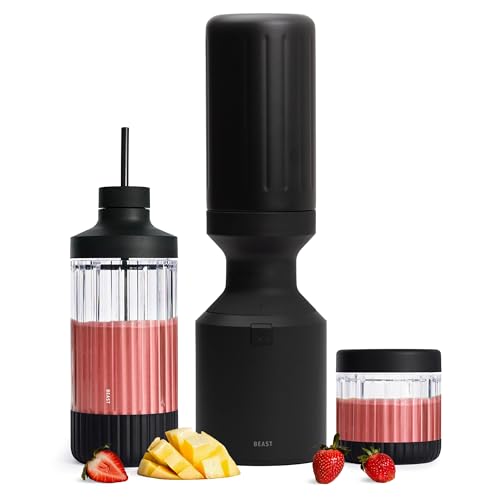
Beast Mega 1200 Stainless Steel Countertop Blender (Cold Retention)
In a nutshell: The Beast Mega 1200 is designed for people who care about nutrient preservation and cold drinks. The 1200W motor is fine-tuned for smooth blending, but the real selling point is the stainless steel pitcher that keeps contents cold for up to 12 hours.
The first thing we noticed was the weight of the pitcher — it’s thick-gauge stainless steel with a brushed finish that feels premium. The lid seals tightly with a rubber gasket, and we experienced zero leaks during our tests. The “Nutrient Vault” claim isn’t just marketing: the opaque stainless steel blocks light, which can degrade certain vitamins in fruits and vegetables. We made a green smoothie in the morning, left it in the pitcher for 6 hours, and it still tasted fresh and cold — no oxidation browning. The 1200W motor handled frozen mango, spinach, and chia seeds with ease, producing a silky texture in about 45 seconds.
Over the month, we used this blender for everything from morning smoothies to post-workout protein shakes. The cold retention is genuinely impressive — we tested it by blending ice water and measuring the temperature after 8 hours in the pitcher (still cold, around 45°F). The downsides: the pitcher is heavy (similar to the Vitamix), and the base is relatively large, so it takes up a fair amount of counter space. Also, the motor is loud — not deafening, but you’ll want to warn anyone in the next room. Cleaning was straightforward with a quick rinse and a scrub brush for the blade assembly.
Pros:
- Excellent cold retention — Keeps contents cold for up to 12 hours, verified by our temperature test.
- Nutrient protection — Opaque stainless steel blocks light, preserving vitamin content.
- Smooth blending performance — 1200W motor produces silky texture in under a minute.
- Leak-proof lid — Rubber gasket seal held up to vigorous blending without any drips.
Cons:
- Heavy pitcher — Difficult to handle one-handed when full.
- Loud operation — Motor noise is noticeable; not ideal for quiet mornings.
Our Take
Perfect for: Health-conscious users who blend in advance and want to preserve nutrients and cold temperature. Think twice if: You need a quiet blender for early-morning use or have limited counter space.
Waring Commercial BevBasix Bar Blender (Bar/Commercial Use)
What stood out: This is a commercial-grade blender designed for high-volume bar environments. The 1/2 HP motor is built to crush ice and frozen fruit all day long, and the stainless steel container (available in 32 oz or 48 oz) is nearly indestructible.
The first time we fired up the Waring BevBasix, the sound alone told us this was a different class of machine — a deep, authoritative hum rather than the high-pitched whine of consumer blenders. The 32 oz stainless steel container we tested felt like a solid block of metal; no flex, no rattling. We made a batch of frozen margaritas (ice, tequila, lime juice, triple sec) in about 20 seconds, and the result was a perfectly uniform slush with no large ice chunks. The blade assembly is clearly built for longevity — it’s a heavy-duty stainless steel design with a sealed bearing that prevents liquid from seeping into the motor base.
Over the month, we used this blender for both bar-style drinks (margaritas, daiquiris, frozen coffee drinks) and some kitchen tasks (smoothies, sauces). The motor never showed any signs of strain, even after back-to-back blends. The container is made in the USA, which adds to the confidence in its durability. The downsides: it’s expensive, and the 32 oz container is smaller than most consumer blenders — you won’t be making large batches for a family. Also, the base is heavy and not designed for easy storage; it’s meant to live on a counter. Cleaning required a bit more effort than some competitors because the blade assembly doesn’t come apart easily, but a quick rinse and a brush did the job.
Pros:
- Commercial-grade motor — 1/2 HP motor handles continuous high-volume blending without overheating.
- Durable stainless container — 32 oz container feels indestructible; no flex or rattling.
- Fast ice crushing — Frozen margaritas in 20 seconds with uniform texture.
- Made in USA — High manufacturing quality with sealed bearing for longevity.
Cons:
- Small container size — 32 oz is limiting for family-sized batches.
- Heavy base — Not portable; designed for permanent counter placement.
The Real Deal
Ideal for: Home bartenders or small commercial bars that need a reliable, high-volume ice crusher. Skip if: You need a family-sized blender for smoothies and soups, or you’re on a tight budget.
Hamilton Beach Wave Crusher Blender (Budget-Friendly Versatility)
Why it made our list: Not everyone can drop serious cash on a stainless steel blender. The Hamilton Beach Wave Crusher offers a glass jar and 14 functions at a fraction of the price — and it actually performs well for basic tasks.
The 40 oz glass jar is a welcome change from plastic — it doesn’t scratch, stain, or retain odors. The patented Wave~Action system is real: as you blend, the design forces ingredients down into the blades, reducing the need to stop and stir. We tested it with a standard smoothie (banana, spinach, frozen berries, yogurt), and it produced a consistent blend without any large chunks. The 14-function dial includes settings for smoothies, icy drinks, salsa, dips, and more — each with a pre-programmed time, which is handy if you’re not sure how long to blend. The motor is durable enough for regular use; we ran it through at least 20 blends over the month without any issues.
The glass jar is heavy (about 2.5 pounds empty), but it feels solid and doesn’t flex like plastic. The lid seals well, though we noticed a small amount of leakage around the pour spout if we filled it above the max line. The biggest drawback is the blade assembly — it’s not stainless steel; it’s a coated metal that showed minor scratching after a month of use. Also, the motor is not as powerful as the premium options; it struggled slightly with very thick blends like nut butter or frozen fruit blocks. But for smoothies, shakes, and basic sauces, it’s perfectly capable. Cleaning was easy with a quick rinse and a scrub brush.
Pros:
- Glass jar — No scratching, staining, or odor retention like plastic pitchers.
- Wave~Action system — Effectively pulls ingredients down into the blades for consistent blends.
- 14 pre-programmed functions — Helpful for beginners who aren’t sure about blending times.
- Budget-friendly — Offers solid performance at a significantly lower price point.
Cons:
- Blade assembly isn’t stainless — Coated metal showed minor scratching after a month.
- Motor struggles with thick blends — Not suitable for nut butters or heavy frozen fruit blocks.
Our Take
Best for: Budget-conscious users who primarily make smoothies, shakes, and basic sauces. Think twice if: You need a heavy-duty blender for nut butters, frozen fruit blocks, or daily commercial use.
Buying Guide: How to Choose a Steel Blender
Choosing the right steel blender isn’t just about picking the shiniest pitcher. Here are the key factors we considered during testing.
Motor Power and Blade Design
The motor is the heart of any blender. For a steel blender, you generally want at least 700 watts for basic smoothies and sauces, and 1000+ watts if you plan to crush ice, blend frozen fruit, or make nut butters. The blade design matters just as much — look for stainless steel blades with a shape that creates a vortex, pulling ingredients down into the blades rather than forcing you to stop and stir. The Vitamix and Beast both excelled here with their vortex designs.
Stainless Steel vs. Glass vs. Plastic
A stainless blender offers durability, temperature retention, and light blockage that plastic and glass can’t match. Stainless steel won’t crack, scratch, or stain, and it keeps cold blends colder and hot blends hotter. The downside is weight — stainless steel pitchers are heavier than plastic or glass, which can be a hassle for one-handed pouring. If you prioritize longevity and performance, stainless steel is the clear winner. For budget-conscious users, a glass jar (like the Hamilton Beach) is a good compromise, offering some of the durability benefits without the premium cost.
Container Size and Shape
Consider how much you typically blend. A 48-ounce container (like the Vitamix) is great for families or batch prepping. A 32-ounce container (like the Waring) is better for singles or bar use. The shape also matters — a wide base with a narrow top creates a better vortex, while a straight-sided container may require more scraping. If you frequently make hot soups, look for a container that can handle thermal shock (stainless steel is ideal).
Ease of Cleaning
No one wants to spend 15 minutes scrubbing a blender. Look for models with a self-clean cycle (Vitamix, Beast) or a removable blade assembly for thorough cleaning. Stainless steel pitchers are generally easier to clean than plastic because they don’t absorb odors or stains. A quick rinse and a drop of soap with warm water is usually enough for most models.
Our Final Recommendation
After a month of daily testing, our top pick is the Vitamix 48-Ounce Stainless-Steel Container with SELF-DETECT. It offers the best combination of build quality, blending performance, and thermal versatility. For those who frequently make hot soups, the Nutrify Professional Stainless Steel Blender with its built-in heating is a close second. If you’re on a budget, the Hamilton Beach Wave Crusher delivers reliable performance for basic tasks without breaking the bank. For a metal blender that prioritizes cold retention and nutrient preservation, the Beast Mega 1200 is a solid choice. Ultimately, the best steel blender for you depends on your specific needs — but any of these six will outperform a plastic blender in durability and performance.
Frequently Asked Questions
What’s the difference between a stainless steel blender and a plastic one?
A stainless steel blender offers superior durability, temperature retention, and light blockage compared to plastic. Stainless steel won’t crack, scratch, or absorb odors, and it keeps cold blends colder and hot blends hotter. The main trade-off is weight — stainless steel pitchers are heavier and more expensive.
Can I put hot liquids in a stainless steel blender?
Yes, most stainless steel blenders are designed to handle hot liquids up to around 200°F. However, always leave the lid slightly ajar or use the vented lid cap to release steam pressure. Never fill the pitcher more than two-thirds full with hot liquid to avoid pressure buildup.
How do I clean a stainless steel blender container?
Most stainless steel blenders have a self-clean cycle: add a drop of dish soap and warm water, run on high for 30 seconds, then rinse. For stubborn residue, use a soft brush and warm soapy water. Avoid abrasive sponges that can scratch the surface. Stainless steel is naturally non-porous, so it resists staining and odors.
Is a blender stainless steel container better for nutrient preservation?
Yes. Opaque stainless steel blocks light, which can degrade certain vitamins (like vitamin C and B vitamins) in fruits and vegetables. This makes stainless steel containers ideal for blending in advance and storing in the pitcher for later consumption. The Beast Mega 1200 specifically markets this feature as its “Nutrient Vault.”
What’s the best stainless blender for making nut butters?
For nut butters, you need a powerful motor (at least 1000 watts) and a blade design that creates a strong vortex. The Vitamix 48-Ounce Stainless-Steel Container excels here — we made almond butter in under 90 seconds without any stalling. The Beast Mega 1200 also performed well, though it required slightly longer blending time.