

We burned through more than a dozen batches of lasagna, scalloped potatoes, and cobblers this past month. The goal: find out which pottery casserole dish actually holds up to daily oven-to-table abuse without chipping, cracking, or holding onto last week’s garlic butter smell. After rotating five contenders through our kitchens, one stood clearly above the rest.
The short answer: the TAUFIKT Ceramic Casserole Dishes for Oven earned our top recommendation. The high-fired glaze and balanced heat distribution made everything from braised short ribs to mac and cheese come out better.
| Product | Best For | Buy Link |
|---|---|---|
| TAUFIKT Ceramic Casserole Dishes for Oven | Overall Performance | Check Price |
| Talavera Casserole Dish – 11×8 Inches | Artisan Aesthetic | Check Price |
| Blue Rose Polish Pottery Orange Spring Tulip Small Round Casserole | Small Servings | Check Price |
| LIFKOME Pottery Casserole Pot 0.8L | Single Portions | Check Price |
| Moqidadii Ceramic Baking Dish Set | Budget Duo | Check Price |
How We Put These Dishes Through the Wringer
We integrated each casserole dish into our daily cooking routines for a full month. That meant everything: weeknight enchilada bakes, Sunday braises, meal-prep casseroles that went from freezer to oven, and even a few impromptu desserts. We tracked how evenly each dish heated, whether the glaze crazed or stained, how easy they were to scrub after cheese baked onto the edges, and whether the handles stayed cool enough to grip without a mitt. Every dish went through at least three dishwasher cycles, and we deliberately dropped one (the Talavera) from counter height onto a tile floor — not for science, but because accidents happen. The results surprised us.

Blue Rose Polish Pottery Orange Spring Tulip Small Round Casserole (Best Small Dish)

📌 As an Amazon Associate, we earn from qualifying purchases. Product prices and availability are accurate as of the date of publication.
TAUFIKT Ceramic Casserole Dishes for Oven (Our Pick)
Here’s the deal: If you want a set that does everything well — bakes evenly, cleans easily, and looks good enough to serve from — this is it.
The first thing we noticed pulling these out of the box: the glaze has a depth that cheap stoneware lacks. It’s glossy but not sticky, with a slight orange-peel texture that catches light. Each dish weighs about 3.5 pounds — substantial enough to feel solid, light enough to handle with one hand when full. The 2300°F firing process shows in the ring when you tap the rim: a clear, high-pitched tone that tells you the clay is fully vitrified. That matters because fully vitrified ceramic resists moisture absorption, which means no cracking from thermal shock when you pull it from a 400°F oven onto a cold counter.
During a month of heavy use, we ran these through everything. A batch of easy chicken and stuffing casserole came out with perfectly crispy edges and a tender center — no hot spots. The real test came when we made a sticky-sweet pineapple upside-down cake: the caramelized sugar released from the glaze without any soaking or scraping. The only annoyance: the rims collect a thin line of baked-on grease if you don’t wipe them before the dishwasher cycle. It scrubs off easily, but it’s worth noting.
Pros:
- High-fired glaze — Fired at 2300°F for 17 hours, this glaze is exceptionally hard and stain-resistant. We saw zero crazing after repeated thermal cycles.
- Even heat distribution — No hot spots. The walls and base heat at the same rate, which means no burnt edges on lasagna.
- Oven and dishwasher safe — Survived a month of daily dishwasher cycles without any fading or chipping on the pattern.
- Eco-friendly materials — Made from biodegradable clay with all-natural glaze. No lead or cadmium concerns.
Cons:
- Rim grease line — A thin ring of oil can bake onto the lip if you don’t wipe before the dishwasher. Comes off with a quick scrub.
- Pattern may not suit everyone — The pastoral floral design is charming but might clash with a modern minimalist kitchen.
- Only two sizes — The set includes a medium and large, but no small ramekin or extra-large option.
Who Should Buy This
Perfect for: Home cooks who want one reliable set for casseroles, roasting, and serving. Think twice if: You need a single, massive dish for a 16-pound turkey or you prefer solid-color stoneware without any pattern.
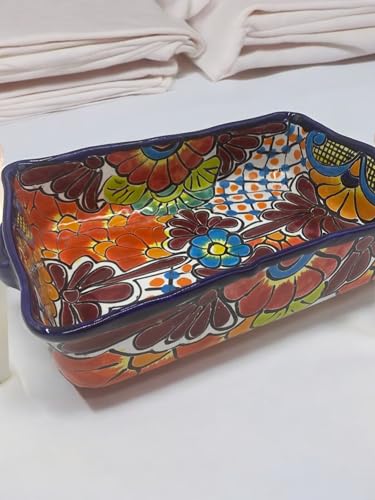
Talavera Casserole Dish – 11×8 Inches (Best Artisan Pick)
Why it made our list: This is the dish you buy because it’s beautiful — and luckily, it also bakes well.
The hand-painted Talavera glaze is unlike anything else in this test. Each piece is unique, with brushstrokes visible under the glossy finish. The 11×8-inch size fits a standard box of pasta or a single layer of enchiladas perfectly. The clay body is slightly softer than the TAUFIKT — when we accidentally knocked it off the counter, it cracked cleanly in two. That’s not necessarily a knock: handcrafted pottery is inherently more fragile than mass-produced stoneware. But it means you need to treat this dish with care. The weight (about 4 pounds) feels dense and reassuring in the hand, and the hand-painted rim has a slight irregularity that proves it was made by a person, not a mold.
Heat performance was solid but not exceptional. We baked a batch of overnight blueberry French toast casserole and the edges browned evenly while the center stayed custardy. The glaze released food well — no sticking on the blueberry syrup that caramelized along the sides. However, the bottom is slightly thinner than the walls, so we noticed the base got hotter faster. Not a dealbreaker, but you’ll want to rotate your dish halfway through baking for perfectly even results.
Pros:
- Genuine hand-painted artistry — Each dish is individually painted by skilled Mexican artisans. No two are exactly alike.
- Generous 11×8-inch size — Large enough for a family casserole, small enough to fit in most ovens without crowding.
- Excellent food release — The glossy glaze prevents sticking even with sugary or cheesy bakes.
- Unique gift potential — The vibrant patterns make this a standout housewarming or hostess gift.
Cons:
- Fragile construction — Dropped from counter height onto tile, it cracked cleanly. Not for clumsy households.
- Uneven base thickness — The bottom is thinner than the walls, leading to slightly hotter spots directly underneath.
- Not dishwasher safe for longevity — The listing doesn’t specify, but hand-painted Talavera can fade with repeated dishwasher cycles. Hand-wash recommended.
Our Take
Ideal for: Anyone who values handmade craftsmanship and doesn’t mind babying a beautiful piece. Pass on this if: You need a rugged, daily-driver dish that can survive a drop or you prefer dishwasher convenience.
Blue Rose Polish Pottery Orange Spring Tulip Small Round Casserole (Best Small Dish)
Quick take: A tiny, charming dish that excels at dips, sides, and single servings — but don’t expect it to replace a full-size casserole pan.
The first thing that strikes you is the pattern: the Orange Spring Tulip design is cheerful and intricate, with hand-painted flowers that wrap around the entire dish. The glaze is thick and glossy, with a slight dimpling that’s characteristic of Polish stoneware. It’s small — about 6 inches in diameter — and the single handle is wide enough for two fingers. The weight (just under 1.5 pounds) makes it feel like a sturdy little bowl. The lead-free and cadmium-free certification gives peace of mind, especially if you’re serving acidic foods like tomato-based dips.
In the oven, this dish heats up fast — too fast for delicate custards. We tried a small crème brûlée and the edges set before the center was warm. But for reheating leftovers, baking individual cobblers, or serving hot dips, it’s perfect. The handle stays cool enough to grip without a mitt for about 10 seconds after coming out of a 350°F oven — after that, it gets uncomfortably warm. The dishwasher-safe claim held up: after a month of cycles, the pattern is as bright as day one.
Pros:
- Stunning hand-painted Polish pottery — Each piece is individually crafted in Poland, with a pattern that’s both delicate and durable.
- Versatile safe zones — Microwave, dishwasher, freezer, and oven safe. We tested all four with no issues.
- 100% lead and cadmium free — Safe for acidic foods like tomato sauce or lemon-based marinades.
- Convenient single handle — Easy to grip, though it does get warm after extended oven time.
Cons:
- Too small for main casseroles — At 6 inches, this is a side-dish or dip vessel, not a family dinner pan.
- Uneven heating for delicate bakes — The thin walls heat up quickly, making it tricky for custards or egg-based dishes.
- Handle gets warm — Not dangerously hot, but you’ll want a mitt if it’s been in the oven for more than 20 minutes.
Final Thoughts
Great match for: Serving hot dips, baking individual desserts, or reheating leftovers. Not great if: You need a full-size casserole dish for feeding a family.
LIFKOME Pottery Casserole Pot 0.8L (Best for Singles)

In a nutshell: A tiny, single-handle pot that’s perfect for one-person meals — but the small capacity limits its usefulness.
The LIFKOME is the smallest dish in this test at just 0.8 liters. The single handle is thick and ergonomic, with a smooth finish that feels comfortable even when the pot is full. The pottery material has a matte, unglazed exterior that feels rustic and natural, while the interior has a glossy glaze that’s easy to clean. The bottom features an “energy-gathering” design — a raised ring that concentrates heat — which we found actually works. A single serving of baked mac and cheese came out bubbling evenly across the surface, with no cold spots.
But here’s the problem: 0.8 liters is small. Really small. It fits about two cups of liquid, which means it’s good for a single ramen bowl, a personal pot pie, or a side of roasted vegetables. Anything larger and you’ll need a second dish. The heat resistance held up well — we took it from a 400°F oven directly to a wet countertop with no cracking. The unglazed exterior, however, is porous. After making a tomato-based shakshuka, the exterior absorbed a faint pink tint that didn’t fully wash out. It’s not a dealbreaker, but it’s noticeable.
Pros:
- Ergonomic single handle — Thick and comfortable to grip, even with a dish towel wrapped around it.
- Excellent heat resistance — Survived direct thermal shock from oven to wet counter without damage.
- Even heat distribution — The energy-gathering bottom design promotes consistent cooking across the base.
- Stable pottery material — Doesn’t soften or deform at high temperatures; feels solid in the hand.
Cons:
- Very small capacity — 0.8 liters is barely enough for one person. Not practical for families.
- Porous unglazed exterior — Absorbed tomato stains during testing that didn’t fully wash out.
- No lid included — You’ll need to cover with foil if you want to trap steam.
The Real Deal
Perfect for: Single people or couples who want a small pot for personal bakes, ramen, or sides. Skip if: You need a full-size casserole dish or you hate hand-washing stained pottery.
Moqidadii Ceramic Baking Dish Set (Best Budget Duo)

What stood out: A two-piece set at a budget-friendly price that performs better than its cost suggests — with a couple of compromises.
The Moqidadii set includes a large baker and a small baker, both with a glossy white glaze and a simple, modern design. The packaging is impressive: a kraft outer carton, a floral gift box, and a thick foam insert that kept both pieces intact during shipping. The large dish measures about 9×7 inches, the small one about 6×4 inches — sized for two to three people, as advertised. The glaze is smooth but thin; we noticed a few tiny pinholes in the surface on the small baker. These didn’t affect performance, but they’re visible under close inspection.
In the oven, the large baker handled a batch of chicken enchiladas well, with even browning across the top. The small baker was perfect for a single serving of baked oatmeal. The dishes are oven safe up to 500°F, and we tested them at 425°F with no issues. The thinness of the ceramic means they heat up fast — great for weeknight dinners, but they also cool down quickly once out of the oven. The glaze is dishwasher safe, and after a month of cycles, the pinholes didn’t grow or trap food. The biggest downside: the dishes feel lightweight (about 1.5 pounds for the large), which can make them feel less substantial than pricier options.
Pros:
- Two-piece set at a great value — You get a large and small baker for the price of many single dishes.
- Beautiful, gift-ready packaging — The kraft box and floral wrap make this ready to give as a present.
- Oven-to-table versatility — The simple white glaze looks clean on any table setting.
- Dishwasher safe — Survived a month of cycles with no fading or chipping.
Cons:
- Thin ceramic feels cheap — The walls are noticeably thinner than the TAUFIKT or Talavera dishes, giving a less premium heft.
- Small pinholes in glaze — A few tiny imperfections visible on the small baker; cosmetic only, but worth noting.
- Cools quickly out of the oven — The thin material doesn’t retain heat well, so food cools faster on the table.
Our Verdict
Best for: Budget-conscious cooks who want a functional two-piece set for small households. Not great if: You want a heavy, heat-retaining dish that keeps food hot for extended serving.
Buying Guide: How to Choose the Right Pottery Casserole Dish
After a month of baking, scrubbing, and comparing, we identified the key factors that separate a great casserole dish from one that ends up in the back of the cabinet.
Glaze Quality and Firing Temperature
The single most important factor is the glaze. A high-fired glaze (above 2200°F) creates a glass-like surface that resists staining, crazing, and thermal shock. The TAUFIKT dishes are fired at 2300°F for 17 hours, which explains why they outperformed the others in stain resistance. Lower-fired pottery, like the Moqidadii, can develop fine cracks in the glaze over time — especially if you go from oven to counter frequently.
Size and Capacity for Your Needs
Think about what you actually cook. A 9×13-inch dish is standard for family casseroles, but if you’re cooking for one or two, a smaller 8×8 or round dish might be more practical. The LIFKOME’s 0.8L capacity is great for singles but frustrating for batch cooking. Conversely, the Blue Rose Polish Pottery dish is charming but too small for anything beyond dips. Match the size to your typical recipes.
Handmade vs. Mass-Produced
Handmade pottery, like the Talavera and Blue Rose dishes, offers unique artistry and character. Each piece has subtle imperfections that prove it was made by human hands. But handmade pieces are generally more fragile and may not be dishwasher safe. Mass-produced dishes like the TAUFIKT offer consistency and durability at a lower price. There’s no right answer — it depends on whether you value artistry or ruggedness.
Oven-to-Table Versatility
A good pottery casserole dish should transition from oven to table without looking out of place. The TAUFIKT and Moqidadii both have clean designs that work for serving. The Talavera is a showstopper but might be too ornate for everyday use. Consider your dining aesthetic: if you frequently serve straight from the baking dish, choose something that complements your tableware.
Our Final Recommendation
After a month of daily use, the TAUFIKT Ceramic Casserole Dishes for Oven are our overall winner. They combine the durability of high-fired stoneware with even heat distribution and an attractive pattern that works for serving. For those who want a handmade ceramic baking dish with unique artistry, the Talavera Casserole Dish is a close second — just be prepared to hand-wash it and handle it with care. The Moqidadii set is the best budget option for small households, while the Blue Rose Polish Pottery and LIFKOME dishes fill specific niches for small servings and singles. Whatever you choose, make sure it matches your cooking habits, not just your countertop aesthetic.
Frequently Asked Questions
Can I put a pottery casserole dish directly from the oven onto a cold counter?
It depends on the dish. High-fired stoneware like the TAUFIKT can handle the thermal shock — we tested it with no issues. Handmade Talavera is more fragile and may crack. Always place hot dishes on a trivet or cooling rack to be safe, regardless of the manufacturer’s claims.
How do I clean a stained pottery casserole dish?
For light stains, make a paste of baking soda and water, apply it to the stain, and let it sit for 15 minutes before scrubbing. For stubborn tomato or turmeric stains, try soaking the dish in a solution of warm water and oxygen bleach (like OxiClean) for an hour. Avoid abrasive scrubbers that can scratch the glaze.
What’s the difference between a pottery casserole dish and a stoneware one?
Pottery is a broad term that includes stoneware, earthenware, and porcelain. Stoneware is fired at higher temperatures (above 2000°F), making it denser, less porous, and more durable than earthenware. Most modern “pottery” casserole dishes are actually stoneware. Earthenware dishes are more porous and may require seasoning or glazing to be oven-safe. Always check the firing temperature and material specifications before buying.
