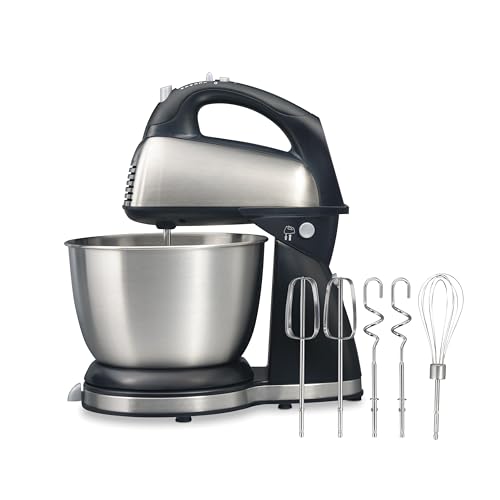
There’s been a quiet shift in how home bakers and serious cooks think about their stand mixer paddles. For years, the flat beater that came in the box was treated as a one-size-fits-all tool. Lately, though, I’ve noticed more people asking pointed questions about materials, dishwasher safety, and whether their paddle is actually the right shape for the job. It makes sense. I’ve tested hundreds of kitchen products over the years, and the ones that last are never the flashiest — they’re the simplest, heaviest, and most boring-looking tools in the drawer. The paddle attachment for your stand mixer is exactly that kind of tool, but only if you pick the right one and treat it properly.
Key Takeaways
- Understanding paddle attachment materials (stainless steel vs. coated) directly affects cleaning ease and longevity.
- Dishwasher-safe paddles save hours of scrubbing, but only if they’re truly rated for high heat cycles.
- Non-stick coatings on paddles wear out faster than bare metal, especially with frequent dishwasher use.
- Knowing when to substitute a paddle for a whisk or dough hook prevents recipe failures and mixer strain.
Why the Paddle Attachment Matters More Than You Think
The paddle, often called a flat beater, is the workhorse of any stand mixer. It’s designed for medium-weight mixing — creaming butter and sugar, beating eggs into batter, mashing potatoes, and mixing cookie doughs. Unlike a whisk, which incorporates air, or a dough hook, which develops gluten, the paddle’s job is to combine ingredients evenly without overworking them.
From a cleaning perspective, the paddle is also the attachment you’ll wash most often. A whisk has narrow wires that trap batter. A dough hook has deep crevices. But a paddle, especially a coated one, can be a nightmare if food bakes onto its surface. That’s why I judge every paddle on two things: how easily it releases food, and whether it can survive a dishwasher cycle without degrading.
Materials Matter: Stainless Steel vs. Coated Paddles
Stainless Steel Paddles
Bare stainless steel paddles are my personal preference. They’re dishwasher-safe without any worry about coating peeling. They don’t react with acidic ingredients like tomato sauce or citrus. And they’re easy to scrub with a stainless steel scrubber if something does stick. The downside is that sticky batters, especially egg-based ones, can cling more stubbornly to stainless steel than to a non-stick surface. A quick spray of cooking oil before mixing helps, but that’s an extra step.
Coated (Non-Stick) Paddles
Non-stick coated paddles are marketed as easier to clean, and they are — at first. The coating prevents batter from baking on, and a simple wipe often removes residue. But here’s the catch: most non-stick coatings on paddles are rated for temperatures far lower than a standard dishwasher’s drying cycle. Repeated dishwasher use can cause the coating to bubble, peel, or flake. Once that happens, the paddle is essentially ruined. You’re either eating flecks of coating or throwing it away.
Cleaning Your Paddle Attachment: What Actually Works
Hand-Washing (The Safe Bet)
For any paddle, hand-washing is the safest method. Use hot water and a degreasing dish soap. A nylon brush reaches the hub where the paddle connects to the mixer. For stuck-on batter, fill the sink with hot water and let the paddle soak for 10 minutes — no longer, especially for coated paddles. Then scrub with a non-abrasive sponge. Dry immediately with a towel to prevent water spots on stainless steel.
Dishwasher Use (Only for Certain Paddles)
If your paddle is labeled dishwasher-safe, check the manufacturer’s temperature rating. Many dishwashers have a sanitize cycle that reaches 160°F (71°C) or higher. Some non-stick coatings can’t handle that. Even stainless steel paddles can develop a cloudy film from hard water and detergent over time. To avoid that, use a rinse aid and skip the heated dry cycle. Place the paddle on the top rack, facing down so water drains from the hub.
When to Substitute Your Paddle Attachment
Sometimes you don’t have the right paddle for the job, or your paddle is in the dishwasher. Knowing what to use instead can save a recipe. For creaming butter and sugar, a whisk attachment works but incorporates more air, leading to a lighter, airier texture. For mashing potatoes, a whisk is useless — use a hand masher instead. For mixing stiff cookie dough, a dough hook can work, but it develops gluten more aggressively, potentially making cookies tough. If you’re looking for a paddle attachment for mixer substitute, the best swap depends on the recipe’s goal.
For delicate mixtures like cake batter, never substitute a whisk for a paddle if the recipe specifically calls for a paddle. The whisk will over-aerate, causing the cake to rise too quickly and then collapse. For sturdier mixtures like meatloaf or meatball mix, a paddle is ideal, but you can also use a sturdy spatula and mix by hand.
Paddle Attachment Longevity: How to Make It Last
Storage
Store your paddle attachment in a dry place. If you stack it with other attachments, place a soft cloth between them to prevent scratching. For coated paddles, scratches are death — they create entry points for moisture and food, leading to peeling.
Inspection
Every few months, inspect your paddle for signs of wear. On coated paddles, look for bubbles, chips, or dull spots. On stainless steel, check the hub for bent prongs or cracks. A damaged paddle can shed metal fragments into your food or damage your mixer’s motor.
Replacement
Most manufacturers recommend replacing coated paddles every 1-2 years with regular use. Stainless steel paddles can last a lifetime if cared for. If you’re looking for the best paddle attachment for a Sunbeam stand mixer, stainless steel options are widely available and worth the investment.
Common Paddle Attachment Problems and Fixes
Batter Sticking to the Paddle
This happens when the paddle’s surface is too smooth or the batter is too thick. For stainless steel paddles, a light coating of vegetable oil before mixing helps. For coated paddles, ensure the coating isn’t worn. If it is, replace the paddle.
Paddle Hitting the Bowl
If your paddle scrapes the bowl or leaves a gap, the mixer’s bowl height may need adjustment. Most stand mixers have a screw or lever that raises or lowers the bowl. Consult your manual. A paddle that’s too low can damage the coating on both the paddle and the bowl.
Paddle Not Mixing Evenly
This often means the paddle is the wrong size for the batch. For small batches, a flex edge paddle (which has a rubber scraper along one side) works better. For large batches, a standard paddle is fine. If you’re using a fresh prep slicer shredder attachment, remember that it replaces the paddle entirely — don’t try to use both at once.
Frequently Asked Questions
Can I put my paddle attachment in the dishwasher?
Only if the manufacturer explicitly states it’s dishwasher-safe. Most stainless steel paddles are safe. Many coated paddles are not, especially on high-heat cycles. When in doubt, hand-wash with warm soapy water. Dishwasher detergent is harsher than hand soap and can degrade coatings over time.
How do I remove stuck-on batter from a paddle attachment?
Soak the paddle in hot water for 10-15 minutes, then scrub with a non-abrasive sponge. For stubborn residue, make a paste of baking soda and water, apply it to the paddle, let it sit for 5 minutes, then scrub. Avoid metal scrubbers on coated paddles — they’ll scratch the surface.
What’s the difference between a paddle and a flat beater?
In most contexts, they’re the same thing. Some manufacturers use “flat beater” to describe the standard paddle that comes with the mixer. “Paddle” is the more common term for aftermarket or specialty attachments, like a flex edge paddle or a pastry paddle. Functionally, they all perform the same basic mixing tasks.
Can I use a paddle attachment for kneading dough?
No. A paddle attachment is not designed for kneading. It will struggle with stiff doughs, potentially straining the mixer’s motor. Use a dough hook for yeast doughs. For very wet doughs like brioche, a paddle can be used for the initial mixing of butter into the dough, but switch to a dough hook for the kneading phase.