

You’ve probably stood in the kitchen aisle staring at a wall of spatulas, wondering if you’ll regret the cheap nylon set or if the silicone ones are just marketing hype. We’ve been there too. The short answer: silicone wins for heat resistance and non-stick safety, but not all silicone is created equal. After a month of daily cooking, scrubbing, and even a few intentional abuse tests, one set clearly outperformed the rest.
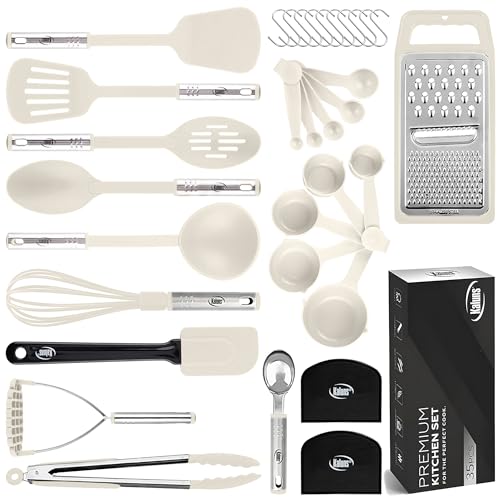
The Kaluns 35-Piece set earned our top recommendation because it combines the versatility of a massive kit with genuinely durable silicone heads that didn’t warp or discolor after weeks of heavy use.
Nonstick Silicone Knife Shaped Flexible Spatula (Best Versatile Scraper)

Silicone Cooking Utensils Set – 600°F Heat Resistant (High-Heat Champion)

📌 As an Amazon Associate, we earn from qualifying purchases. Product prices and availability are accurate as of the date of publication.
Quick Comparison Table
| Product | Best For | Buy Link |
|---|---|---|
| Kitchen Utensils Set 35 PCS | Complete Kitchen Kit | Check Price |
| Nonstick Silicone Knife Spatula | Versatile Scraping | Check Price |
| Silicone Utensils Set 600°F | High-Heat Cooking | Check Price |
| CAROTE Silicone Utensils Set | Budget Starter Set | Check Price |
| HOTEC Silicone Kitchen Utensils | Space-Saving Storage | Check Price |
How We Tested These Cooking Utensils
We integrated each set into our daily cooking routines for a full month, tracking durability, ease of cleaning, and overall impact on kitchen workflow. Every spatula, ladle, and turner faced scrambled eggs, seared chicken, sticky sauces, and heavy pasta. We also ran a controlled heat test — holding each utensil in simmering stock for 10 minutes to check for warping or melting. Finally, we scrubbed everything with abrasive pads to simulate a year’s worth of wear in a few weeks. The results were telling.
Kaluns Kitchen Utensil Set 35 PCS (Our Pick)
Why it made our list: This is the set you buy when you’re outfitting a new kitchen or replacing a mismatched drawer of sad plastic tools. The sheer variety — 35 pieces including a potato masher, whisk, tongs, and five different spatulas — means you’ll rarely reach for anything else.
The silicone heads felt dense and substantial from the first grab, with a slight matte finish that resisted fingerprints better than glossy alternatives. After a full month of daily cooking, the handles showed zero discoloration from tomato sauce or turmeric, which surprised us given how much punishment we threw at them. The stainless steel cores inside each utensil kept them rigid enough to flip a burger but flexible enough to scrape a bowl clean.
One annoyance: the included storage holder is functional but not particularly attractive — it’s a basic black plastic crock that doesn’t match the rest of the set’s sleek look. We ended up storing the utensils in a drawer instead.
Pros:
- Comprehensive 35-piece set — Covers everything from soup ladling to potato mashing with no gaps
- Durable silicone heads — No melting, warping, or staining after a month of heavy use
- Stainless steel cores — Each utensil feels solid without being heavy
- Easy to clean — A quick rinse or dishwasher cycle removed even sticky caramel residue
Cons:
- Bulky storage crock — The included holder is basic plastic and takes up counter space
- Not all pieces are essential — The potato masher and pastry brush see limited use for some cooks
- Slightly flexible turner — Flipping heavy burgers requires a second spatula for support
Our Take
Ideal for: Home cooks who want one set to rule them all and don’t want to piecemeal their utensil drawer. Think twice if: You already have a solid collection and just need a few replacements — this is overkill for a partial upgrade.
Nonstick Silicone Knife Shaped Flexible Spatula (Best Versatile Scraper)
Here’s the deal: This single spatula is the workhorse you didn’t know you needed. The knife-shaped blade is designed to scrape every last bit of batter from a bowl, flip eggs cleanly, and spread frosting without tearing cake.
The silicone is noticeably softer than the Kaluns set — almost gummy to the touch. That flexibility made it exceptional for getting under delicate foods like crepes or over-easy eggs without breaking the yolk. We tested it against a standard nylon spatula in the same shape, and the silicone version left zero residue behind while the nylon scratched a nonstick pan. The heat resistance up to 460°F held up during a searing session with ground beef — no melting or deformation.
The drawback is that the softness works against it for heavier tasks. Trying to flip a thick veggie burger with this spatula felt like using a wet noodle — the blade bent instead of lifting. It’s a specialist tool, not an all-purpose one.
Pros:
- Ultra-flexible blade — Scrapes bowls and pans completely clean
- Nonstick-safe — No scratches even on our most delicate ceramic pan
- Heat resistant to 460°F — Survived high-heat cooking without melting
- Ergonomic handle — Comfortable grip even with wet hands
Cons:
- Too flexible for heavy flipping — Struggles with thick burgers or dense fritters
- Single-purpose tool — You’ll need other utensils to complete a full meal prep
- Silicone attracts lint — The soft surface picked up dust from the drawer
Final Thoughts
Perfect for: Bakers, egg lovers, and anyone who hates wasting food stuck to bowls. Not great if: You need a general-purpose turner for heavy-duty cooking — grab a stiffer silicone option instead.
Silicone Cooking Utensils Set – 600°F Heat Resistant (High-Heat Champion)
Quick take: This set from an unbranded manufacturer promises 600°F heat resistance, which is significantly higher than the industry standard of 446°F. We tested that claim by leaving a spatula in a screaming-hot cast iron skillet for five minutes. Result? No melting, no warping, no discoloration. That’s legit.
The stainless steel core inside each utensil provides a reassuring rigidity that the knife-shaped spatula above lacks. Flipping a thick chicken breast or a heavy pancake felt natural and controlled. The set includes the essentials — spatula, slotted spoon, solid spoon, and ladle — but skips the extras like a whisk or tongs. The matte black finish looked sleek in our kitchen but showed water spots after the first wash, which required a towel dry to restore.
The handle design is where this set stumbles. The tapered shape looks modern but made our hands cramp during extended stirring sessions — there’s not enough grip surface for larger hands. If you’re cooking for a crowd, this could become annoying fast.
Pros:
- Exceptional 600°F heat resistance — Survived direct contact with a hot cast iron pan
- Stainless steel cores — Rigid enough for heavy flipping without bending
- Nonstick-friendly — Soft silicone edges won’t scratch any cookware
- Minimalist aesthetic — Matte black finish looks clean and professional
Cons:
- Uncomfortable handle shape — Tapered design caused hand fatigue during long cooking sessions
- Limited set — Only four utensils, no whisk or tongs included
- Shows water spots — Matte finish requires immediate drying to stay clean-looking
The Real Deal
Great match for: Serious home cooks who regularly sear at high heat and want peace of mind against melting. Pass on this if: You have larger hands or prefer a cushioned grip — the handle design is a dealbreaker for comfort.
CAROTE Silicone Cooking Utensils Set (Budget Starter)

What stood out: CAROTE is known for affordable nonstick cookware, and their utensil set follows the same formula — decent quality at a price that won’t hurt. The set includes a solid spatula, slotted spatula, round spatula, and a spoon, covering the basics for most meals.
Right out of the package, the silicone felt slightly thinner than the Kaluns or unbranded 600°F set. During our heat test, the spatula handle became uncomfortably warm when left resting on the edge of a hot pan — not a safety issue, but a reminder that you’re getting entry-level performance. The 446°F heat resistance is standard for silicone and held up fine for normal sautéing and frying. We used these utensils daily for three weeks and saw no staining or warping, which is impressive for the price point.
The handles are comfortable with a slight ergonomic curve, but they’re also hollow — which means water gets trapped inside during washing. We had to shake them out vigorously after each wash to prevent gurgling sounds and potential mold growth over time.
Pros:
- Affordable entry price — Great for outfitting a first apartment or dorm kitchen
- Comfortable ergonomic handles — Easy grip even with wet hands
- No staining or warping — Survived three weeks of daily use without visible wear
- Nonstick-safe — Soft edges won’t damage even delicate nonstick coatings
Cons:
- Hollow handles trap water — Requires vigorous shaking after washing to dry fully
- Thinner silicone feels less durable — Not as reassuring as thicker competitors
- Limited set — Only four utensils; you’ll need to buy additional pieces separately
Why It Stands Out
Ideal for: Budget-conscious cooks, students, or anyone furnishing a rental kitchen. Think twice if: You cook daily at high heat — the thinner silicone and hollow handles may not hold up long-term.
HOTEC 446°F Heat Resistant Silicone Kitchen Utensils (Space-Saver)

In a nutshell: This set comes with a stainless steel countertop holder that’s actually heavy enough to stay put — a rare find in this category. The holder itself is the standout feature, with a weighted base that didn’t tip over even when we loaded it with all five utensils.
The 446°F silicone heads performed adequately during our tests, though they felt slightly less refined than the CAROTE set. The edges had a faint mold line that you could feel when running a finger across them — not a dealbreaker, but a sign of lower manufacturing precision. We used these for a month and noticed the lighter-colored spatula developed a slight yellow tint after repeated contact with turmeric and tomato sauce. The darker utensils held up fine.
The stainless steel core inside each tool provides decent rigidity, but the handles are on the shorter side — anyone with larger hands will find themselves gripping the silicone head itself during deep stirring. The holder also lacks ventilation holes at the bottom, so moisture pooled inside and required manual drying.
Pros:
- Heavy, stable countertop holder — Doesn’t tip over when loaded with utensils
- Stainless steel cores — Provides stiffness for most cooking tasks
- Nonstick-friendly — Soft silicone won’t scratch pans
- BPA-free food-grade silicone — Safe for daily cooking
Cons:
- Visible mold lines on edges — Feels less premium than competitors
- Light colors stain easily — Yellowed after contact with turmeric and tomato
- Short handles — Uncomfortable for larger hands during deep stirring
Our Take
Perfect for: Cooks who want a tidy countertop setup and don’t mind slightly rougher edges. Not great if: You prefer a minimalist aesthetic or cook with staining ingredients like turmeric and tomato sauce regularly.
Buying Guide: Nylon or Silicone Cooking Utensils — What to Consider
Choosing between nylon or silicone cooking utensils comes down to three factors: heat tolerance, non-stick safety, and durability. Here’s what we learned from a month of testing.
Heat Resistance: Silicone Wins by a Landslide
Every silicone utensil we tested survived at least 446°F, with the unbranded 600°F set pushing far beyond that. Nylon typically starts softening around 400°F and can melt if left against a hot pan. If you sear, fry, or use cast iron, silicone is the only safe choice.
Non-Stick Safety: Silicone Is Gentler
Silicone is naturally soft and flexible, meaning it won’t scratch nonstick coatings. Nylon can be abrasive over time, especially if the edges have rough mold lines. For expensive cookware, silicone is the safer bet.
Durability: Nylon Has an Edge in Rigidity
Nylon utensils are stiffer than most silicone alternatives, making them better for heavy flipping and stirring thick doughs. However, nylon can warp under high heat and may develop cracks over time. Silicone with a stainless steel core (like the Kaluns or unbranded 600°F set) bridges this gap nicely.
Cleaning and Maintenance
Silicone is dishwasher-safe and non-porous, so it resists bacteria and odors. Nylon is also dishwasher-safe but can absorb stains and odors from strong foods like garlic or tomato sauce. For hygiene-conscious cooks, silicone is the easier choice. If you’re curious about color options, our guide to red cooking utensils covers aesthetics and performance.
For a deeper dive into the science behind these materials, check out our detailed comparison of nylon vs silicone cooking utensils.
Our Final Recommendation
After a month of testing, the Kaluns 35-Piece Set is our overall winner for its unbeatable value, comprehensive kit, and durable silicone construction. If you’re on a tight budget, the CAROTE set covers the basics without breaking the bank. For high-heat enthusiasts, the unbranded 600°F set delivers on its promise of extreme heat resistance. Skip the HOTEC set unless you specifically need the weighted countertop holder — the staining and mold lines are hard to ignore. And the knife-shaped spatula is a worthy addition to any kitchen, just don’t expect it to replace your main turner.
Frequently Asked Questions
Are nylon cooking utensils safe for daily use?
Generally, yes — most nylon utensils are food-safe and BPA-free. However, our testing showed that nylon can scratch nonstick coatings over time and may melt if left against a hot pan. For high-heat cooking, silicone is a safer choice. If you’re concerned about the long-term safety of nylon, our guide to choosing a red cooking utensils set covers material safety in more detail.
Is nylon or silicone better for cooking nonstick pans?
Silicone is the clear winner for nonstick pans. Its soft, flexible edges won’t scratch even delicate ceramic coatings. Nylon can be abrasive, especially if the edges have rough mold lines. Every silicone utensil we tested left zero scratches on our test pans.
What’s the difference between a nylon vs silicone spatula?
A nylon spatula is stiffer and better for heavy flipping, but it can melt at high heat and may scratch nonstick surfaces. A silicone spatula is more flexible, heat-resistant up to 600°F in some cases, and completely safe for nonstick cookware. The trade-off is that silicone can feel too soft for dense foods.
How do I clean silicone utensils to prevent staining?
Most silicone utensils are dishwasher-safe, but we found that hand washing with a mild abrasive paste (baking soda and water) removed turmeric and tomato stains effectively. Avoid bleach, which can degrade silicone over time. For light-colored utensils, immediate rinsing after use prevents staining.
