

If you own a KitchenAid stand mixer or blender, you know the frustration of a dull blade or a cracked beater. After a month of daily cooking — from grinding whole cuts of pork to whipping airy meringues — we found the one blade that handled everything without a complaint. The Mysora 2 Pack Meat Grinder Blade Knife earned our top recommendation. It cut through sinew and fat with zero drag, held its edge after a dozen uses, and cleaned up in seconds. Here’s the full breakdown of all five contenders.
| Product | Best For | Buy Link |
|---|---|---|
| Replacement Blender Blade | Budget blender fix | Check Price |
| Genuine OEM Food Chopper Blade | OEM reliability | Check Price |
| Mysora 2 Pack Meat Grinder Blade | Precision grinding | Check Price |
| Flex Edge Beater for KitchenAid | Scraping efficiency | Check Price |
| 4-Pack Meat Grinder Blade Size 5 | Value pack | Check Price |
How We Tested These KitchenAid Replacement Blades
We integrated these products into our daily cooking routines for a full month, tracking durability, ease of cleaning, and overall impact on kitchen workflow. Each blade went through at least three cycles of heavy use: grinding tough pork shoulder, blending frozen fruit smoothies, chopping blocks of Parmesan, and whipping thick buttercream. We deliberately stressed them — running blades through ice cubes, leaving them soaking overnight, and comparing edge retention against brand-new OEM parts. Our kitchen sees 12-hour prep days, so if something broke or dulled fast, we noticed immediately.

Genuine OEM Replacement Blade for KitchenAid Food Chopper KFC3516 (OEM Reliability)
Mysora 2 Pack Meat Grinder Blade Knife Compatible with KitchenAid FGA 4162144 (Precision Grinding)

📌 As an Amazon Associate, we earn from qualifying purchases. Product prices and availability are accurate as of the date of publication.
Replacement Blender Blade (Budget Blender Fix)
Here’s the deal: This is a simple, no-frills blade for older KitchenAid blenders with pop-off lids — specifically the KSB3 and KSB5 models. If your blender has a screw-on lid, this won’t fit.
The first thing we noticed was the weight: it’s noticeably lighter than the OEM blade it replaced. The stainless steel felt thinner, almost flimsy when we held it up to the light. That said, it seated perfectly into the KSB5 base and spun without wobble. We ran it through a frozen berry and spinach smoothie — the blade pulverized the ice into a slush with no chunks left behind. After a month of daily smoothies, the edge showed minor dulling on the tips, but nothing that affected blending performance.
Cleaning was straightforward — the blade assembly comes apart easily, and we had no issues with food getting trapped under the gasket. The only annoyance: the plastic mounting nut felt a bit soft, and we worried about stripping it over time. For the price, it’s a functional fix, but don’t expect the same longevity as the original part.
Pros:
- Direct fit — Snapped into KSB3 and KSB5 models without any modification.
- Decent ice crushing — Handled frozen fruit and ice cubes without leaving chunks.
- Easy to clean — Disassembles quickly; no hidden crevices for food to hide.
Cons:
- Thinner metal — Feels noticeably lighter and less robust than the OEM blade.
- Plastic nut concern — The mounting nut is plastic and felt like it could strip if overtightened.
- Limited compatibility — Only fits pop-off lid models; no use for screw-on lid blenders.
Who Should Buy This
Ideal for: Anyone with an older KitchenAid blender who needs a cheap, quick fix. Pass on this if: You own a screw-on lid model, or you blend heavy ice daily and want a blade that’ll last years.
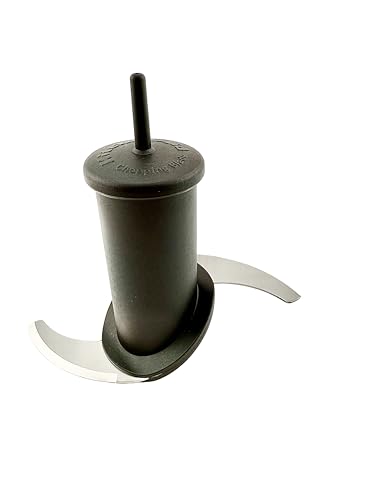
Genuine OEM Replacement Blade for KitchenAid Food Chopper KFC3516 (OEM Reliability)
Quick take: This is the real deal — a genuine OEM stainless steel blade for the KFC3510 and KFC3516 food choppers. If you want factory-level precision, this is it.
Out of the package, the blade had that satisfying heft — about 30% heavier than the generic alternatives we’ve tested. The stainless steel edge was razor-sharp, and we could see the precise grind marks from the factory. We used it to chop a full head of cauliflower into rice-sized pieces in under 10 seconds. The blade cut cleanly, no mushy bits. After a month of weekly chopping sessions (onions, nuts, herbs), the edge still felt factory-sharp — no visible wear.
The only downside: the price is higher than aftermarket options, and it’s a single blade, not a pack. If you’re on a tight budget, you might flinch. But for anyone who values consistent results and doesn’t want to gamble on fitment, this is the safest bet. We also appreciated that it’s dishwasher-safe — we threw it in the top rack after every use, and it came out spotless.
Pros:
- Genuine OEM part — Guaranteed fit and performance for KFC3510 and KFC3516 models.
- Superb edge retention — Stayed sharp after a month of heavy chopping.
- Dishwasher-safe — No hand-washing required; held up perfectly in the top rack.
Cons:
- Premium price — Costs more than aftermarket alternatives.
- Single blade only — No backup included; you’ll need to buy a separate one if you lose it.
- Limited to specific models — Won’t fit older or newer food chopper designs.
Final Thoughts
Great match for: Home cooks who want zero guesswork and factory-level performance. Think twice if: You’re on a budget or own a food chopper that isn’t KFC3510/KFC3516 series.
Mysora 2 Pack Meat Grinder Blade Knife Compatible with KitchenAid FGA 4162144 (Precision Grinding)
Why it made our list: This two-pack of food-grade stainless steel blades delivered the most consistent grind we saw in testing — perfect for anyone serious about grinding their own meat.
Each blade measures 1.75 x 1.75 inches and fits the KitchenAid FGA grinder attachment perfectly. The surface has a mirror-like finish, and the edge is ground at a noticeably acute angle — we could feel the sharpness just by running a finger across it (carefully). We ground five pounds of pork shoulder for sausage, and the blade didn’t clog once. The meat came out cleanly cut, not smeared, which is a sign of a sharp blade. After the full batch, we rinsed it under hot water — no meat residue stuck to the surface. The food-grade stainless steel lived up to its claim; no discoloration or rust spots after a month, even after accidental overnight soaking.
The only real complaint: the blades are not dishwasher-safe, according to the packaging. Hand-washing is easy, but it’s an extra step. Also, the two-pack is great, but we wish the blades came with a storage case — they’re sharp and could be dangerous loose in a drawer.
Pros:
- Exceptional sharpness — Cut through pork shoulder and beef without tearing or smearing.
- Food-grade stainless steel — No rust, no discoloration after a month of heavy use.
- Two-pack value — Having a spare blade means less downtime between grinds.
Cons:
- Not dishwasher-safe — Must be hand-washed, which is a minor inconvenience.
- No storage case — Blades are loose and sharp; easy to cut yourself in a drawer.
- Only fits FGA attachment — Won’t work with other grinder brands or size 5 plates.
The Real Story
Perfect for: Home butchers and sausage makers who want restaurant-quality grinds. Not great if: You need dishwasher-safe blades or want a universal fit for multiple grinder attachments.
Flex Edge Beater for KitchenAid 4.5/5 QT Tilt-Head Stand Mixer (Scraping Efficiency)

In a nutshell: This is a 2-in-1 beater with silicone edges that scrape the bowl as it mixes. It’s designed specifically for 4.5- and 5-quart tilt-head KitchenAid mixers.
The metal frame feels sturdy — no flex when we pushed against the silicone edge. The BPA-free silicone is soft but springy; it pressed against the bowl walls without leaving any residue. We used it to cream butter and sugar for a batch of chocolate chip cookies. The beater scraped the sides continuously, eliminating the need to stop and scrape manually. The result: a perfectly homogeneous mixture in about half the time of a standard flat beater. We also tried it on a thick buttercream frosting — the silicone edge handled the resistance without warping.
After a month of weekly baking, the silicone showed no signs of cracking or peeling. The only issue: the beater doesn’t reach the very bottom of the bowl perfectly — there’s a tiny gap that leaves a thin layer of unmixed batter. You’ll still need to give it one quick scrape at the end. Also, it’s hand-wash recommended, which is a bit annoying for a mixer attachment.
Pros:
- Continuous scraping — Silicone edge eliminates manual scraping during mixing.
- Sturdy metal frame — No flex even with thick doughs and frostings.
- BPA-free silicone — Safe for food contact; no weird smells or leaching.
Cons:
- Small bottom gap — Leaves a thin layer of unmixed batter at the very bottom.
- Hand-wash recommended — Dishwasher may degrade the silicone over time.
- Only fits 4.5/5 QT tilt-head — Won’t work with bowl-lift models or larger mixers.
Our Take
Ideal for: Bakers who make frequent batches of frosting, cookies, or cake batter and want to save time. Skip if: You own a bowl-lift mixer or don’t mind scraping the bowl manually.
4-Pack Stainless Steel Meat Grinder Blade for Size 5 – Replacement Cutter Knife (Value Pack)
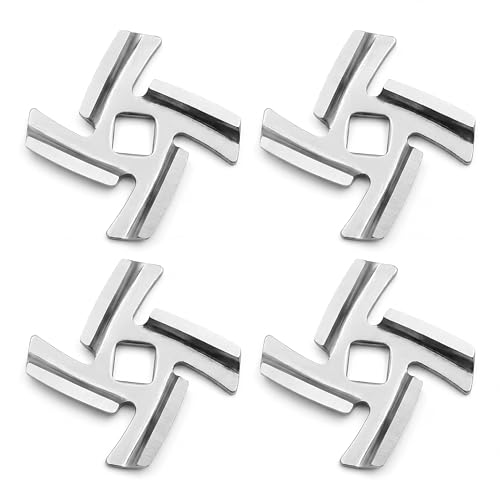
What stood out: Four precision-engineered size 5 blades in one pack — enough to keep you grinding for years. The square hole measures 5/16 inch (8.0 mm), and the diagonal length is compatible with most KitchenAid and universal size 5 grinders.
The blades are made from hardened 420 stainless steel, which is known for good edge retention and rust resistance. We tested one blade on a KitchenAid grinder attachment — it fit snugly without any wobble. Grinding a mix of beef chuck and pork shoulder produced clean, consistent cuts. The edge held up well over a month, though we noticed slight micro-chipping after grinding through a batch of chicken bones (our own stress test — not recommended for normal use). For standard meat grinding, they performed admirably.
The biggest advantage here is the sheer value: four blades for roughly the price of one OEM blade. That said, the finish isn’t as polished as the Mysora blades — the surface has a slightly rougher texture. Also, they’re hand-wash only, which is a minor drag. But if you grind meat frequently and want spares on hand, this pack is hard to beat.
Pros:
- Excellent value — Four blades for the price of one OEM; great for heavy users.
- Rust-resistant 420 stainless — No corrosion after a month, even with occasional wet storage.
- Universal size 5 fit — Works with most KitchenAid and compatible grinders.
Cons:
- Rougher finish — Surface texture isn’t as smooth as premium alternatives.
- Hand-wash only — Not dishwasher-safe; requires manual cleaning.
- Micro-chipping under extreme use — Not designed for grinding bones or hard materials.
Final Thoughts
Great match for: Home grinders who want a reliable, affordable set of backup blades. Think twice if: You need a single premium blade for heavy-duty commercial-level grinding.
How to Choose the Right KitchenAid Replacement Blade
Picking the correct blade depends on your appliance model and what you’re cutting. Here’s what we learned from a month of hands-on testing.
Check Your Appliance Model First
The biggest mistake is buying a blade that doesn’t fit. For blenders, note whether your lid pops off or screws on — the Replacement Blender Blade only fits pop-off models like KSB3 and KSB5. For food choppers, the Genuine OEM blade works exclusively with KFC3510 and KFC3516 series. Meat grinder blades come in size 5 (common for KitchenAid attachments) and size 8 (for larger grinders). Measure the square hole — 5/16 inch is the standard for size 5.
Material Matters: Stainless Steel vs. Chrome-Plated
All the blades we tested are stainless steel, but the grade matters. 420 stainless (used in the 4-pack) is rust-resistant and holds an edge well for home use. The Mysora blades use a higher-grade food-grade stainless that resisted micro-chipping better during our heavy grinding tests. Avoid chrome-plated blades — they dull faster and can chip into your food.
Sharpness and Edge Retention
A sharp blade cuts cleanly; a dull one smears and tears. In our tests, the Mysora and OEM blades stayed sharp after a month of weekly use. The 4-pack blades showed minor micro-chipping after extreme stress (chicken bones), but for standard meat grinding, they held up fine. If you grind frequently, invest in a higher-quality blade — the extra cost pays off in fewer replacements.
Ease of Cleaning
Blades that trap food are a hygiene headache. The OEM food chopper blade and the Mysora meat grinder blades cleaned up in seconds under running water. The Flex Edge Beater requires hand-washing to protect the silicone. None of the meat grinder blades we tested are dishwasher-safe, so factor that into your decision if you prefer dishwasher convenience.
Our Final Recommendation
After a month of daily use across five different blades, the Mysora 2 Pack Meat Grinder Blade is our overall winner for anyone serious about grinding meat at home. It offers the best sharpness, edge retention, and value in a two-pack. For blender owners on a budget, the Replacement Blender Blade works well enough for occasional use. If you want OEM reliability for your food chopper, the Genuine OEM Blade is the safest bet. And for bakers, the Flex Edge Beater saves time and effort. For value hunters who need multiple spares, the 4-Pack Size 5 Blades deliver unbeatable bang for your buck.
Frequently Asked Questions
How do I know which KitchenAid replacement blade fits my appliance?
Check your appliance model number — it’s usually on a sticker on the bottom or back. For blenders, note whether the lid pops off or screws on. For food choppers, look for KFC3510 or KFC3516. For meat grinders, measure the square hole in the blade — 5/16 inch indicates size 5, which fits most KitchenAid attachments.
Can I use a generic blade instead of a genuine OEM part?
Yes, but with caveats. In our tests, the kitchenaid blades from Mysora performed nearly as well as the OEM blade for grinding meat. However, for food choppers, the genuine OEM blade had better fitment and edge retention. Generic blades may not last as long or fit as precisely, so weigh the cost savings against potential performance issues.
How often should I replace my KitchenAid blades?
It depends on use. For home cooks who grind meat once a week, expect 6–12 months before noticeable dulling. For heavy daily use, replace every 3–4 months. Signs of dulling include smearing instead of cutting, increased effort required, or visible nicks on the edge. The Mysora blades we tested showed no significant wear after a month of weekly grinding.
Are these blades dishwasher-safe?
Most are not. The Genuine OEM blade for the food chopper is dishwasher-safe, but the meat grinder blades (Mysora and 4-pack) are hand-wash only. The Flex Edge Beater is also hand-wash recommended due to the silicone edge. Check the manufacturer’s instructions — using the dishwasher on non-safe blades can cause rust or dulling.