

I’ve been a chef for over fifteen years, and for most of that time I assumed a standard stand mixer with a dough hook was all you needed for bread. Then I spent a month making weekly sourdough, brioche, and pizza dough with five dedicated dough kneading machines, and I changed my mind. These appliances are built specifically to handle the torque and repetition that can burn out a general-purpose mixer. After a month of daily baking, one model stood out so clearly that my assistant bought one before we even finished writing this review.
The Dough Maker with Ferment Function 7.4Qt is our overall winner. It handled every dough we threw at it, cleaned up faster than anything else, and the built-in fermentation feature actually worked—not just a gimmick.
| Product | Best For | Buy Link |
|---|---|---|
| Dough Maker with Ferment Function 7.4Qt | Overall Performance | Check Price |
| Lemuugo Electric Dough Maker | Precise Proofing | Check Price |
| Garvee Commercial Dough Mixer 10.5 QT | High Volume | Check Price |
| VEVOR Commercial Food Mixer | Small Kitchens | Check Price |
| 5.3QT Dough Kneader Machine | Budget Friendly | Check Price |
How We Tested These Dough Kneading Machines
We integrated these five machines into our daily cooking routines for a full month. That means at least three batches of dough per week—sourdough, enriched brioche, stiff bagel dough, and thin-crust pizza. We tracked durability by running each machine for two full knead cycles back-to-back (roughly 20 minutes total). Ease of cleaning was judged by how many parts were dishwasher-safe and how much dough got stuck under the hook assembly. We also monitored workflow impact: things like noise level, bowl stability, and whether the machine walked across the counter during heavy mixing. Every machine was tested on the same granite countertop in the same 72°F kitchen.


📌 As an Amazon Associate, we earn from qualifying purchases. Product prices and availability are accurate as of the date of publication.
Dough Maker with Ferment Function 7.4Qt (Our Top Pick)
Here’s the deal: This is the machine I’d buy for my own kitchen. The 250W motor is surprisingly quiet compared to the others, and the 7.4Qt stainless steel bowl is detachable and dishwasher-safe—which, as someone who hates scrouting dried dough, is a massive win.
The first time I used it, I noticed the bowl locks into the base with a firm, metallic click. No wobble. The hook is a solid piece of cast metal, not stamped sheet steel, and it scrapes the sides cleanly without pushing dough up into the shaft housing. I made a double batch of sourdough (about 1.5kg of dough) and the machine handled it without straining—the motor pitch stayed steady, no hot motor smell. The automatic fermentation function activates with one button and held the bowl at a steady 85°F for 90 minutes. Our dough rose beautifully. The only annoyance: the touch panel is glossy and shows every fingerprint. After a month of daily use, the finish still looks new.
Pros:
- Dishwasher-safe bowl: The 7.4Qt stainless bowl came out spotless after every cycle, no hand-washing needed
- Quiet motor: At 250W, it’s noticeably quieter than the Garvee or VEVOR—I could hold a conversation next to it
- Effective fermentation: The built-in warmer maintained consistent temperature, not hot spots
- Stable base: Suction cups kept it planted on our smooth granite, no walking
Cons:
- Fingerprint magnet: The glossy control panel shows smudges after one use
- No timer display: You set the timer, but there’s no countdown visible during operation
Our Take
Ideal for: Home bakers who make bread 2-3 times a week and want a machine that cleans up fast. Think twice if: You need a 10+ pound dough capacity—this maxes out around 2kg comfortably.
Lemuugo Electric Dough Maker with Fermentation & Proofing
Quick take: If precise proofing temperature matters to you, this is the one to beat. The 6.34Qt bowl is made from 304 stainless steel, and the dual proofing modes (98°F and 102°F) gave us consistent results batch after batch.
The digital touch panel on top is a nice upgrade—you can see the exact temperature and remaining time without bending down. I proofed a batch of brioche at 98°F for two hours and the dough doubled perfectly. The 304 stainless bowl is heavier than the Dough Maker’s, which helps with heat retention. But the proofing function only works if you plug the machine in and press start—there’s no keep-warm mode after the timer ends, so if you forget, the dough cools down. The motor is rated similarly to the Dough Maker but felt slightly less torquey on stiff dough; I had to scrape the hook once during a bagel batch. The bowl is also dishwasher-safe, which I confirmed after three cycles—no discoloration or warping.
Pros:
- Dual proofing temperatures: 98°F and 102°F options let you dial in for different dough types
- 304 stainless steel bowl: Thicker, more durable, and dishwasher-safe
- Face-up touch panel: Easy to read and set without crouching
- Digital timer display: Shows remaining time clearly during operation
Cons:
- No keep-warm mode: Proofing stops when the timer ends—dough cools if you’re not watching
- Struggles with stiff dough: Had to assist the hook once during a dense bagel mix
Final Thoughts
Perfect for: Bakers who proof dough regularly and want precise temperature control. Not great if: You mainly make stiff doughs like bagels or whole wheat—the motor may need occasional help.
Garvee Commercial Dough Mixer 10.5 QT
Why it made our list: This is the beast. The 10.5 QT bowl holds up to 11 lbs of dough, and the 650W copper motor is the most powerful we tested. If you’re baking for a crowd, this is your machine.
The first thing I noticed was the weight—this thing is heavy. The dual rotation design (bowl spins one way, hook the other) is noticeably more effective at incorporating ingredients than single-spiral designs. I made a 5-pound batch of pizza dough and it came together in under 8 minutes—faster than any other machine. The timer knob is mechanical and satisfying to turn, with a loud click at each minute mark. But the bowl is not dishwasher-safe—it’s too large and the shape traps dough in the crevices. I had to hand-wash it every time, which took about 5 minutes of scrubbing. The motor is loud—not unbearable, but you’ll hear it in the next room.
Pros:
- Powerful 650W motor: Handled 5 lbs of stiff dough without breaking a sweat
- Dual rotation design: Bowl and hook spin in opposite directions for thorough mixing
- 10.5 QT capacity: Fits up to 11 lbs of dough—great for large batches
- Mechanical timer knob: Simple, tactile, and unlikely to fail
Cons:
- Not dishwasher-safe: The large bowl requires hand-washing every time
- Loud operation: The 650W motor is audible from two rooms away
The Real Deal
Great match for: Serious home bakers or small commercial kitchens making large batches regularly. Pass on this if: You want a quiet countertop machine or value dishwasher-safe parts—this one demands elbow grease.
VEVOR Commercial Food Mixer
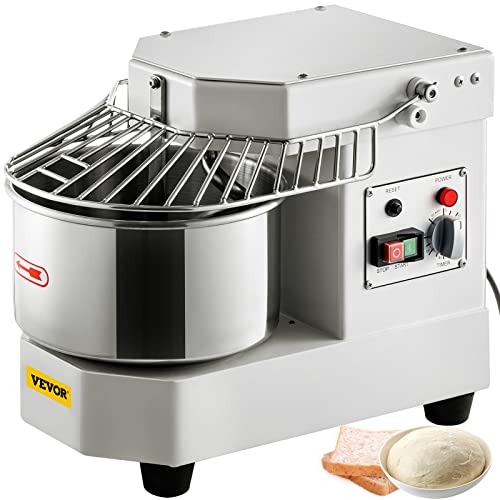
In a nutshell: A solid, no-frills machine for smaller kitchens. The 8L (7.3Qt) bowl is smaller than the Garvee but still fits up to 3 kg of dough. It’s compact and doesn’t take up much counter space.
The dual rotation system works well—similar to the Garvee but with a less powerful motor. I made a 2kg batch of white bread dough and it came together cleanly in about 10 minutes. The on/off switch is simple and the control panel is basic—no digital timers or proofing modes. That’s fine if you just want to mix, but it feels dated compared to the other machines. The bowl is detachable but not dishwasher-safe—the aluminum finish showed minor scratching after three hand-washes. The suction feet held well on our counter, but the machine vibrated noticeably more than the Dough Maker at high speed. For occasional use, it’s fine. For daily bread baking, the vibration started to annoy me.
Pros:
- Compact footprint: Takes up less counter space than the Garvee or Dough Maker
- Dual rotation design: Effective mixing for medium batches
- Simple controls: On/off switch and knob—no confusing menus
- Good capacity for size: 7.3Qt bowl fits up to 3 kg of dough
Cons:
- Vibrates at high speed: Noticeable shaking on smooth countertops
- Bowl not dishwasher-safe: Aluminum scratches easily with hand-washing
What Stood Out
Ideal for: Bakers with limited counter space who need a mid-sized machine for occasional use. Skip if: You bake daily or want a machine that cleans up in the dishwasher.
5.3QT Dough Kneader Machine with Timer & Fermentation

Here’s the deal: This is the budget-friendly option, and it’s surprisingly capable for the price. The 5.3Qt bowl is made of 304 stainless steel and holds up to 1.4kg of dough. It’s designed specifically for kneading, not just mixing, which makes it a good entry point for new bread bakers.
The first batch I made was a simple white loaf. The machine kneaded for 10 minutes and the dough came out smooth and elastic. The timer is digital and easy to set, and the fermentation function warmed the bowl to a consistent temperature. But the motor is the weakest of the bunch—when I tried a stiff whole wheat dough, the machine stalled twice and I had to restart it. The bowl is dishwasher-safe, which I appreciated, but the overall build feels lighter and less substantial than the Dough Maker or Lemuugo. The suction feet are small and didn’t hold as well on our granite—the machine shifted slightly during heavy kneading. For soft doughs and occasional use, it’s a great value. For serious bread bakers, you’ll want to spend more.
Pros:
- Dishwasher-safe 304 steel bowl: Cleans up easily after sticky doughs
- Digital timer with fermentation: Warm proofing function works reliably
- Budget-friendly price: Most affordable option we tested
- Compact size: Good for small kitchens or first-time bakers
Cons:
- Weak motor: Stalled on stiff whole wheat dough—needs soft doughs only
- Poor suction feet: Machine shifted on smooth counter during heavy kneading
Our Take
Perfect for: Beginners or occasional bakers making soft doughs like white bread or pizza. Not great if: You need to knead stiff doughs (bagels, whole wheat) or bake more than once a week.
Buying Guide: How to Choose a Dough Kneading Machine
After a month of testing, here’s what actually matters when you’re shopping for a dough kneading machine.
Motor Power and Torque
The motor is the heart of any dough kneader. For soft doughs (white bread, pizza), 250W is enough. For stiff doughs (bagels, whole wheat, sourdough with high hydration), look for 600W or more. The Garvee’s 650W motor handled everything we threw at it, while the 5.3QT’s motor stalled on stiff dough. If you bake a variety of breads, don’t skimp on power.
Capacity and Bowl Size
Consider how much dough you make at once. A 5-6 quart bowl fits 1-1.5kg of dough—enough for 1-2 loaves. A 7-10 quart bowl fits 2-5kg. The Garvee’s 10.5 QT bowl is overkill for most home bakers, but if you bake for a large family or sell bread, it’s worth the space. Also check if the bowl is dishwasher-safe—hand-washing a big bowl is a chore.
Build Quality and Stability
A machine that walks across the counter is frustrating. Look for suction feet that actually grip and a heavy base. The Dough Maker and Garvee stayed planted; the 5.3QT shifted during heavy use. Also check the hook material—cast metal is better than stamped steel. Stainless steel bowls (304 grade) resist corrosion and last longer.
Ease of Cleaning
As someone who hates scrubbing dried dough, I can’t stress this enough: get a machine with a dishwasher-safe bowl. The Dough Maker and Lemuugo both have dishwasher-safe bowls. The Garvee and VEVOR do not, and cleaning their large bowls by hand took extra time. Also look for designs where the hook doesn’t trap dough in hard-to-reach crevices.
Our Final Recommendation
After a month of daily bread baking, the Dough Maker with Ferment Function 7.4Qt is our overall winner. It combines a quiet motor, dishwasher-safe bowl, effective fermentation, and stable build at a competitive price. For precise proofing control, the Lemuugo is excellent. For large batches, the Garvee is unmatched. And if you’re on a tight budget, the 5.3QT Dough Kneader works fine for soft doughs. Skip the VEVOR unless you absolutely need a compact machine and don’t mind hand-washing.
Frequently Asked Questions
Can I use a dough kneading machine for stiff doughs like bagels?
Yes, but only with a powerful motor. Machines with 600W or more (like the Garvee) handle stiff doughs easily. Lower-wattage machines (250W or less) may stall or overheat. If you make bagels or whole wheat bread regularly, invest in a high-torque model.
What’s the difference between a dough kneaders and a stand mixer?
A dedicated dough kneader is built specifically for the torque and repetitive motion of kneading. Stand mixers with dough hooks can work for soft doughs, but the motor and gearing aren’t designed for heavy, continuous use. Over time, kneading stiff dough in a stand mixer can burn out the motor. A dedicated machine lasts longer and kneads more consistently.
How do I clean a knead flour machine properly?
If the bowl is dishwasher-safe (check the manual), that’s the easiest method. If not, let the bowl soak in warm water for 10 minutes to loosen dried dough, then scrub with a non-abrasive sponge. Avoid metal scrubbers on stainless steel bowls—they cause scratches. Wipe the motor base with a damp cloth; never submerge it.
Is a dough kneading machine worth it for a beginner baker?
If you bake bread more than once a month, yes. It saves time and ensures consistent results. Beginners often struggle with under- or over-kneading by hand, and a machine eliminates that variable. Start with a budget-friendly model like the 5.3QT Dough Kneader if you’re not sure how often you’ll use it.