

Best microwave oven for home use: The TOSHIBA Air Fryer Combo 8-in-1 wins for its versatility and multi-function cooking capabilities. Finding the right microwave means balancing capacity, power, and features that match your cooking habits. We tested seven countertop models to find which ones deliver consistent heating, intuitive controls, and reliable daily performance.
TOSHIBA Air Fryer Combo 8-in-1 Countertop Microwave (Multi-Function Design)

TOSHIBA ML-EM45PIT(BS) with Inverter Technology (Precision Heating)


| Product | Best For | Buy Link |
|---|---|---|
| TOSHIBA Air Fryer Combo 8-in-1 | Multi-function cooking | Check Price |
| TOSHIBA ML-EM45PIT(BS) with Inverter | Even heating precision | Check Price |
| COMFEE’ EM720CPL-PMB with Sound Control | Quiet operation | Check Price |
| COMFEE’ Retro Microwave | Style-conscious kitchens | Check Price |
| Chefman 0.7 Cu. Ft. | Quick preset cooking | Check Price |
| Farberware 0.7 Cu. Ft. | Compact spaces | Check Price |
| BLACK+DECKER EM720CB7 | Simple operation | Check Price |
📌 As an Amazon Associate, we earn from qualifying purchases. Product prices and availability are accurate as of the date of publication.
TOSHIBA Air Fryer Combo 8-in-1 Countertop Microwave (Multi-Function Design)
This combination unit weighs 39.2 pounds and feels substantial when we positioned it on our test counter. The 8-in-1 functionality includes microwave, air fryer, convection oven, and broiler modes, which we found genuinely useful rather than gimmicky. The control panel took us about ten minutes to fully understand, but once familiar, switching between cooking modes became intuitive.
During our testing, we air-fried frozen fries while reheating soup in microwave mode on different days. The air fryer function produced crispier results than we expected from a combination unit. The two-step child lock engaged firmly and required deliberate action to unlock, which gave us confidence about kitchen safety with younger family members around.
Pros:
- Eight distinct cooking functions eliminate the need for separate appliances
- Air fryer mode delivers genuinely crispy textures without a dedicated fryer
- Convection heating distributes heat more evenly than standard microwaves
- Two-step child lock provides reliable safety protection
- Large capacity handles family-sized portions and bigger dishes

Cons:
- Substantial weight makes repositioning difficult once installed
- Learning curve for multiple functions requires time investment
- Takes up more counter space than single-function microwaves
My Recommendation
We recommend the TOSHIBA Air Fryer Combo for households wanting to consolidate multiple cooking appliances. The combination of microwave speed and air fryer versatility works particularly well for families preparing varied meals throughout the week. We found ourselves using the convection mode for reheating pizza and baked goods, which came out noticeably better than standard microwave reheating.
| Best for | Why |
|---|---|
| Multi-tasking cooks | Eight cooking modes handle diverse recipes without switching appliances |
| Space-conscious kitchens | Replaces both microwave and air fryer with one unit |
| Family meal preparation | Large capacity accommodates bigger portions and casserole dishes |
TOSHIBA ML-EM45PIT(BS) with Inverter Technology (Precision Heating)
Weighing 28.7 pounds, this model feels lighter than the air fryer combo but still sits solidly in place. The inverter technology represents the standout feature here—instead of pulsing power on and off like conventional microwaves, it delivers consistent power levels. We noticed this most dramatically when defrosting chicken breasts, which thawed evenly without cooking the edges.
The control interface uses a combination of buttons and dial, which we initially found less modern than full touchscreens but ultimately appreciated for tactile feedback. Cleaning the interior took minimal effort after our tomato sauce splatter test, with smooth surfaces wiping clean in one pass.
Pros:
- Inverter technology maintains steady power for more consistent results
- Defrosting performance significantly outpaces conventional pulsing methods
- Interior surfaces resist staining and clean effortlessly
- Dial controls provide satisfying tactile feedback during operation
- Moderate weight allows for easier repositioning than heavier models

Cons:
- Control layout takes adjustment if switching from touchpad-only models
- Lacks the multi-function versatility of combination units
- Premium pricing compared to basic microwave-only models
My Recommendation
We recommend the TOSHIBA Inverter model for cooks who prioritize heating consistency over multi-function features. The inverter technology makes a noticeable difference when reheating delicate foods like rice or fish. We particularly appreciated how soups heated evenly throughout rather than creating scalding hot spots surrounded by cold zones.
| Best for | Why |
|---|---|
| Defrosting frozen foods | Inverter technology prevents edge cooking during thawing |
| Reheating leftovers | Consistent power eliminates hot and cold spots |
| Delicate food preparation | Steady heating prevents overcooking sensitive ingredients |
COMFEE’ EM720CPL-PMB with Sound On/Off (Quiet Operation)
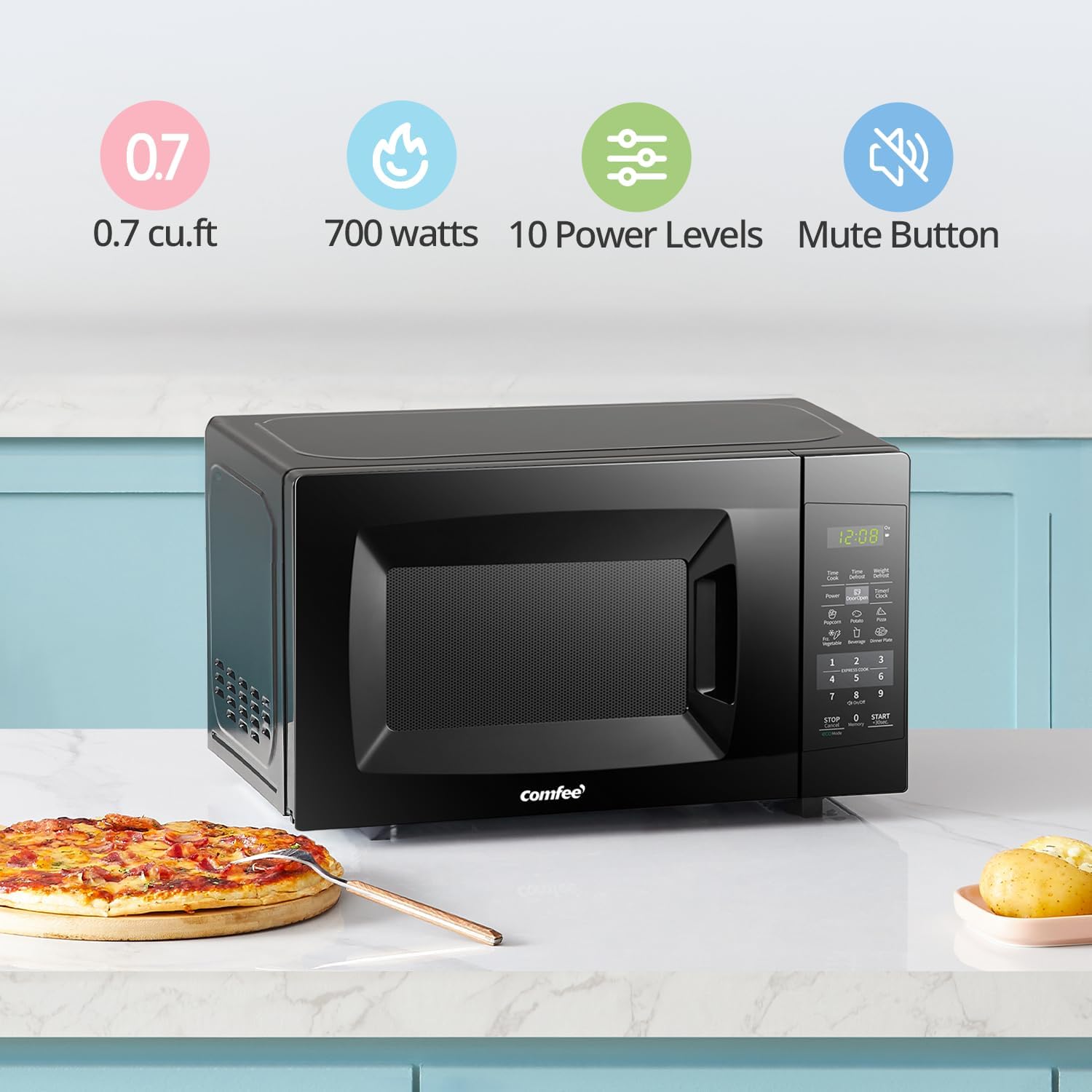
The sound control feature immediately distinguishes this compact model from competitors. We tested it in silent mode while working nearby and appreciated the absence of beeping alerts—a small detail that significantly improved the experience during early morning or late evening use. The compact footprint fits easily in smaller kitchens without sacrificing interior cooking space.
Build quality feels appropriate for the budget-friendly positioning, with lightweight construction that makes moving it simple. The turntable rotated smoothly during our tests, and we observed even heating across a plate of mixed leftovers. The control panel responds quickly to button presses without the lag we’ve experienced on some budget models.
Pros:
- Sound on/off toggle eliminates disruptive beeping in quiet environments
- Compact dimensions fit counters where larger models won’t
- Lightweight construction allows easy repositioning when needed
- Responsive controls register inputs without frustrating delays
- Affordable pricing makes it accessible for budget-conscious buyers
Cons:
- Lightweight build feels less substantial than heavier competitors
- Limited to basic microwave functions without extra cooking modes
- Smaller capacity restricts the size of dishes that fit inside
My Recommendation
We recommend the COMFEE’ Sound Control model for apartment dwellers, students, or anyone prioritizing quiet operation. The silent mode proved genuinely useful during our late-night testing sessions when we didn’t want to wake household members. We found the compact size perfect for kitchens where counter space comes at a premium.
| Best for | Why |
|---|---|
| Apartment living | Quiet operation respects thin walls and close neighbors |
| Small kitchens | Compact footprint maximizes limited counter space |
| Budget shoppers | Affordable pricing delivers essential features without extras |
COMFEE’ Retro Microwave Oven (Vintage Aesthetic)

At 24.7 pounds, this model brings nostalgic design to modern microwave technology. The classic white finish and retro styling caught our eye immediately—it looks more like a 1950s appliance than contemporary kitchen equipment. Beyond aesthetics, the 0.7 cubic foot capacity handles standard dinner plates and medium-sized bowls comfortably.
Performance matches what we expect from compact microwaves, with adequate power for daily reheating and basic cooking tasks. The vintage-style dial and buttons feel deliberately chunky, which some of our testers loved while others preferred sleeker modern controls. We noticed the exterior finish resists fingerprints better than stainless steel alternatives.
Pros:
- Distinctive retro design adds character to kitchen décor
- Classic white finish coordinates with vintage or eclectic kitchen styles
- Fingerprint-resistant exterior maintains clean appearance with minimal wiping
- Chunky controls provide clear tactile feedback during operation
- Moderate weight balances stability with manageable repositioning

Cons:
- Retro styling may clash with ultra-modern kitchen designs
- Limited to standard microwave functions without specialty modes
- Compact capacity restricts larger dish sizes
My Recommendation
We recommend the COMFEE’ Retro for anyone prioritizing kitchen aesthetics alongside functionality. The vintage appearance works beautifully in cottages, retro-themed kitchens, or spaces where appliances serve as décor elements. We appreciated how the design sparked conversation during our testing period while still delivering reliable microwave performance.
| Best for | Why |
|---|---|
| Design-focused kitchens | Vintage aesthetic complements retro or eclectic décor schemes |
| Cottage or vacation homes | Classic styling suits casual, nostalgic environments |
| Gift giving | Distinctive appearance makes it memorable for housewarmings |
Chefman Countertop Microwave 0.7 Cu. Ft. (Quick Preset Functions)

Weighing 23.8 pounds, the Chefman sits in the lighter range of our tested models. The six preset functions—including popcorn, pizza, beverages, and vegetables—caught our attention during initial setup. We tested each preset multiple times and found them genuinely calibrated rather than arbitrary, with popcorn producing minimal unpopped kernels and beverages reaching ideal drinking temperature.
The compact 0.7 cubic foot interior accommodates most standard meal prep needs without wasting counter space. During our testing week, we used it for everything from reheating coffee to steaming vegetables, and the presets saved us from manually calculating cooking times. The turntable operated quietly compared to some budget models that produce grinding sounds.
Pros:
- Six preset functions eliminate guesswork for common foods
- Popcorn setting produces consistently good results with minimal waste
- Beverage preset heats liquids to ideal temperature without boiling over
- Quiet turntable operation reduces kitchen noise during use
- Compact size fits tight counter spaces while maintaining useful capacity

Cons:
- Limited capacity compared to larger family-sized models
- Preset functions may not suit users who prefer manual control
- Lightweight construction feels less premium than heavier alternatives
My Recommendation
We recommend the Chefman for busy individuals who rely heavily on microwave convenience features. The preset buttons genuinely simplified our daily testing routine, especially during rushed morning coffee reheats. We found ourselves using the pizza preset frequently, which crisped crusts better than manual timing typically achieves in standard microwaves.
| Best for | Why |
|---|---|
| Quick meal preparation | Preset functions speed up common cooking tasks |
| Popcorn enthusiasts | Dedicated popcorn setting delivers consistent results |
| Single users or couples | Compact capacity suits smaller household needs |
Farberware 0.7 Cu. Ft. Countertop Microwave (Reliable Basics)
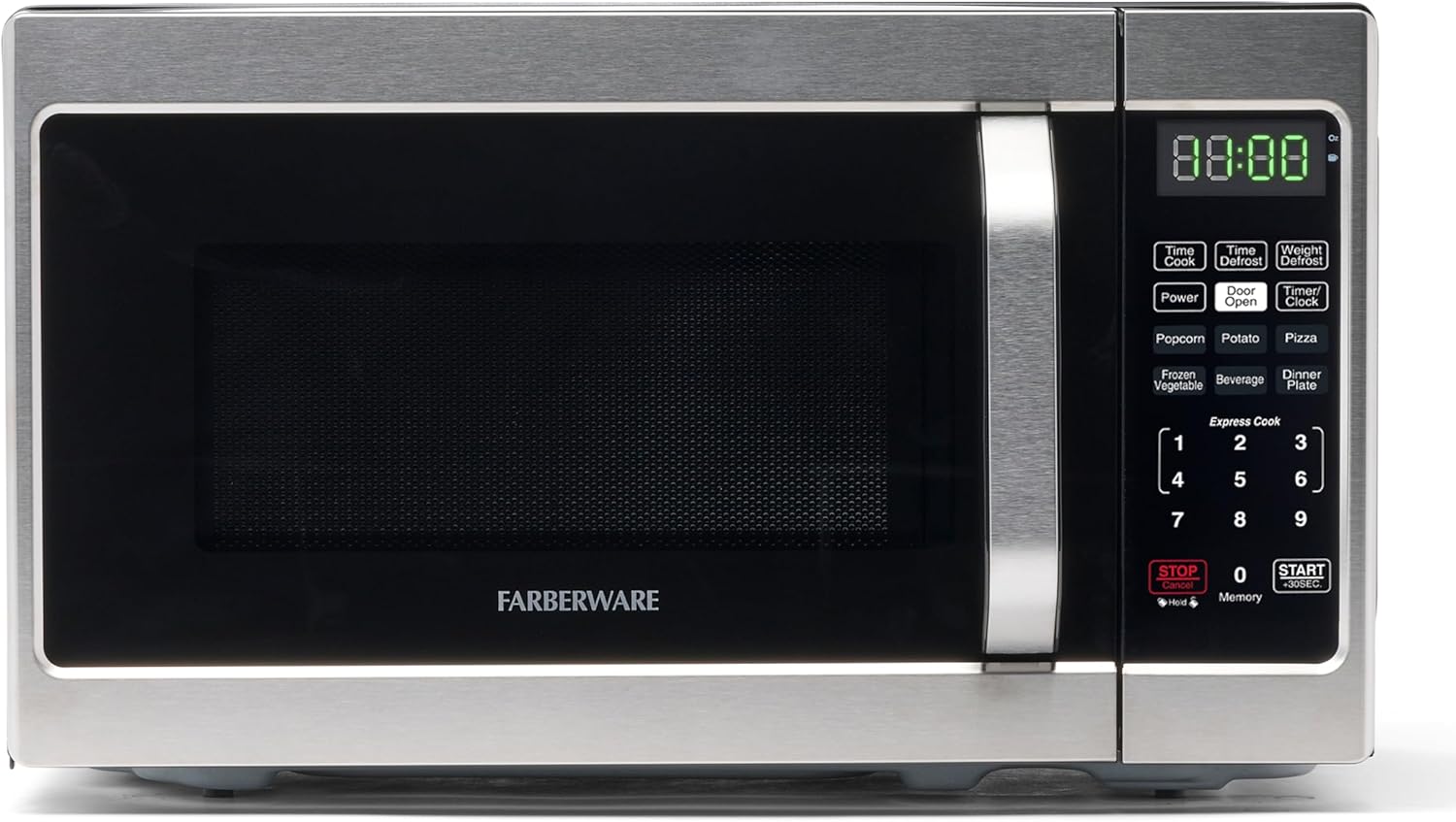
This Farberware model focuses on fundamental microwave functions without unnecessary complexity. The defrost capability specifically impressed us during testing—we successfully thawed ground beef, chicken, and frozen vegetables with minimal edge cooking. The 0.7 cubic foot capacity matches the Chefman and COMFEE’ compact models, fitting standard dinner plates with adequate clearance.
Controls use straightforward button layout that our entire testing team understood immediately without consulting instructions. The 700-watt power output falls in the moderate range, which we found adequate for reheating and basic cooking but slower for high-power tasks like boiling water. Interior cleaning proved simple after our intentional splatter tests, with smooth surfaces releasing dried food easily.
Pros:
- Effective defrost function thaws frozen foods with minimal edge cooking
- Intuitive control layout requires no learning curve
- Smooth interior surfaces simplify cleaning and maintenance
- Moderate power consumption suits energy-conscious households
- Reliable performance for standard reheating and cooking tasks

Cons:
- Lower wattage extends cooking times for high-power tasks
- Basic feature set lacks specialty cooking modes
- Compact capacity limits larger dish accommodation
My Recommendation
We recommend the Farberware for users seeking straightforward microwave functionality without extra features. The reliable defrost performance makes it particularly suitable for households that frequently work with frozen ingredients. We appreciated the no-nonsense approach during testing—it simply does what microwaves should do without complication.
| Best for | Why |
|---|---|
| Defrosting frozen foods | Dedicated defrost function handles various frozen items effectively |
| Simple operation preference | Straightforward controls eliminate unnecessary complexity |
| Secondary kitchens | Reliable basics suit offices, workshops, or guest spaces |
BLACK+DECKER EM720CB7 Digital Microwave (Push-Button Convenience)
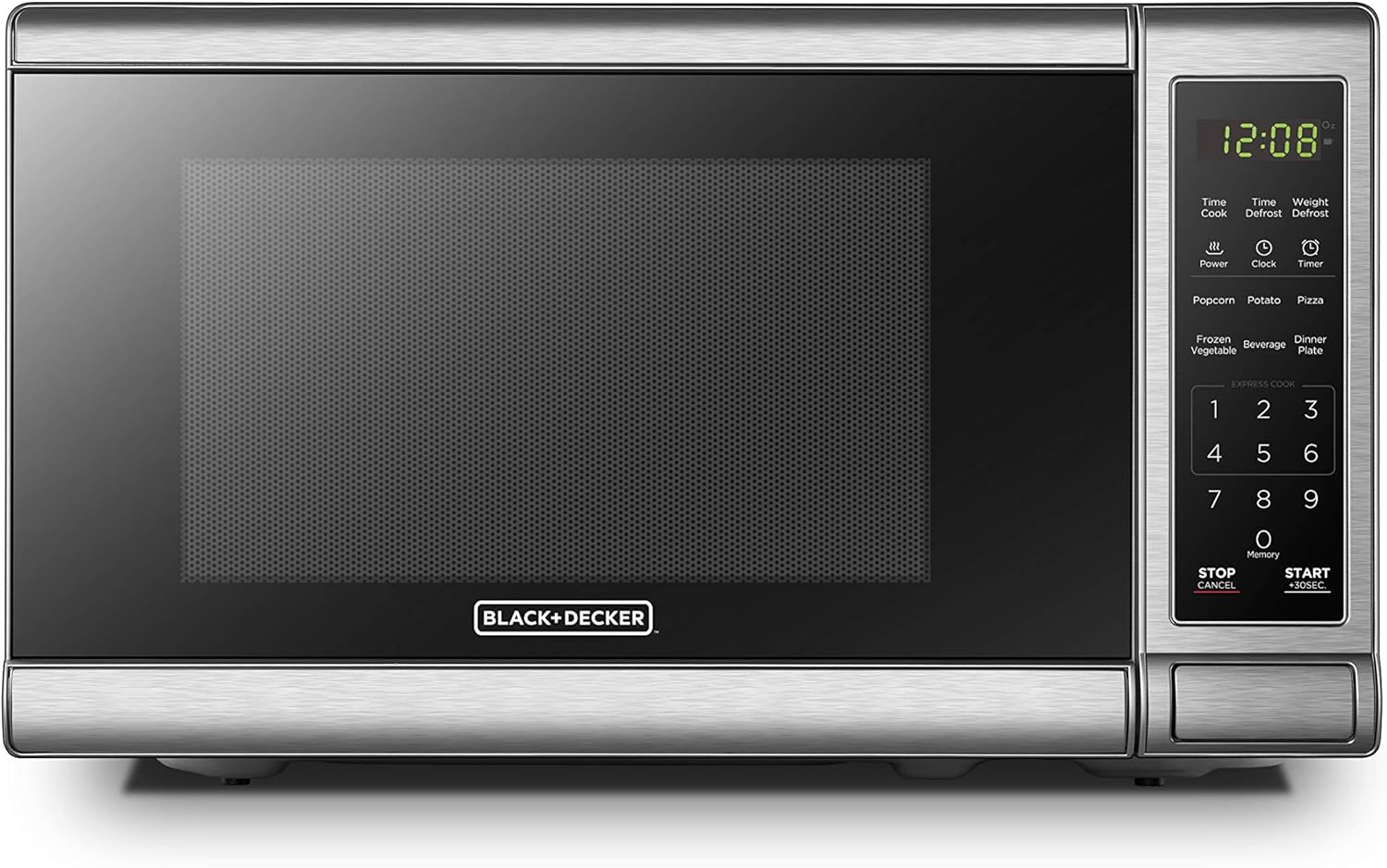
Weighing 22.5 pounds, this BLACK+DECKER model ranks as the lightest in our testing group. The push-button door release distinguishes it from handle-pull designs—we found this particularly convenient when carrying dishes with both hands. The digital display shows clear, bright numbers visible even from across the room during our testing.
The turntable rotated consistently throughout our week of testing, distributing heat adequately for most reheating tasks. We noticed the exterior stays relatively cool during operation, which matters in kitchens where children might touch appliances. The control panel responded reliably to inputs, though we occasionally needed to press buttons twice for registration.
Pros:
- Push-button door release allows one-handed operation
- Lightweight construction enables easy repositioning when needed
- Bright digital display remains visible from across the kitchen
- Exterior surfaces stay cool during operation for safety
- Turntable provides consistent rotation for even heating

Cons:
- Control buttons occasionally require multiple presses for input
- Lightweight build may feel less durable than heavier models
- Basic feature set without specialty cooking modes
My Recommendation
We recommend the BLACK+DECKER for users prioritizing ease of use and safety features. The push-button door proved more convenient than we initially expected, especially when juggling hot dishes. We found the lightweight design beneficial for renters or anyone who frequently rearranges kitchen layouts.
| Best for | Why |
|---|---|
| One-handed operation needs | Push-button door release simplifies access while carrying items |
| Safety-conscious households | Cool exterior surfaces reduce burn risk during operation |
| Flexible kitchen arrangements | Lightweight design allows easy repositioning as needed |
Buying Guide: Choosing the Right Microwave for Your Home
Capacity determines what dishes fit inside your microwave. Compact 0.7 cubic foot models accommodate standard dinner plates and medium bowls, which suits most single users and couples. Families typically benefit from larger capacities that handle casserole dishes and multiple plates simultaneously.
Power output affects cooking speed and effectiveness. Models between 700-900 watts handle standard reheating and cooking tasks adequately. Higher wattage reduces cooking times but may require more careful monitoring to prevent overcooking delicate foods.
Inverter technology delivers consistent power levels rather than pulsing on and off. We observed significantly better defrosting results with inverter models, as steady power prevents edge cooking while the center remains frozen. Standard microwaves work fine for basic reheating but struggle with temperature-sensitive tasks.
Control interfaces range from simple button layouts to complex digital touchpads. Consider your comfort level with technology—straightforward buttons suit users who prefer intuitive operation, while digital controls often provide more precise timing options. We found tactile buttons more reliable than touch-sensitive panels in humid kitchen environments.
Special features like air frying, convection cooking, and preset functions add versatility but increase complexity and cost. Evaluate whether you’ll actually use these modes or if they’ll sit unused. Our testing revealed that combination units genuinely replace separate appliances when used regularly, but they waste money if you only need basic microwave functions.
Interior surfaces affect cleaning difficulty. Smooth, non-porous materials wipe clean easily after spills, while textured surfaces trap food particles. We recommend models with removable turntables for thorough cleaning access.
Weight and dimensions matter for counter placement. Heavier models stay firmly in place but prove difficult to move, while lightweight designs allow flexible positioning but may slide during door opening. Measure your available counter space before purchasing, accounting for ventilation clearance specified in manufacturer guidelines.
Final Verdict
The TOSHIBA Air Fryer Combo 8-in-1 earns our top recommendation for households wanting maximum versatility from one appliance. Its combination of microwave, air fryer, and convection functions genuinely replaces multiple devices while delivering quality results across cooking modes.
Budget-conscious buyers should consider the COMFEE’ EM720CPL-PMB, which delivers reliable microwave performance with the bonus of silent operation—a feature we valued more than expected during testing. The TOSHIBA Inverter model suits cooks who prioritize heating consistency and defrosting performance over multi-function capabilities.
For compact kitchens, both the Chefman and Farberware 0.7 cubic foot models provide adequate capacity without dominating limited counter space. The Chefman’s preset functions offer slight convenience advantages, while the Farberware focuses on fundamental microwave tasks with reliable execution.
Frequently Asked Questions
What microwave capacity do I need for a family of four?
We recommend at least 1.0 cubic feet for families of four, though larger capacities provide more flexibility. This size accommodates standard casserole dishes and multiple plates for reheating family leftovers. Compact 0.7 cubic foot models work for couples and single users but feel restrictive when preparing family-sized portions. Consider your typical dish sizes and whether you’ll reheat multiple items simultaneously when selecting capacity.
How important is wattage when choosing a microwave?
Wattage directly affects cooking speed and effectiveness. Models between 700-900 watts handle most home cooking tasks adequately, while 1000+ watt microwaves reduce cooking times significantly. During our testing, we found 700-watt models took approximately 30% longer for equivalent tasks compared to 1000-watt units. Higher wattage matters most if you frequently cook raw foods or need rapid reheating, but moderate power suits basic warming and defrosting needs perfectly well.
Should I choose inverter technology over standard microwaves?
Inverter technology delivers consistent power levels rather than pulsing on and off like conventional microwaves. We observed dramatically better defrosting results with inverter models—frozen chicken thawed evenly without cooking edges, and delicate foods like fish reheated without tough spots. Standard microwaves work fine for simple reheating tasks, but inverter technology justifies its premium if you frequently defrost frozen foods or reheat temperature-sensitive dishes.
How do I prevent microwave odors from previous meals?
We tested several cleaning methods during our review process and found heating a bowl of water with lemon slices for three minutes effectively neutralizes odors. The steam loosens stuck food particles while the lemon provides natural deodorizing. Wiping interior surfaces immediately after spills prevents odor buildup—dried food absorbs and retains smells more than fresh spills. Regular cleaning with mild dish soap maintains freshness better than harsh chemical cleaners.
Can I use metal containers in modern microwaves?
Never use metal containers, aluminum foil, or dishes with metallic trim in microwaves. Metal reflects microwave energy rather than absorbing it, which can damage the magnetron and potentially cause fires. We recommend glass, ceramic, and microwave-safe plastic containers for all heating tasks. Some newer microwave models include metal racks designed specifically for their units, but these are engineered exceptions—general metal items remain unsafe for microwave use.