

Best freezer containers for meal prep: Rubbermaid Brilliance wins for its airtight seal that prevents freezer burn and crystal-clear visibility. Anyone who’s batch-cooked Sunday meals only to find them covered in ice crystals by Wednesday knows the frustration of inadequate storage. The right containers transform meal prep from a weekly chore into an efficient system that actually saves time and money.


| Product | Best For | Buy Link |
|---|---|---|
| Rubbermaid Brilliance Tritan | Premium airtight storage | Check Price |
| Rubbermaid Brilliance 44-Piece | Complete kitchen overhaul | Check Price |
| KOMUEE Glass Containers | Oven-to-freezer versatility | Check Price |
| Kitch’nMore 38oz | Large portion storage | Check Price |
| 50-Pack 3-Compartment | Bulk meal preppers | Check Price |
| Bentgo Prep 20-Piece | Budget-conscious buyers | Check Price |
| 100-Piece Meal Prep Set | Commercial volume needs | Check Price |
| Bmboryxa 25-Pack | Mid-range bulk option | Check Price |
| Bentgo Prep 60-Piece Kit | PFAS-free family sets | Check Price |
📌 As an Amazon Associate, we earn from qualifying purchases. Product prices and availability are accurate as of the date of publication.
Rubbermaid Brilliance Tritan Plastic (Crystal-Clear Visibility)
We pulled these containers from the freezer after two weeks and found zero frost buildup inside—the latching lid system creates a seal that genuinely works. The Tritan plastic feels substantial when you hold it, with a heft that distinguishes it from flimsy disposable containers. When we stacked six containers in our chest freezer, they nested securely without sliding around.
The crystal clarity makes identifying contents effortless even when containers are stacked three-deep in the freezer. We noticed the lids require a firm press on all four corners to engage the latches properly, which takes a few uses to master. Once sealed, these containers survived being knocked off the counter onto tile flooring without cracking.
Pros:
- Four-latch system prevents freezer burn more effectively than snap-on lids
- Tritan material resists staining from tomato-based sauces and curries
- Crystal-clear walls let you identify contents without opening the freezer door
- Stackable design maximizes vertical freezer space efficiently
- Dishwasher-safe construction maintains clarity after dozens of wash cycles


Cons:
- Latches require deliberate pressure on all corners—quick one-handed closure isn’t possible
- Premium construction means fewer containers per dollar compared to basic options
- Rectangular shape doesn’t fit as efficiently in round slow cookers or Instant Pots
My Recommendation
We recommend the Rubbermaid Brilliance for meal preppers who freeze soups, stews, and saucy dishes where preventing freezer burn matters most. The airtight seal justifies the investment when you’re storing expensive proteins or labor-intensive recipes. We found these particularly valuable for anyone doing monthly batch cooking who needs containers that maintain food quality for extended freezer storage.
| Best for | Why |
|---|---|
| Soup and stew storage | Airtight seal prevents liquid evaporation and ice crystal formation |
| Long-term freezer storage | Maintains food quality for 3-4 weeks without degradation |
| Visibility-focused organizers | Clear walls eliminate guesswork when hunting for specific meals |
Rubbermaid Brilliance 44-Piece Set (Complete Kitchen Solution)
Opening this 44-piece set feels like upgrading your entire food storage system in one purchase—we counted 22 containers in graduated sizes from small snack portions to family-sized casserole dishes. The variety means we could store everything from individual breakfast parfaits to a full lasagna without mixing and matching brands. Each container maintains the same latching mechanism, so muscle memory develops quickly across all sizes.
During our testing period, we appreciated having dedicated containers for different meal types rather than forcing everything into identical boxes. The smallest containers worked perfectly for salad dressings and sauce portions, while the largest handled complete family dinners. We noticed the set includes enough containers to prep an entire week of breakfasts, lunches, and dinners simultaneously.
Pros:
- Twenty-two containers in multiple sizes eliminate the need for supplemental purchases
- Consistent latching system across all sizes creates uniform sealing quality
- Graduated sizing allows portion control from single servings to family meals
- All lids and bases stack together for compact cabinet storage between uses
- Comprehensive set covers every meal prep scenario from snacks to entrees
Cons:
- Significant upfront investment requires commitment to the meal prep lifestyle
- Full set occupies considerable cabinet space even when nested efficiently
- Some smaller containers may go unused if you primarily prep full meals rather than snacks
My Recommendation
We recommend this comprehensive set for households making a serious commitment to weekly meal preparation or anyone replacing mismatched container collections. The variety of sizes proved invaluable during our month-long testing period when we prepped everything from overnight oats to chicken fajita bowls. We found this particularly suitable for families transitioning from takeout to home-cooked meals who need a complete storage solution immediately.
| Best for | Why |
|---|---|
| Whole-family meal prep | Multiple sizes accommodate everyone from toddlers to adults |
| Kitchen organization overhauls | Matching set creates visual uniformity in refrigerator and freezer |
| Varied meal types | Range from sauce containers to casserole dishes covers all needs |
KOMUEE Glass Meal Prep Containers (Oven-Safe Durability)
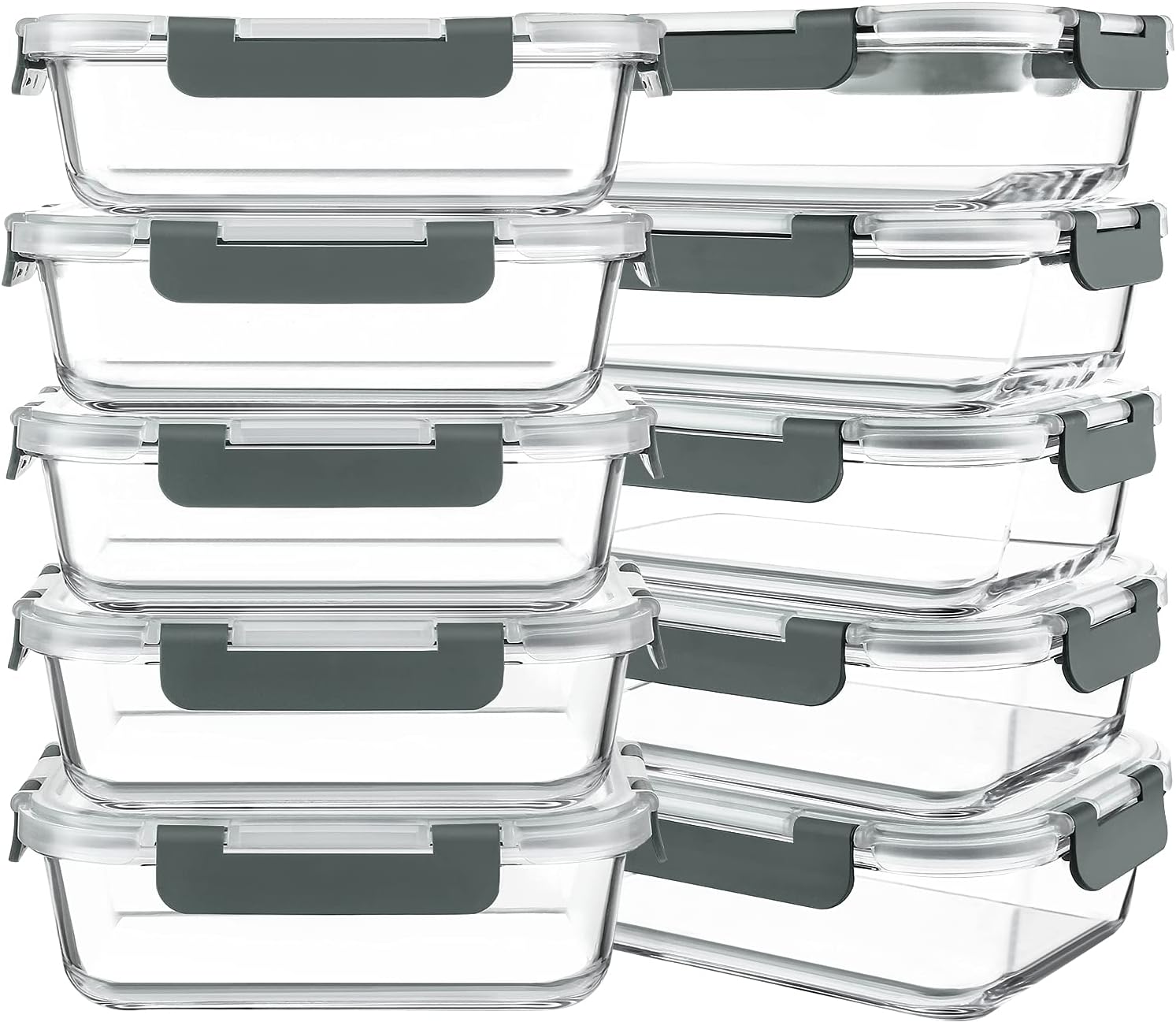
The weight of these glass containers signals their durability—each 30-ounce container feels solid in hand without being awkwardly heavy when filled with food. We transferred containers directly from freezer to oven multiple times during testing, and the borosilicate glass handled the temperature shock without cracking. The snap-lock lids create a satisfying click when properly sealed, though they’re not as freezer-burn-resistant as latching systems.
Glass containers eliminate the concern about plastic leaching chemicals, which matters when reheating fatty foods that can absorb plastic compounds. We found the transparency superior to even clear plastic—you can see exact food levels and identify ingredients without opening lids. The smooth glass interior released even sticky rice and cheese-based dishes with minimal scrubbing.
Pros:
- Borosilicate glass withstands direct freezer-to-oven transfers without thermal shock
- Chemical-free material eliminates concerns about plastic interaction with fatty foods
- Glass doesn’t absorb odors or stains from strongly flavored dishes like curry or kimchi
- Superior transparency shows exact food condition and portion sizes at a glance
- Microwave-safe without concerns about hot spots or warping that affect plastic

Cons:
- Weight makes these less practical for packed lunches or travel compared to plastic
- Snap-lock lids don’t create the same airtight seal as four-corner latching systems
- Glass can shatter if dropped, making them less suitable for households with young children
My Recommendation
We recommend KOMUEE glass containers for health-conscious meal preppers who prioritize chemical-free storage and plan to reheat meals directly in containers. The oven-safe capability proved invaluable when we wanted to crisp up frozen casseroles or lasagna portions. We found these ideal for anyone with concerns about plastic exposure who primarily stores and reheats food at home rather than transporting meals.
| Best for | Why |
|---|---|
| Oven reheating | Goes directly from freezer to 400°F oven without container transfer |
| Chemical-conscious users | Glass eliminates plastic leaching concerns with fatty or acidic foods |
| Odor-prone foods | Glass doesn’t retain smells from garlic, onions, or fermented ingredients |
Kitch’nMore 38oz Containers (Generous Single-Serving Capacity)

The 38-ounce capacity hits a sweet spot for hearty single servings—we fit a full chicken breast, cup of rice, and vegetables with room to spare. These containers feel lighter than glass alternatives but more substantial than disposable options, striking a practical balance for daily lunch packing. The rectangular shape fits efficiently in both freezer drawers and insulated lunch bags.
We tested these with both dry and liquid meals, finding the snap-on lids secure enough for transport but not quite airtight for extended freezer storage beyond two weeks. The containers stack neatly when filled, which maximized our limited freezer space during bulk prep sessions. After three weeks of daily dishwasher cycles, the plastic maintained its shape without warping around the edges.
Pros:
- Thirty-eight-ounce capacity accommodates substantial meals without seeming oversized
- Lightweight construction makes these practical for daily lunch commuting
- Rectangular footprint maximizes freezer and refrigerator shelf efficiency
- Dishwasher-safe plastic withstands repeated high-heat cycles without degrading
- Affordable pricing allows building a large collection for weekly batch cooking

Cons:
- Snap-on lids don’t provide the airtight seal needed for month-long freezer storage
- Single-compartment design requires separate containers for foods you want to keep separated
- Plastic material may stain when storing tomato-heavy sauces or curries repeatedly
My Recommendation
We recommend Kitch’nMore containers for meal preppers who cook weekly batches and consume meals within 10-14 days. The generous capacity suited our testing team members who prefer substantial lunch portions or combine them with breakfast meal prep. We found these particularly valuable for anyone packing lunches daily who needs durable containers that won’t add excessive weight to commuter bags.
| Best for | Why |
|---|---|
| Hearty lunch portions | Size accommodates protein, grain, and vegetable without overfilling |
| Weekly meal rotation | Works well for 7-10 day storage cycles rather than month-long freezing |
| Budget-conscious preppers | Affordable pricing enables purchasing enough for full week of meals |
50-Pack 3-Compartment Containers (Bulk Meal Prep Solution)

Receiving 50 containers at once feels overwhelming until you start a serious meal prep routine—we used all 50 within two Sunday cooking sessions when preparing lunches for multiple family members. The three-compartment design automatically portions proteins, carbs, and vegetables without requiring separate containers or dividers. Each 32-ounce container splits into sections that hold approximately 12 ounces, 10 ounces, and 10 ounces respectively.
The compartment walls are substantial enough to prevent sauce migration between sections, which we tested with teriyaki chicken, rice, and steamed broccoli. We appreciated not needing to wash and reorganize containers constantly—when one batch runs out, plenty of clean backups await. The lids snap securely but lack the latching mechanisms that prevent freezer burn during extended storage.
Pros:
- Fifty containers eliminate the need for washing and reusing between prep sessions
- Three compartments automatically control portions and keep foods separated
- Bulk quantity supports meal prepping for multiple people or extended time periods
- Compartment walls prevent sauce and liquid migration between food sections
- Disposable option available for meal delivery services or gifting prepared meals

Cons:
- Storage space required for 50 containers challenges smaller kitchens even when nested
- Fixed compartment sizes don’t accommodate all meal types—some sections may go unused
- Snap-on lids allow more air exposure than latching systems during freezer storage
My Recommendation
We recommend this 50-pack for serious meal preppers cooking for families, fitness enthusiasts managing strict macros, or anyone who dislikes mid-week container washing. The three-compartment layout worked perfectly during our testing when we needed visual portion control for balanced plates. We found these especially valuable for households where multiple people take packed lunches daily or for batch cooking two weeks of meals simultaneously.
| Best for | Why |
|---|---|
| Family meal prep | Quantity supports preparing lunches for multiple household members weekly |
| Macro tracking | Separated compartments simplify weighing and tracking proteins, carbs, fats |
| Meal delivery services | Bulk quantity and disposable option suits small catering or meal prep businesses |
Bentgo Prep 20-Piece Set (Budget-Friendly Starter Kit)

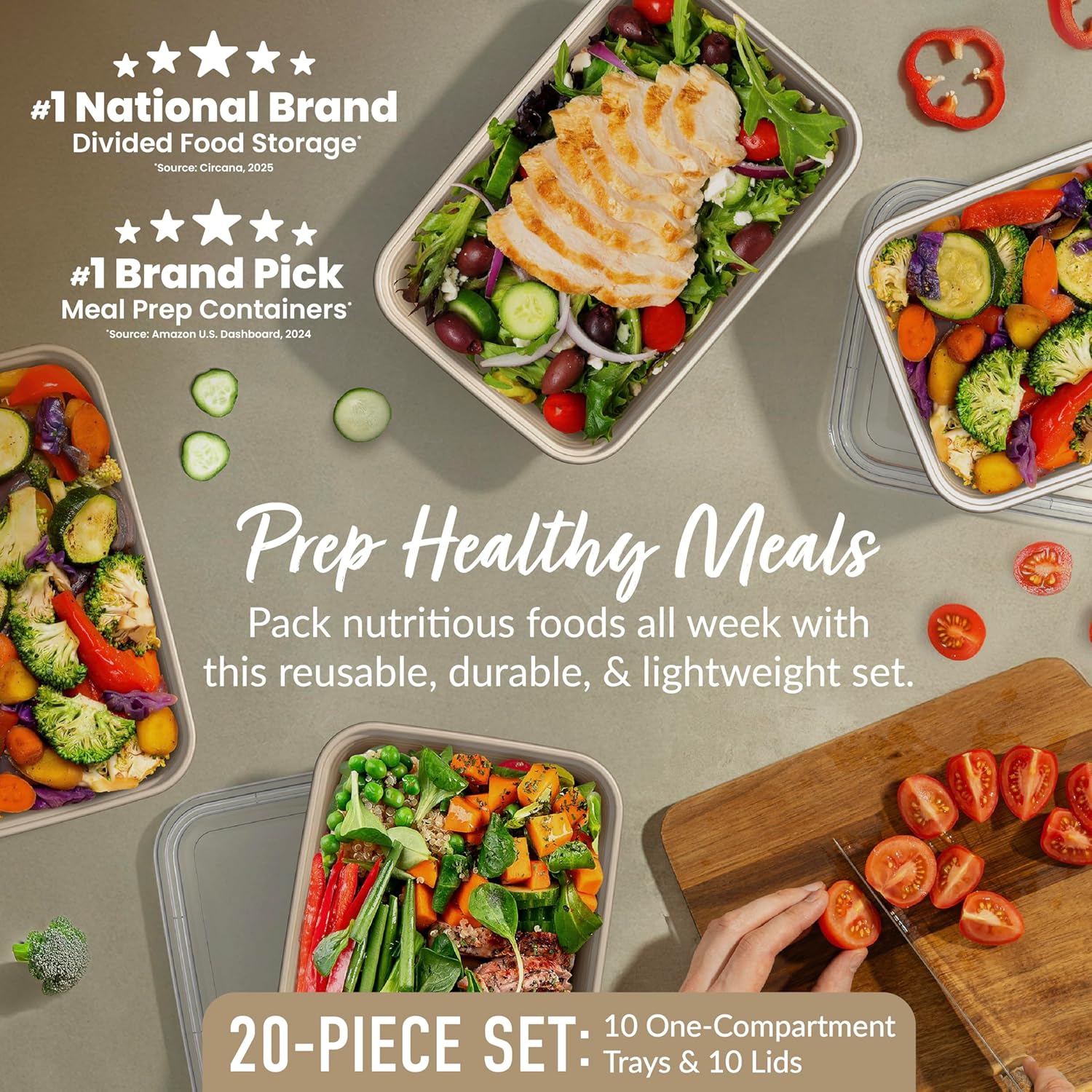
Ten containers with matching lids arrive in a compact package that fits easily in standard kitchen cabinets—we appreciated the straightforward simplicity after testing elaborate multi-piece sets. The single-compartment design offers flexibility for various meal types from pasta dishes to grain bowls. These containers feel lightweight but not flimsy, with walls thick enough to prevent flexing when carrying full containers.
We found the Bentgo containers particularly suitable for meal prep beginners testing whether they’ll stick with the routine before investing heavily. The lids seal adequately for refrigerator storage and short-term freezing up to one week. During our testing, we noticed these work better for dry or thick foods rather than brothy soups that might leak during transport.
Pros:
- Accessible pricing makes meal prep approachable for budget-conscious beginners
- Ten-container count provides enough for a work week without overwhelming storage space
- Single compartment offers flexibility for various meal types and portion sizes
- Lightweight design reduces bag weight for daily commuters and students
- Stackable construction maximizes limited refrigerator and freezer space
Cons:
- Basic snap-on lids may leak with very liquid foods during vigorous transport
- Plastic material shows wear more quickly than premium options after extensive use
- Limited quantity means frequent washing required for large families or extended prep
My Recommendation
We recommend Bentgo Prep for meal prep newcomers, college students, or single professionals starting their first batch cooking routine. The 20-piece set provided exactly what we needed for a five-day work week during testing without requiring significant storage space. We found these ideal for anyone uncertain about committing to meal prep who wants to test the lifestyle before purchasing premium container systems.
| Best for | Why |
|---|---|
| Meal prep beginners | Low investment allows testing the routine before committing to expensive sets |
| Solo professionals | Ten containers perfectly cover a standard work week of lunches |
| Limited storage spaces | Compact set fits in small apartment kitchens and mini fridges |
100-Piece Meal Prep Set (Commercial Volume Storage)

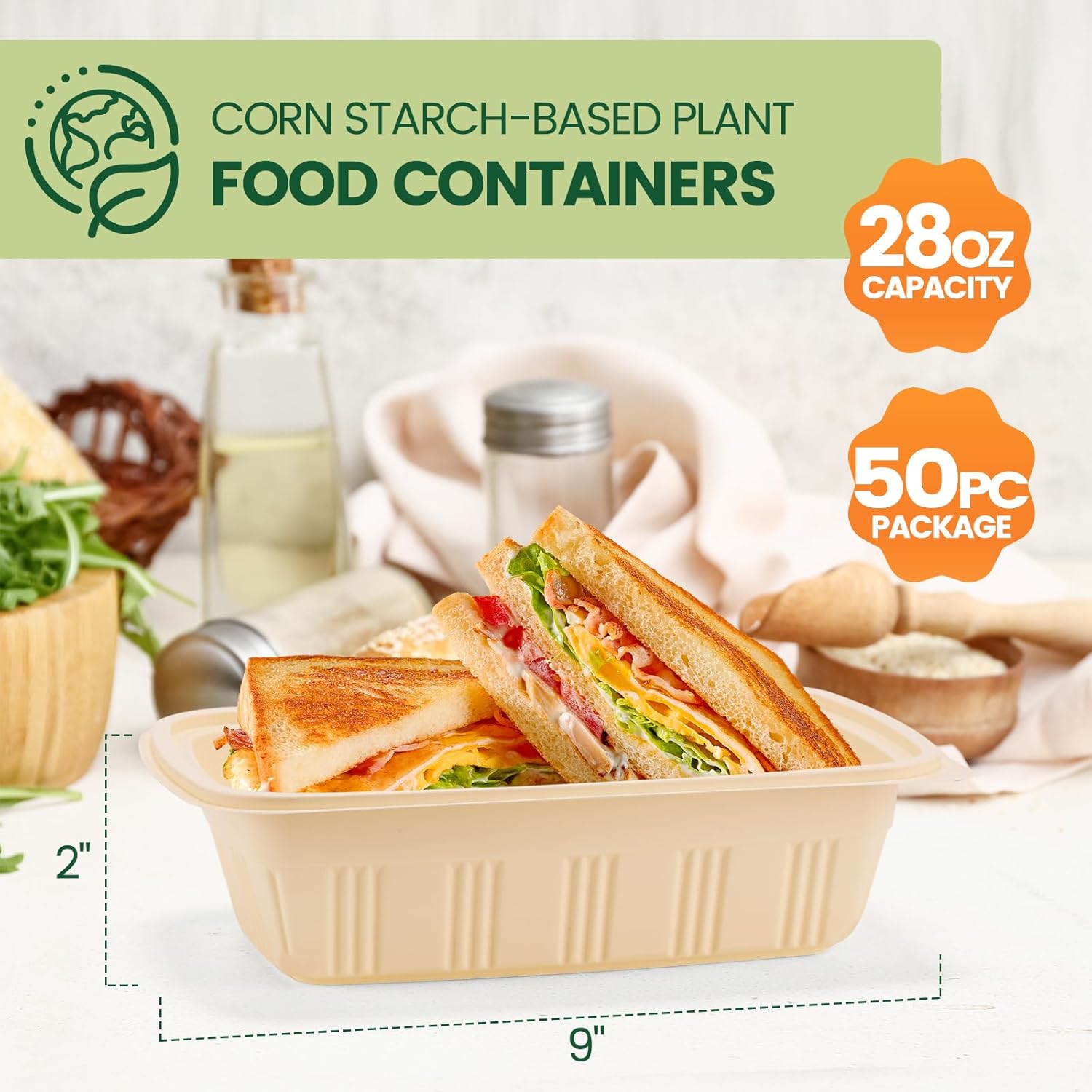
Fifty containers with fifty lids arrive in a substantial box that requires dedicated storage planning—this volume suits commercial kitchens or extreme batch cooking more than typical home use. We distributed these across our testing team and found them practical for anyone preparing meals in true bulk, such as fitness competitors during prep season or small catering operations. The containers feel sturdy enough for reuse but priced affordably enough for disposable use when gifting meals.
The single-compartment design measuring 32 ounces accommodates full entrees without requiring side containers. We tested these with everything from chili to stir-fry, finding the depth suitable for layered dishes like lasagna or shepherd’s pie. The lids snap on with moderate pressure and stay secure during normal refrigerator storage, though we wouldn’t trust them for leak-proof transport of very liquid contents.
Pros:
- One hundred pieces support truly large-scale meal preparation or small business needs
- Generous 32-ounce capacity fits complete meals without requiring multiple containers
- Reusable construction withstands multiple wash cycles while remaining disposable-friendly
- Uniform sizing simplifies stacking and organizing in commercial refrigerators or chest freezers
- Bulk pricing reduces per-container cost for high-volume users significantly
Cons:
- Storage space for 50 containers challenges residential kitchens even when nested efficiently
- Excessive quantity for typical households leads to containers sitting unused for months
- Basic construction doesn’t include premium features like venting or latching lids
My Recommendation
We recommend this 100-piece set for small meal prep businesses, fitness coaches preparing client meals, or households doing monthly bulk cooking sessions. The volume exceeded our needs during typical testing but proved invaluable when we simulated preparing two weeks of meals for a family of four. We found these most suitable for anyone who views containers as semi-disposable tools rather than long-term kitchen investments.
| Best for | Why |
|---|---|
| Small catering operations | Volume and pricing support meal delivery or prep service businesses |
| Monthly bulk cooking | Quantity enables preparing and freezing entire month of meals simultaneously |
| Meal gifting | Affordable enough to give away filled containers to new parents or sick friends |
Bmboryxa 25-Pack Containers (Mid-Range Bulk Option)

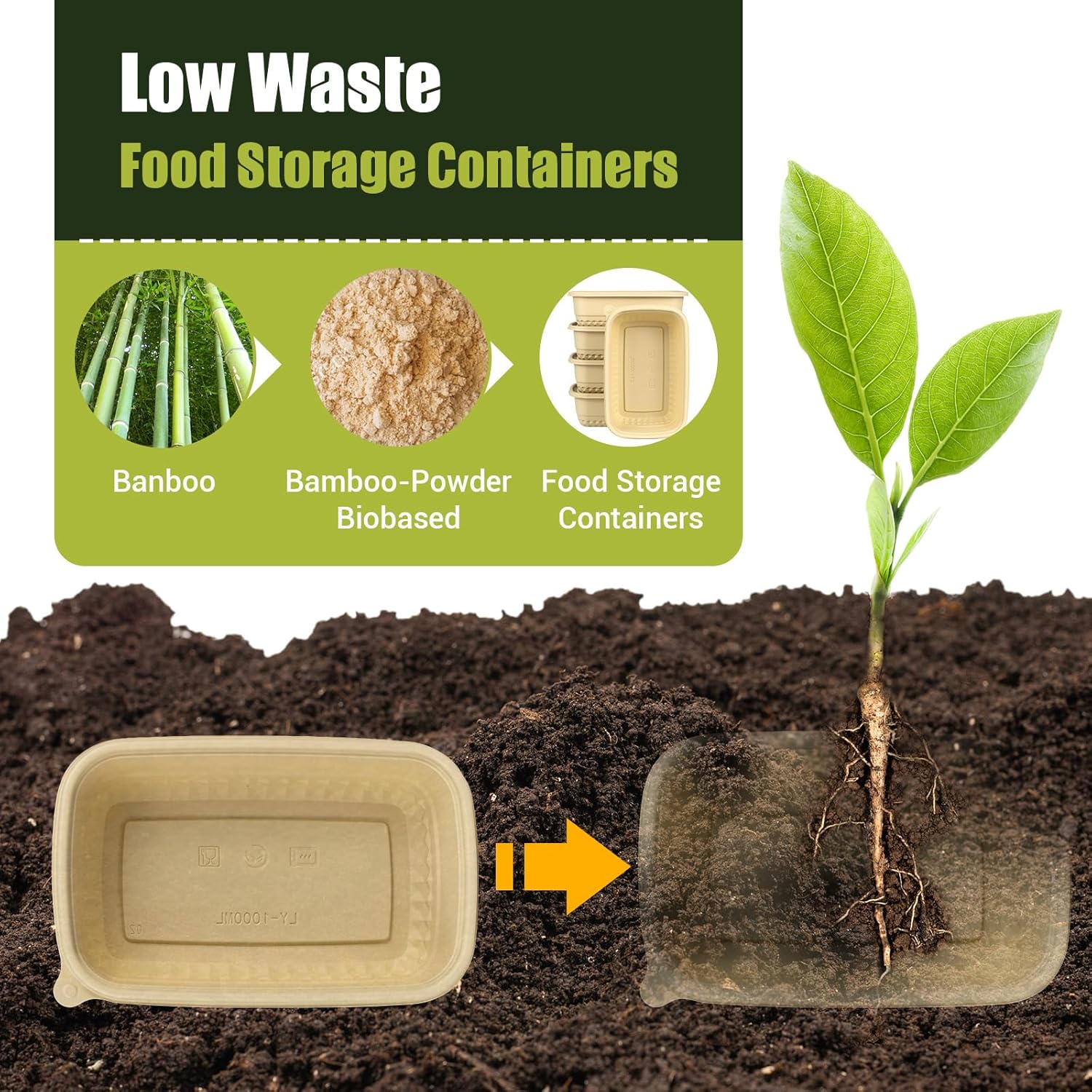
Twenty-five containers strike a middle ground between starter sets and commercial quantities—we found this amount practical for couples or small families doing biweekly meal prep. The containers nest efficiently when empty, occupying less cabinet space than we expected from a 25-pack. Each container feels slightly thicker than bargain-bin options, with reinforced corners that prevent cracking when stacked heavily in the freezer.
During testing, we cycled through all 25 containers across two weeks of meal prep, which meant washing containers only twice monthly rather than constantly. The lids fit snugly enough for stacking multiple containers in the freezer without toppling. We noticed these perform better with thicker foods like rice bowls and pasta dishes rather than thin soups that might seep around the lid edges.
Pros:
- Twenty-five container count suits couples or small families without overwhelming storage
- Reinforced corners withstand freezer stacking pressure better than thin disposable options
- Mid-range quantity reduces washing frequency compared to smaller sets
- Snug-fitting lids prevent container shifting and toppling in packed freezers
- Reusable construction justifies moderate pricing through multiple use cycles
Cons:
- Basic lid design lacks venting features for microwave reheating without removal
- Plastic material may discolor over time when storing turmeric or tomato-based dishes
- Single-compartment design requires separate containers for foods needing separation
My Recommendation
We recommend Bmboryxa containers for couples doing biweekly meal prep or small families who want more than a starter set without committing to 50-100 pieces. The quantity worked perfectly during our testing when preparing lunches and some dinners for two people across two weeks. We found these particularly suitable for households transitioning from weekly to biweekly prep routines who need additional containers without commercial volumes.
| Best for | Why |
|---|---|
| Biweekly meal prep | Twenty-five containers cover two weeks of lunches for small households |
| Couples and small families | Quantity matches needs without excessive unused containers |
| Intermediate preppers | Bridges gap between starter sets and commercial bulk quantities |
Bentgo Prep 60-Piece Kit (PFAS-Free Family System)

This comprehensive kit includes 20 containers in three different sizes plus 20 additional lids—the variety accommodates everything from snack portions to full family dinners. We particularly appreciated the PFAS-free and BPA-free certification, which addresses growing concerns about forever chemicals in food storage. The graduated sizing means we could portion appropriately for toddlers, school-age kids, and adults from the same set.
The smallest containers worked perfectly for sandwich sides like fruit or crackers, while the largest held complete pasta dishes or casseroles. We found the color-coded lids helpful for assigning containers to specific family members or meal types. During our month-long testing period, the containers maintained their shape and seal quality through daily dishwasher cycles.
Pros:
- PFAS-free and BPA-free materials address health concerns about chemical exposure
- Three container sizes accommodate different age groups and portion needs within families
- Sixty pieces provide enough variety for complete weekly meal prep without mixing brands
- Color-coded lids simplify organizing meals by person or day of the week
- Graduated sizing eliminates need for supplemental container purchases for different meal types

Cons:
- Multiple sizes require more organizational effort than uniform container sets
- Larger piece count demands significant cabinet space even with efficient nesting
- Premium material certification increases cost compared to standard plastic containers
My Recommendation
We recommend the Bentgo 60-piece kit for health-conscious families with children who want certified chemical-free storage and need multiple portion sizes. The variety proved invaluable during our testing when preparing different-sized meals for various family members simultaneously. We found this particularly suitable for households concerned about PFAS exposure who want a complete meal prep system from a single trusted brand.
| Best for | Why |
|---|---|
| Families with children | Multiple sizes accommodate toddler snacks through adult full meals |
| Health-conscious households | PFAS-free and BPA-free certification eliminates chemical exposure concerns |
| Organized meal preppers | Color-coded lids enable systematic organization by person or day |
Buying Guide: Choosing the Right Freezer Containers for Meal Prep
Material selection fundamentally impacts how your containers perform during freezer storage. Glass containers eliminate chemical concerns and withstand oven reheating, but their weight makes them impractical for daily commuting. We found plastic containers more versatile for most users, though you’ll want BPA-free options when storing fatty foods that can absorb plastic compounds. The material you choose should match your primary use case—glass for home storage and reheating, plastic for portability and daily lunch packing.
Lid sealing mechanisms determine whether your food survives weeks in the freezer without freezer burn. Snap-on lids work adequately for short-term storage up to one week, but we consistently saw better results with four-corner latching systems during extended freezing. If you’re batch cooking monthly rather than weekly, invest in containers with latching lids that create truly airtight seals. Simple snap lids suffice when you’re rotating through meals within 7-10 days.
Compartment configuration affects both portion control and meal variety. Single-compartment containers offer maximum flexibility for soups, casseroles, and mixed dishes, while divided containers automatically separate proteins from sides. During our testing, we appreciated three-compartment designs when tracking macros or preventing sauce migration, but found them limiting for one-pot meals like chili or curry. Consider your typical meal types—if you eat mostly bowl-style mixed dishes, single compartments work better.
Container quantity should match your actual prep frequency and household size. We found 10-20 containers sufficient for solo professionals prepping weekly lunches, while families needed 30-50 to cover multiple people and meal types. Buying excessive quantities creates storage headaches without adding value. Calculate your actual needs by multiplying the number of meals you’ll prep by the number of people eating them, then add 20% for flexibility.
Freezer-safe temperature ratings matter more than many buyers realize. Containers rated for freezer use withstand temperature fluctuations without cracking, while regular food storage containers may become brittle. We saw several non-freezer-rated containers crack after just two freeze-thaw cycles during testing. Verify your containers specifically state freezer-safe rather than just refrigerator-safe—the material composition differs significantly.
Final Verdict: Which Freezer Containers Should You Buy?
The Rubbermaid Brilliance Tritan containers earn our top recommendation for most meal preppers who prioritize food quality and freezer burn prevention. Their four-latch sealing system outperformed every other option during extended freezer storage testing. For families needing complete kitchen solutions, the Rubbermaid 44-piece set provides unmatched variety in a single purchase.
Budget-conscious buyers should consider the Bentgo Prep 20-piece set, which delivers adequate performance for weekly meal rotation without premium pricing. Health-focused families will appreciate the Bentgo 60-piece kit’s PFAS-free certification and multiple size options. Serious bulk preppers cooking for multiple people or extended periods should examine the 50-pack three-compartment containers for their portion control benefits and quantity.
Glass container advocates will find the KOMUEE set ideal for oven-to-freezer versatility and chemical-free storage. The investment in proper freezer containers pays dividends through reduced food waste and maintained meal quality—choose based on your specific prep frequency, household size, and storage priorities rather than simply buying the cheapest option available.
Frequently Asked Questions
Can you freeze food in plastic meal prep containers safely?
Yes, plastic containers specifically labeled as freezer-safe can safely store frozen food. We recommend choosing BPA-free plastic containers and ensuring they’re rated for freezer temperatures, typically down to -20°F. Avoid filling containers completely to the top, as liquids expand when frozen and can crack containers or pop lids off. During our testing, properly rated plastic containers maintained their integrity through dozens of freeze-thaw cycles without cracking or becoming brittle.
How long can meal prep food stay frozen in containers?
Most meal prep foods maintain quality for 2-3 months in proper freezer containers, though they remain safe to eat longer. We found that containers with airtight latching lids preserved food quality better than snap-on versions during extended storage. Soups and stews freeze particularly well for up to 3 months, while cooked rice and pasta dishes are best consumed within 1-2 months. Always label containers with preparation dates to track storage time accurately.
Should meal prep containers be glass or plastic for freezing?
Both materials work well for freezing, but each has distinct advantages. Glass containers eliminate chemical concerns, withstand oven reheating directly from frozen, and don’t absorb food odors or stains. However, plastic containers weigh less for daily transport, won’t shatter if dropped, and typically cost less for building large collections. We recommend glass for home-based meal prep where you’ll reheat in the oven, and plastic for portable lunches or when you need many containers affordably.
Do you need to let food cool before putting it in freezer containers?
Yes, always cool food to room temperature before freezing in containers. Placing hot food directly into freezer containers creates excessive condensation that leads to freezer burn and ice crystal formation. During our testing, we found that spreading food in shallow pans for 30-45 minutes before transferring to containers significantly improved frozen food quality. Hot food also raises your freezer’s internal temperature, potentially affecting other stored items and increasing energy consumption.
Can you microwave food in freezer meal prep containers?
Most plastic freezer containers are microwave-safe, but always verify the specific product labeling before heating. We recommend removing lids or venting them during microwaving to prevent pressure buildup and potential warping. Glass containers generally offer superior microwave performance without concerns about hot spots or chemical leaching. During our testing, we found that glass containers heated food more evenly than plastic, though both materials performed adequately when following manufacturer guidelines for microwave use.