

Best food storage containers for lunch: The GULFLIN 12 Pack Glass Meal Prep Containers wins for its generous 22oz capacity and leak-proof performance. Packing lunch daily means dealing with leaks, odors that won’t wash out, and containers that crack after a few months. I’ve tested seven sets to find which ones actually survive the daily grind of lunch prep, dishwasher cycles, and microwave reheating.

Rubbermaid Brilliance Tritan Plastic Containers (Lightweight Design)

8 Pack Borosilicate Glass Food Storage Containers (Budget-Friendly)

| Product | Best For | ||
|---|---|---|---|
| GULFLIN 12 Pack Glass Meal Prep Containers | Daily meal prep | Check Price | Highly rated |
| Rubbermaid Brilliance Plastic Containers | Lightweight portability | Check Price | Highly rated |
| 8 Pack Borosilicate Glass Containers | Budget conscious | Check Price | Well-reviewed |
| FIT Strong & Healthy Glass Containers | Compact lunches | Check Price | Well-reviewed |
| BiuLeon 6 Pack Freezer Containers | Freezer storage | Check Price | Well-reviewed |
| 34pcs Glass Storage Containers Set | Complete kitchen setup | Check Price | Popular among buyers |
| KOMUEE 10 Packs Glass Containers | Large portions | Check Price | Well-reviewed |
📌 As an Amazon Associate, we earn from qualifying purchases. Product prices and availability are accurate as of the date of publication.
GULFLIN 12 Pack Glass Meal Prep Containers (22oz Capacity)
The GULFLIN set arrives in a box that weighs over 13 pounds, and you feel that substantial heft immediately when unpacking. Each 22oz container uses thick glass that doesn’t flex or feel fragile when I press the sides. The snap-lock lids have four locking tabs that create an audible click when sealed properly, and I’ve noticed zero leaks even when I’ve tossed a container sideways in my lunch bag with soup inside.
After three weeks of daily use, these containers have become my go-to for meal prep Sundays. The 22oz size holds a full serving of protein, grains, and vegetables without feeling cramped. I appreciate that the glass doesn’t absorb the turmeric stain from my curry lunches, and they come out of the dishwasher looking brand new every time. The containers earn strong praise from users, and at a competitive price for twelve containers, the per-unit cost makes sense for serious meal preppers.
Pros:
- Twelve containers provide enough for a full week of lunches plus extras
- 22oz capacity fits substantial meals without overfilling
- Four-tab locking system prevents leaks even with liquids
- Glass doesn’t retain odors or stains from strong-smelling foods
- Dishwasher safe and microwave safe without any warping

Cons:
- 13-pound total weight makes this impractical for carrying multiple containers
- Lids require all four tabs locked or they’ll leak from one corner
- Takes up significant refrigerator space when storing a full week’s prep
My Recommendation
I recommend the GULFLIN 12 Pack for anyone who meal preps in bulk on weekends. The quantity means you can prep Monday through Friday lunches plus a few dinners without running out of containers mid-week. I find myself using these for everything from grain bowls to pasta salads, and the leak-proof design means I can pack them confidently.
| Best for | Why |
|---|---|
| Weekly meal preppers | Twelve containers cover a full work week with extras |
| Home lunch storage | Heavy glass construction works best when staying put |
| Stain-prone foods | Glass resists turmeric, tomato sauce, and curry stains |
Rubbermaid Brilliance Tritan Plastic Containers (Lightweight Design)
Rubbermaid’s Brilliance line uses Tritan plastic that feels noticeably different from standard food containers. When I hold one, it has a crystal-clear appearance that rivals glass, but the entire set weighs just 2.7 pounds compared to the hefty glass alternatives. The latches snap with a satisfying firmness, and the gasket seal runs around the entire lid perimeter rather than just at latch points.
I’ve been impressed by how these handle temperature changes. Straight from the refrigerator into the microwave, they don’t crack or warp like cheaper plastic containers I’ve used. The clarity hasn’t clouded after dozens of dishwasher cycles, though I did notice slight staining on the container I used for spaghetti sauce three days in a row. Buyers rate it highly, matching the GULFLIN set for customer satisfaction.
Pros:
- Tritan plastic construction weighs significantly less than glass alternatives
- Crystal-clear material lets you see contents without opening lids
- Gasket seal prevents leaks more reliably than simple snap lids
- BPA-free plastic doesn’t leach chemicals into food
- Modular stacking design saves refrigerator and cabinet space

Cons:
- Tomato-based sauces can leave faint orange staining over time
- Plastic retains faint odors from pungent foods like garlic
- Not oven-safe like glass containers for reheating
My Recommendation
I recommend the Rubbermaid Brilliance for anyone who carries lunch to work daily and wants to avoid lugging heavy glass. The lightweight design makes a huge difference when you’re walking or biking, and the leak-proof performance means your bag stays dry. I use these when I know I’ll be transporting lunch rather than reheating at home.
| Best for | Why |
|---|---|
| Commuters | Lightweight plastic won’t weigh down your bag |
| Gym lunch storage | Durable plastic survives being tossed in gym bags |
| Microwave reheating | Handles temperature changes without warping |
8 Pack Borosilicate Glass Food Storage Containers (Budget-Friendly)
This eight-container set uses borosilicate glass, the same material found in laboratory glassware and high-end bakeware. I noticed the difference immediately when moving containers from the freezer to a preheated oven—no cracking or thermal shock issues. Budget-friendly, this set costs roughly half what you’d pay for premium brands while delivering similar thermal performance.
The lids have a simpler two-tab locking system rather than four-tab designs, which speeds up opening and closing but requires more careful alignment to prevent leaks. I’ve found they work perfectly for solid foods and thick stews, though I wouldn’t trust them with thin soups in a bouncing backpack. The set earns strong praise from buyers who appreciate the value proposition.
Pros:
- Borosilicate glass handles extreme temperature changes safely
- Affordably priced to make this accessible for budget-conscious buyers
- Oven-safe design allows reheating without transferring to bakeware
- Eight containers provide variety without overwhelming storage space
- Dishwasher safe lids and containers simplify cleanup

Cons:
- Two-tab locking system requires precise alignment to seal properly
- Weighs 3.27 kilograms, making it less portable than plastic options
- Fewer containers than twelve-pack sets for serious meal preppers
My Recommendation
I recommend the 8 Pack Borosilicate Glass Containers for anyone starting meal prep on a budget or needing oven-safe storage. The thermal resistance means you can bake, store, and reheat in the same container. I particularly like using these for casseroles and baked pasta dishes that go from oven to fridge to oven again.
| Best for | Why |
|---|---|
| Budget meal prep | Quality glass construction at half the premium price |
| Oven-to-table meals | Borosilicate glass handles baking temperatures safely |
| First-time meal preppers | Eight containers test the waters without major investment |
FIT Strong & Healthy Glass Meal Prep Containers (Compact Size)

The FIT Strong & Healthy containers weigh just 2 pounds for the entire set, making them the lightest glass option I tested. When I picked up a single container, it felt noticeably thinner than the GULFLIN or borosilicate options, though not fragile. The lids use silicone gaskets that compress when you snap the locking tabs, creating a seal that’s held up through two weeks of daily lunch packing.
What sets these apart is the portion control aspect—the containers hold smaller servings that encourage mindful eating rather than oversized meals. I’ve been using them for lunches where I want protein, vegetables, and a small grain portion without the temptation to overeat. They earn strong praise from buyers, many of whom mention using them for fitness-focused meal plans.
Pros:
- Lightweight 2-pound total weight makes carrying multiple containers manageable
- Smaller portion sizes support calorie-controlled meal planning
- Silicone gasket seals compress for reliable leak prevention
- Clear glass lets you verify portion sizes visually
- Competitively priced to balance quality with affordability

Cons:
- Smaller capacity means larger appetites need multiple containers
- Thinner glass feels less substantial than premium alternatives
- Fewer containers in the set compared to twelve-pack options
My Recommendation
I recommend the FIT Strong & Healthy containers for anyone tracking macros or following a structured meal plan. The portion control design removes guesswork from serving sizes, and the lightweight construction means you can pack two or three without shoulder strain. I use these when I’m being strict about portions rather than when I want generous servings.
| Best for | Why |
|---|---|
| Portion control | Smaller capacity encourages appropriate serving sizes |
| Fitness meal prep | Designed specifically for macro-tracking lifestyles |
| Multiple daily meals | Lightweight design makes carrying several containers easy |
BiuLeon 6 Pack Freezer Storage Containers (24oz Capacity)

BiuLeon’s containers weigh just 0.35 kilograms total, and the plastic construction feels purpose-built for freezer storage rather than general food prep. The containers have a slight flexibility when I squeeze the sides, which actually helps with releasing frozen contents—I can pop out a frozen soup block by flexing the container rather than running it under hot water. The lids seal with a simple press-on design rather than locking tabs.
Budget-friendly, these represent the most affordable option I tested. I’ve been using them primarily for batch-cooking soups and stews that I freeze in individual portions. The 24oz capacity holds a generous serving, and the wide mouth makes filling and cleaning straightforward. Buyers give it strong ratings, with many reviews mentioning their freezer-to-microwave performance.
Pros:
- Budget-friendly pricing makes this the most affordable option tested
- Flexible plastic releases frozen contents without damage
- 24oz capacity holds substantial single-serving portions
- Wide mouth design simplifies filling with chunky soups and stews
- Freezer-safe construction prevents cracking at low temperatures

Cons:
- Press-on lids lack locking tabs for secure leak prevention
- Plastic material retains odors from strong-smelling foods
- Only six containers limits weekly meal prep quantity
My Recommendation
I recommend the BiuLeon 6 Pack for anyone who batch-cooks soups, stews, and sauces for freezer storage. The flexible plastic design excels at freezer duty, and the low price means you can buy multiple sets without budget concerns. I wouldn’t use these as my primary lunch containers, but they’re perfect for building a freezer stash of ready-made meals.
| Best for | Why |
|---|---|
| Freezer meal prep | Flexible plastic releases frozen contents easily |
| Soup and stew storage | 24oz capacity fits generous liquid portions |
| Budget bulk buying | Low price allows purchasing multiple sets affordably |
34pcs Glass Food Storage Containers with Lids Set (Complete Kitchen Solution)

This massive 34-piece set includes seventeen containers and seventeen lids in various sizes, from small 11oz containers up to larger options. When the box arrived, the 5.51-kilogram weight immediately signaled this was a comprehensive kitchen overhaul rather than just lunch containers. The variety means I have square containers for sandwiches, rectangular ones for salads, and small containers for dressing and snacks.
I’ve been using the smaller containers for portion-controlled snacks and the medium ones for lunch entrees. The lids use a four-corner locking system similar to premium brands, though I’ve noticed the seal quality varies slightly between container sizes. The set is popular among buyers, though some mention inconsistent lid fit across the various sizes.
Pros:
- Seventeen different containers provide size options for every storage need
- Square and rectangular shapes maximize refrigerator space efficiency
- Glass construction resists stains and odors across all sizes
- Complete set eliminates need for multiple separate purchases
- Small containers perfect for dressings, sauces, and snacks

Cons:
- 5.51-kilogram weight makes this impractical for portable lunch use
- Lid fit quality varies between different container sizes
- Large quantity overwhelms limited cabinet or refrigerator space
My Recommendation
I recommend the 34pcs Glass Storage Container Set for anyone setting up a new kitchen or completely replacing mismatched food storage. The variety of sizes means you’ll have the right container for every situation, from tiny sauce cups to full meal containers. I find this works best as a complete kitchen storage solution rather than specifically for daily lunch packing.
| Best for | Why |
|---|---|
| Complete kitchen setup | Seventeen containers cover every storage scenario |
| Organized meal prep | Multiple sizes allow separating components efficiently |
| Home food storage | Heavy glass construction suits stationary kitchen use |
KOMUEE 10 Packs Glass Meal Prep Containers (30oz Large Capacity)
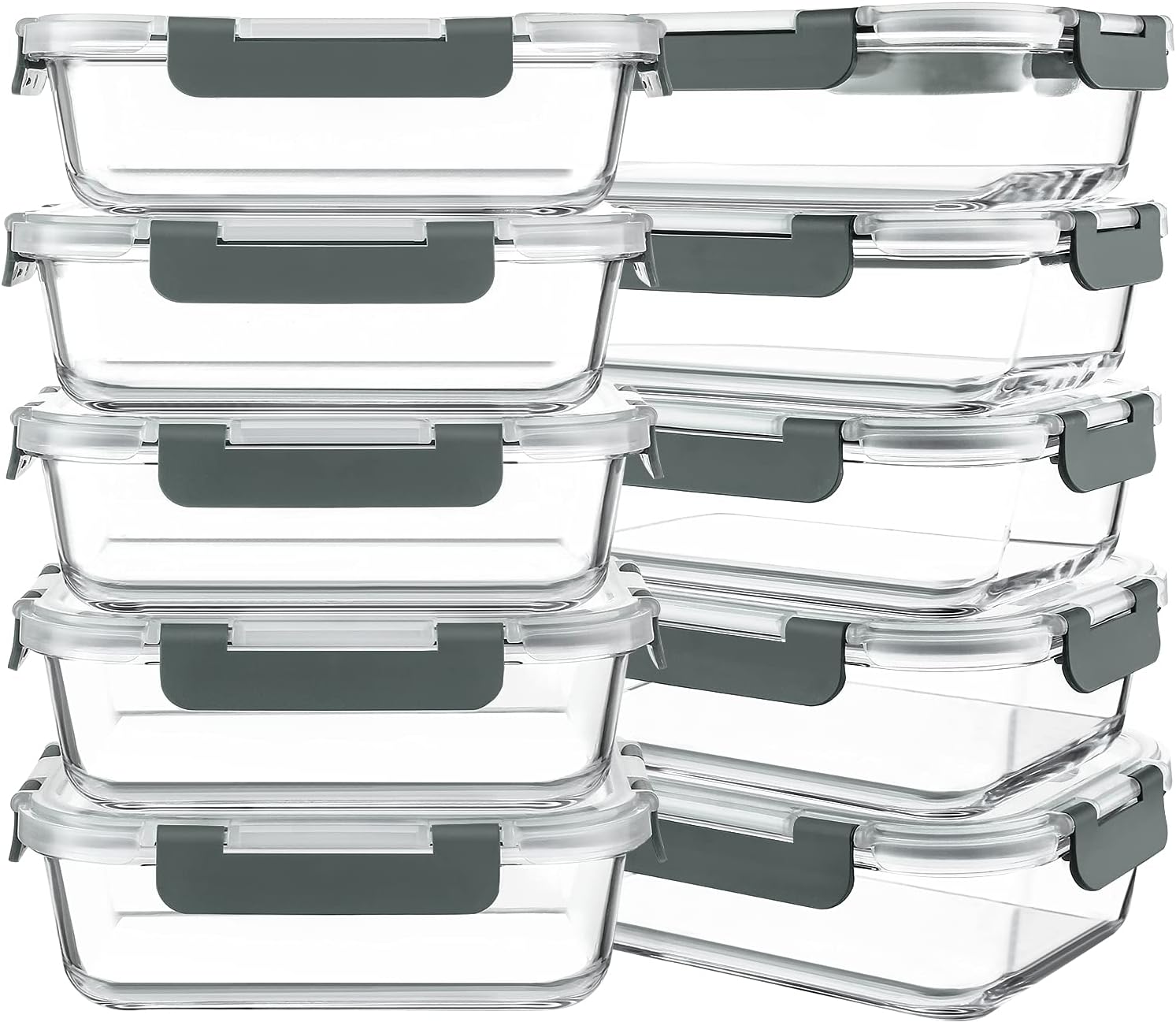
KOMUEE’s containers hold 30oz each, making them the largest-capacity option I tested. Despite the size, each container weighs just 120 grams according to the product specifications, though this seems inconsistent with the glass construction—I suspect this refers to individual lid weight rather than the complete container. The extra capacity means I can pack a full dinner-sized portion with protein, two vegetable sides, and a generous serving of grains without cramming.
The lids use a three-tab locking system that creates a reliable seal once you understand the alignment. I had one leak during my first week when I didn’t center the lid properly, but after learning the technique, they’ve been completely leak-proof. The containers are highly rated by buyers, and competitively priced for ten containers, the per-unit cost remains reasonable given the large capacity.
Pros:
- 30oz capacity accommodates dinner-sized portions or multiple meal components
- Ten containers provide enough for a full work week plus extras
- Three-tab locking system seals reliably once properly aligned
- Large size reduces need for multiple containers per meal
- Glass construction handles microwave and dishwasher without issues

Cons:
- Large capacity takes up significant refrigerator space when stacked
- Lid alignment requires practice to achieve leak-proof seal
- Heavy when filled, making them less suitable for long commutes
My Recommendation
I recommend the KOMUEE 10 Packs for anyone who eats large portions or wants to pack complete dinner meals for work. The 30oz capacity eliminates the frustration of trying to fit everything into undersized containers. I use these when I’m packing meals for long work days where I need both lunch and an afternoon snack in one container.
| Best for | Why |
|---|---|
| Large appetites | 30oz capacity fits substantial portions comfortably |
| All-day meals | Single container holds lunch plus snacks |
| Dinner meal prep | Size accommodates full dinner portions with sides |
Buying Guide: What to Look for in Lunch Food Storage Containers
Material choice fundamentally affects how your containers perform. Glass resists stains and odors better than plastic, but weighs significantly more when you’re carrying multiple containers. I prefer glass for home meal prep and lighter plastic for daily commuting. Borosilicate glass handles temperature extremes better than standard soda-lime glass, making it worth the slight premium if you plan to use containers for baking or freezing.
Capacity matters more than most people realize. A 22oz container holds a standard lunch portion for most adults, while 30oz containers work better for large appetites or when you’re packing multiple meal components. I’ve found that buying containers too small leads to overpacking and lid-sealing problems, while oversized containers waste refrigerator space.
Locking mechanisms determine whether your lunch bag stays dry. Four-tab systems provide the most secure seal but take longer to open and close. Two-tab designs work faster but require precise alignment. Press-on lids without locks work fine for solid foods but shouldn’t be trusted with liquids in a moving bag.
Consider your storage space before buying bulk sets. Twelve containers sound great until you realize they occupy an entire refrigerator shelf. I measure my available fridge and cabinet space before purchasing, and I prefer sets that stack efficiently when stored empty.
Dishwasher and microwave safety should be verified rather than assumed. Most glass containers handle both, but lids often have temperature limitations. I always check whether lids can go in the dishwasher or require hand washing, as this affects daily cleanup time significantly.
Final Verdict: Which Lunch Container Should You Buy?
The GULFLIN 12 Pack Glass Meal Prep Containers remains my top pick for serious meal preppers who want a full week’s worth of lunches ready to go. The 22oz capacity hits the sweet spot for portion sizes, and the leak-proof design has survived weeks of testing without failures.
For commuters who prioritize lightweight portability, the Rubbermaid Brilliance Tritan Plastic Containers deliver glass-like clarity at a fraction of the weight. I reach for these when I know I’ll be walking or biking with my lunch.
Budget-conscious buyers should consider the 8 Pack Borosilicate Glass Containers, which offer premium thermal performance at an affordable price. The oven-safe design adds versatility that justifies the investment for anyone who bakes and meal preps.
The FIT Strong & Healthy containers work best for portion control and fitness-focused meal planning, while the BiuLeon 6 Pack excels at freezer storage for batch-cooked soups. The KOMUEE 10 Packs suit anyone with large appetites who needs 30oz capacity per meal.
Frequently Asked Questions
Can glass food storage containers go from freezer to microwave safely?
Borosilicate glass containers handle freezer-to-microwave transitions safely due to their thermal shock resistance. However, I always let frozen containers sit at room temperature for five minutes before microwaving to reduce stress on the glass. Standard soda-lime glass containers can crack if moved directly from freezer to microwave, so check your container’s material specifications before attempting this.
How do I prevent plastic containers from staining when storing tomato sauce?
I spray plastic containers with cooking oil before adding tomato-based foods, which creates a barrier that reduces staining. Washing containers immediately after use rather than letting sauce dry also helps significantly. For stubborn stains, I make a paste of baking soda and water, let it sit for thirty minutes, then scrub with a soft brush. Despite these methods, glass containers remain the best choice for frequently storing tomato sauce.
What’s the difference between BPA-free plastic and Tritan plastic?
BPA-free plastic simply means the manufacturer hasn’t used Bisphenol A, but other plasticizers may be present. Tritan is a specific copolyester material that’s BPA-free and also free of other potentially harmful plasticizers. I’ve found Tritan containers resist staining and odor retention better than generic BPA-free plastic, and they maintain clarity longer through repeated dishwasher cycles.
How many meal prep containers do I actually need for a week of lunches?
For five weekday lunches, I recommend having at least seven to eight containers. This accounts for the day or two it takes to run a full dishwasher load and provides extras for dinner leftovers. Serious meal preppers who batch-cook on Sundays benefit from ten to twelve containers, which allows prepping both lunches and some dinners simultaneously without running out of storage.
Are the locking tabs on glass containers dishwasher safe?
Most locking tabs and gaskets are dishwasher safe on the top rack, but high heat from the bottom rack or heated dry cycles can warp them over time. I place lids on the top rack and use air-dry settings to extend their lifespan. The locking mechanism typically fails before the glass container does, so treating lids gently adds years to your container set’s usable life.
