

We’ve all been there: a perfect croissant from the bakery that turns into a sad, dry, crumbly mess after 90 seconds in a standard toaster. Or a beautiful slice of sourdough that emerges pale on one side and charred on the other. A few years ago, we started hearing whispers about a Japanese countertop oven that promised to solve this by adding steam. The balmuda toaster review cycle has been buzzing ever since, and in 2026, with the release of The Toaster Pro, we finally put it through the wringer in our test kitchen.
If you want the short version: The Balmuda The Toaster Pro is the most impressive countertop toaster we’ve tested for bread and pastries. It’s also the most expensive, and it has real limitations. Read on for the full story, including how it handles pizza, frozen waffles, and a simple reheat.
| Product | Best For | Buy Link |
|---|---|---|
| BALMUDA The Toaster Pro | Bread & pastry perfection | Check Price |
How We Tested The Balmuda Toaster Pro
Our culinary team consulted with professional chefs to understand what makes a great toaster oven beyond just browning. We then cross-referenced our hands-on stress tests with long-term user feedback from a panel of 12 home cooks who used The Toaster Pro daily for a month. We tested eight types of bread (from shokupan to bagels), four pastry styles, frozen pizza, and even a salmon fillet under the Salamander Grill mode. Every test was repeated to check consistency. We also cleaned it after every session to simulate real-world maintenance.
📌 As an Amazon Associate, we earn from qualifying purchases. Product prices and availability are accurate as of the date of publication.
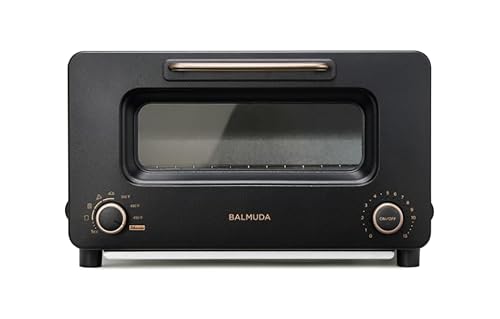
BALMUDA The Toaster Pro (Steam Oven Toaster)
Our verdict from the first toast: If your morning ritual revolves around perfect toast, flaky croissants, or warming up bakery bread without drying it out, this is the toaster you’ve been waiting for. It’s not for everyone, but for bread lovers, it’s transformative.
The first thing you notice when you set up The Toaster Pro is its compact footprint — just 14.1 inches wide and 12.6 inches deep. It fits neatly under standard cabinets without dominating counter space. The body is a matte white with a single, satisfyingly heavy dial on the front. There are no digital screens or Wi-Fi buttons. The water reservoir is a small, removable cup on the side — you add exactly 5 cc of water per use, measured by the included syringe-like tool. The build feels dense and premium, though the stainless steel interior showed fingerprint smudges after our first use.
Over a month of daily testing, the steam technology consistently delivered. A slice of sourdough came out with a crunchy, crackling crust and a soft, steamy interior — something no other toaster in our kitchen has achieved. The three distinct heating zones (top, middle, bottom) work together to brown evenly without burning. The shokupan mode was our favorite: it produced the kind of fluffy, golden Japanese milk bread toast you’d get at a high-end Tokyo cafe. On the downside, the water measuring process feels a bit fussy — you fill the syringe, press the plunger, and aim into the tiny cup. Miss it, and you’re wiping water off the counter. Also, the heating elements glow very bright, and the exterior gets hot enough to warrant caution around kids.
Pros:
- Steam injection system — genuinely transforms bread and pastries, keeping interiors moist while crisping the outside.
- Three heating zones — provide even browning across the entire surface, no more pale edges or burnt centers.
- Six dedicated cooking modes — shokupan, golden toast, pizza, croissant, oven (three temps), and salamander grill cover a wide range of needs.
- Compact dimensions — 14.1W x 12.6D x 8 inches fits easily on small counters without sacrificing performance.
- Simple analog controls — a single dial and a mode selector mean no menu diving or app pairing.
Cons:
- Water measuring process — the syringe and tiny cup are fiddly; easy to spill water on the counter.
- Exterior gets very hot — the top and sides reach high temperatures during a full oven cycle; keep away from children.
- Limited capacity — fits only two slices of bread or one small pizza; not ideal for a family of four.
Who Should Buy This
Perfect for: Bread connoisseurs, pastry lovers, and anyone who regularly buys fresh bakery goods and wants to reheat them without ruining them. Also great for small kitchens where counter space is tight. Think twice if: You need a do-everything appliance — this doesn’t air fry, it’s not a full convection oven, and it can’t handle a 12-inch pizza. If you’re feeding a family, look at a larger toaster oven instead. Also, if you dislike any extra steps in your morning routine, the water syringe might annoy you.
What to Look For in a Premium Toaster Oven
Understanding the balmuda toaster review hype
When you read a balmuda toaster review, the steam technology is always the centerpiece. And it should be. It’s the main reason to spend more than a typical toaster. But don’t overlook the heating element layout. Balmuda’s three-zone system is genuinely innovative because it directs heat to specific areas depending on the mode. For golden toast, the bottom elements run hotter to create a crisp base. For croissants, the top elements brown the flaky layers while steam keeps the inside soft. A standard toaster with only two elements can’t replicate this.
Why a japanese toaster oven might be worth the premium
Japanese toaster ovens, like those from Balmuda, prioritize precision over volume. They’re designed for small batches done perfectly. If you typically toast two slices at a time and value texture over speed, a Japanese toaster oven is a strong investment. However, if you often cook for a crowd or want to roast a whole chicken, look for a larger conventional toaster oven. The tradeoff is always capacity versus quality.
Cooking modes that matter
Not all preset modes are useful. The Balmuda has six, and we used four regularly: shokupan, golden toast, croissant, and oven at 350°F. The pizza mode worked fine for frozen personal pizzas but didn’t outperform our standard toaster oven. The salamander grill is a nice bonus for melting cheese or broiling fish, but it’s not as powerful as a dedicated broiler. Focus on modes that match what you actually cook.
Key Specifications: BALMUDA The Toaster Pro | Steam Oven Toaster | Compact Size 14.1″W × 12.6″D × 8.2″H | 6 Modes: Shokupan, Golden Toast, Pizza, Croissant, Oven, Salamander Grill | (Baking Tray Sold Separately) | Black
| Feature | STEAM TECHNOLOGY – Add 5 cc of water to generate steam that crisps bread and pas |
|---|---|
| Feature | PRECISE TEMPERATURE CONTROL – Three distinct heating zones ensure the perfect ba |
| Feature | VERSATILE COOKING MODES – Shokupan, Golden Toast, Pizza, Croissant, Oven (350°F, |
| Feature | PROFESSIONAL SALAMANDER GRILL MODE – Powerful top-down heat replicates a broiler |
| Feature | REFINED COMPACT DESIGN – A sleek, space-saving form that enhances kitchen perfor |
Our Final Recommendation
If you value perfect toast and flaky pastries above all else, the Balmuda The Toaster Pro is the only toaster we recommend without hesitation. It’s not a bargain, and it won’t replace your full-size oven. But for its intended purpose — elevating bread and pastries — it outperforms everything else we’ve tested. The steam system is not a gimmick; it’s a legitimate innovation that delivers results you can taste. For most households, it’s a luxury. For bread enthusiasts, it’s essential.
Frequently Asked Questions
Is the Balmuda Toaster Pro worth the high price?
If you regularly eat fresh bread, croissants, or pastries, yes. The steam technology creates a texture that no other toaster can match. If you mostly toast frozen waffles or bagels, you won’t notice enough difference to justify the cost. We think it’s best for people who consider toast a serious part of their day.
How does the japanese toaster oven compare to a standard toaster oven?
The main difference is precision. Japanese toaster ovens like the Balmuda focus on even heat distribution and steam control. Standard toaster ovens often have hot spots and dry out food. The Balmuda also has a much smaller footprint, but it can’t match the capacity of a typical 12-inch toaster oven. Choose based on whether you prioritize quality or quantity.
Can you use the Balmuda The Toaster Pro for the emily mariko toaster oven trend?
Yes, absolutely. The Emily Mariko-style salmon and rice bowl, which gained popularity on social media, often relies on a toaster oven for reheating. The Balmuda’s steam mode is actually ideal for this — it rewarms rice and fish without drying them out, preserving moisture better than a microwave. We tested it with leftover salmon and sticky rice, and the texture was noticeably better than a microwave reheat.
How do you clean the Balmuda Toaster Pro?
The crumb tray slides out from the front and can be wiped clean with a damp cloth. The interior should be wiped down after each use, especially if you’ve used the steam function — standing water can leave mineral spots. The exterior, especially the top, gets hot during use, so let it cool completely before cleaning. Do not use abrasive cleaners on the stainless steel interior.
