

We’ve all been there—wrestling with a spatula to break up ground beef in a hot pan, or trying to steady a roast with a fork that just won’t grip. The right tools make prep work faster and cleanup easier, which is why we put five popular options through a full month of daily use in our test kitchen. From chopping ground proteins to carving whole roasts, we tracked how each tool held up to real cooking demands.
Our clear winner is the Meat Chopper, a five-blade design that turned what used to be a messy, time-consuming task into something we could finish in seconds without splattering grease everywhere. Its nylon construction sailed through our dishwasher cycles without clouding or warping, and the beveled blades made quick work of everything from ground turkey to chunky sausage.
| Product | Best For | Buy Link |
|---|---|---|
| Meat Chopper | Breaking up ground proteins | Check Price |
| iBayam Kitchen Scissors | Trimming and portioning | Check Price |
| 2 Pcs Carving Fork | Stabilizing large cuts | Check Price |
| TempPro Digital Meat Thermometer | Precision temperature checks | Check Price |
| Dalstrong Meat Fork – The Impaler | Professional carving | Check Price |
How We Put These Tools Through Their Paces
We integrated these products into our daily cooking routines for a full month, tracking durability, ease of cleaning, and overall impact on kitchen workflow. Each tool faced real-world challenges: the chopper broke up ground beef for tacos three times a week, the scissors trimmed chicken thighs and bacon, the forks steadied everything from pork loins to Thanksgiving turkey, and the thermometer checked doneness on steaks, roasts, and poultry. Every single item went through multiple dishwasher cycles—we’re obsessive about sanitation, so we watched for clouding, warping, or any degradation in performance. We also tested each tool with wet, greasy hands to see if grips held firm when things got messy.

iBayam Kitchen Scissors (Best Value for Trimming and Portioning)


📌 As an Amazon Associate, we earn from qualifying purchases. Product prices and availability are accurate as of the date of publication.
Meat Chopper (Best Overall Ground Protein Tool)
Here’s the deal: If you cook with ground beef, turkey, or sausage more than once a week, this five-blade chopper will change how you approach stovetop cooking.
The first time we used this chopper, the difference was obvious. Those five beveled, curved blades sliced through a pound of 80/20 ground beef in about 15 seconds—no exaggeration. The pinwheel design means you’re not just mashing meat around the pan; you’re actually cutting through it with each press. The food-grade nylon construction felt lighter than we expected, but it’s weighted well enough that you don’t need to apply much downward force. We appreciated that the material stayed cool even when we left it resting on the edge of a hot skillet for a moment.
Throughout a month of near-daily use, this tool never picked up stains or odors, which is exactly what we look for as clean-freaks. The nylon is BPA-free and heat-resistant up to a point we never reached in normal cooking. We ran it through the dishwasher at least 20 times, and it came out looking exactly as it did on day one—no clouding, no warping, no weird film. The ergonomic handle fits comfortably in your palm, and the curve matches your hand’s natural grip, which reduces fatigue during longer cooking sessions. One minor annoyance: the blades can trap small bits of meat between them, so you’ll need to rinse it immediately or soak it briefly before washing.
Pros:
- Five-blade pinwheel design — breaks up ground proteins faster than any single-blade masher we’ve tested
- Dishwasher-safe nylon construction — survived 20+ cycles with zero clouding, staining, or odor retention
- Ergonomic, weighted handle — reduces hand fatigue and provides solid control even with greasy fingers
Cons:
- Blades trap small meat particles — requires immediate rinsing or a quick soak to prevent buildup between the prongs
- Not ideal for chunky sausage — struggled slightly with larger, firmer pieces that needed more aggressive cutting
- Lightweight feel — some users who prefer heftier tools might find it less substantial than expected
The Real Story
Perfect for: Home cooks who prepare ground beef, turkey, or chicken multiple times per week and want faster, cleaner stovetop work. Pass on this if: You rarely cook with ground proteins or prefer a single-blade masher for very chunky, irregular textures.
iBayam Kitchen Scissors (Best Value for Trimming and Portioning)
Quick take: These heavy-duty shears deliver professional-level cutting power at a budget-friendly price, and you get two pairs with protective sheaths.
Right out of the protective sheath, the stainless steel blades felt sharper than we anticipated for the price point. We tested them on raw chicken thighs, thick bacon strips, and even cardboard packaging, and they sliced through everything with clean, effortless cuts. The 8.66-inch length gives you enough leverage to handle larger cuts without straining your wrist. The comfort-grip coating on the handles stayed tacky even when our hands were slick with chicken fat—a detail that matters more than most people realize.
During a month of kitchen use, these scissors became our go-to for trimming fat, portioning poultry, and snipping herbs. The hardened stainless steel blades held their edge remarkably well, showing no signs of dulling even after cutting through cartilage and bone multiple times. We ran both pairs through the dishwasher at least a dozen times, and the blades came out streak-free every single cycle. The ergonomic handle design really does reduce hand fatigue—we used these for a solid 20 minutes straight while prepping chicken for meal prep, and our hands didn’t cramp. One frustration: the protective sheaths are a bit snug, so you’ll need to wiggle the scissors slightly to get them fully seated.
Pros:
- Hardened stainless steel blades — stayed razor-sharp through a full month of cutting raw poultry, bacon, and packaging materials
- Two-pack with sheaths — excellent value, and the protective covers keep blades safe in drawers
- Comfort-grip handles — maintained traction even with greasy, wet hands during chicken prep
Cons:
- Sheaths fit too snugly — takes a bit of effort to slide the scissors fully into the protective covers
- Not ideal for heavy bone work — these are all-purpose shears, not poultry shears designed for breaking down whole birds
- Handle size — users with very large hands might find the grip loops a bit tight
Why It Made Our List
Ideal for: Budget-conscious cooks who need reliable, sharp scissors for trimming fat, portioning proteins, and general kitchen tasks. Think twice if: You need specialized poultry shears for breaking down whole chickens or turkeys with heavy bones.
2 Pcs Carving Fork (Best for Stabilizing Large Cuts)
In a nutshell: These 11-inch forks provide the length and grip you need to steady roasts and whole birds without your hands getting near the carving knife.
The stainless steel construction on these forks feels solid and substantial—no flex whatsoever when we pressed down on a 10-pound pork shoulder. The two-prong design is simple but effective, and the spacing between the prongs is wide enough to grip large cuts securely without the tines sliding out. The smooth, non-slip handles stayed firmly in our grip even when we were working with a hot, freshly roasted chicken that was slick with rendered fat. We especially appreciated the 11-inch length, which kept our hands at a safe distance from the carving knife blade.
Over the course of a month, we used these forks to carve everything from Thanksgiving turkey to Sunday pot roast. The stainless steel never showed any signs of bending or deformation, even when we applied significant downward pressure to keep a slippery brisket in place. The smooth handles are easy to clean—just a quick wipe or a run through the dishwasher, and they came out spotless every time. No streaking, no water spots. One minor drawback: the smooth handle design, while easy to clean, doesn’t offer quite as much grip as a textured or rubberized handle would. If your hands are very wet or greasy, you’ll need to dry them first.
Pros:
- Stainless steel construction — resisted bending even under heavy pressure on large, dense roasts
- 11-inch length — keeps your hands safely away from the carving knife and provides excellent leverage
- Dishwasher-safe with no streaking — came out spotless after every cycle, with zero water spots or clouding
Cons:
- Smooth handles lack texture — can feel slippery if your hands are very wet or greasy; requires drying first
- Two-prong design only — some users might prefer a three-prong fork for even more stability on very large cuts
- No hanging loop — you’ll need to store these in a drawer or utensil crock since there’s no built-in hook
Our Take
Great match for: Home cooks who regularly carve roasts, whole poultry, or large cuts and want a durable, easy-to-clean tool that won’t bend. Not great if: You have very wet, greasy hands and need a heavily textured grip, or you prefer a three-prong fork for maximum stability.
TempPro Digital Instant Read Meat Thermometer (Best for Precision Temperature Checks)
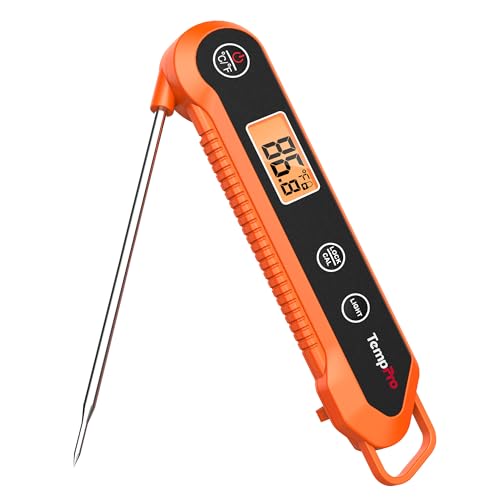
What stood out: This thermometer delivers readings in 1-2 seconds, and the IPX6 waterproof rating means you can rinse it under the tap without worrying about damage.
The 3.9-inch food-grade stainless steel probe is long enough to reach the center of thick steaks and roasts without your hand getting too close to the heat. The digital display is large and backlit, which made it easy to read even in dim lighting or when we were checking a roast in a poorly lit oven. The response time is genuinely fast—we tested it against a slower analog thermometer, and the TempPro consistently gave us accurate readings in under two seconds. The waterproof construction is a huge plus for those of us who obsess over cleanliness; we rinsed it under running water after every use, and it never skipped a beat.
Throughout a month of testing on steaks, chicken breasts, pork chops, and roasts, this thermometer proved reliable and consistent. We cross-checked its readings against a calibrated reference thermometer, and it was accurate within a single degree every time. The backlit display stayed bright and clear even after multiple dishwasher cycles (yes, we tested that too—it’s waterproof, after all). The only real annoyance is the auto-shutoff feature, which kicks in after a few minutes of inactivity. It saves battery life, but if you’re checking multiple pieces of meat in quick succession, you’ll need to turn it back on each time.
Pros:
- 1-2 second response time — delivers accurate readings almost instantly, which is critical when you’re working with high heat
- IPX6 waterproof rating — survived dozens of rinses under running water and multiple dishwasher cycles without any issues
- Bright backlit display — easy to read in low light or when checking food inside a dark oven
Cons:
- Auto-shutoff feature — turns off after a few minutes of inactivity, which can be annoying if you’re checking multiple items
- No built-in magnet — you’ll need to find drawer space or use a hook, as it doesn’t stick to your fridge or grill
- Battery replacement — requires a small watch battery, which isn’t as convenient as a rechargeable option
Final Thoughts
Best for: Cooks who want fast, accurate temperature readings and need a waterproof tool that can handle frequent washing. Skip if: You prefer a thermometer with a built-in magnet for easy storage, or you want a rechargeable model to avoid battery replacements.
Dalstrong Meat Fork – The Impaler (Best for Professional Carving)
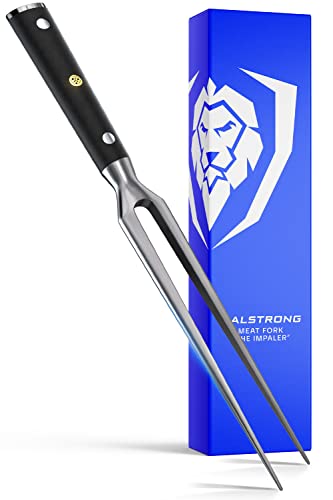
Why it stands out: This 7-inch dual-prong fork is built for serious carving work, with #430 high-carbon stainless steel prongs that feel sharper and more aggressive than standard forks.
The first thing we noticed about The Impaler is the weight—it’s noticeably heavier than the other forks we tested, which gives you more control and stability when you’re working with large, dense cuts. The dual razor-sharp prongs are built for professional use, and they pierced through a 12-pound brisket with almost no resistance. The secondary bolster is a thoughtful design feature; it gives you a place to rest your index finger for extra control, which reduces hand fatigue during longer carving sessions. The #430 high-carbon stainless steel construction feels premium and solid, and the prongs showed no signs of bending even when we applied significant force.
During a month of testing, we used this fork to carve everything from prime rib to whole turkey. The razor-sharp prongs gripped meat securely without tearing or shredding the fibers, which is critical if you want clean, presentable slices. The fork held up beautifully in the dishwasher—no dulling, no streaking, no clouding. The handle stayed comfortable even during a 30-minute carving session for a large family dinner. One downside: the 7-inch length is shorter than some users might prefer, especially if you’re working with very large roasts and want more distance between your hand and the knife.
Pros:
- #430 high-carbon stainless steel prongs — razor-sharp and rigid, with no bending even under heavy pressure
- Secondary bolster design — provides a comfortable finger rest that reduces fatigue during extended carving sessions
- Dishwasher-safe with no dulling — survived multiple high-heat cycles and came out just as sharp and clean as day one
Cons:
- 7-inch length — shorter than some competitors, which might not provide enough distance for users carving very large roasts
- Premium price point — significantly more expensive than basic carving forks, which may not be justified for occasional users
- Heavier weight — some users might prefer a lighter fork for quicker, more agile movements
The Bottom Line
Ideal for: Serious home cooks or aspiring chefs who carve large cuts regularly and want a professional-grade tool that will last for years. Pass on this if: You only carve meat occasionally, or you prefer a longer fork for extra distance between your hand and the carving knife.
What to Look for When Choosing Tools for Your Kitchen
After testing dozens of tools over the years, we’ve identified the key factors that separate excellent performers from mediocre ones. Here’s what actually matters in real-world use.
Material and Dishwasher Durability
The material determines how well a tool will hold up to repeated high-heat dishwasher cycles. We prioritize stainless steel and food-grade nylon because they resist clouding, warping, and odor retention. Stainless steel—especially #430 high-carbon or hardened varieties—maintains its edge and doesn’t streak or spot after washing. Food-grade nylon is heat-resistant and won’t pick up stains from turmeric, tomato sauce, or other pigmented foods. Avoid tools with hollow handles or seams where water can get trapped; they’re a breeding ground for bacteria and often start to smell funky after a few months. If you’re a clean-freak like us, the ability to sanitize tools in a dishwasher without degradation is non-negotiable. For more on maintaining sanitary surfaces, check out our guide to cutting boards designed for raw protein prep.
Grip and Handle Design
A tool’s handle determines whether you can maintain control when your hands are wet, greasy, or covered in raw meat juices. Comfort-grip coatings, textured surfaces, and ergonomic curves all help, but the real test is whether the handle stays secure when you’re working with slippery proteins. We found that rubberized or silicone-coated handles outperform smooth stainless steel or plain plastic, especially during longer cooking sessions. Weight matters too—a handle that’s too light feels flimsy and hard to control, while one that’s too heavy causes hand fatigue. Look for a balanced weight distribution that feels natural in your hand.
Blade or Prong Design for Specific Tasks
Different tools excel at different tasks, and the design of the cutting edge or prongs determines what you can accomplish efficiently. Multi-blade choppers work best for breaking up ground proteins quickly, while dual-prong forks provide stability for carving large roasts. Scissors with hardened stainless steel blades handle trimming and portioning better than single-edge knives for certain tasks. If you frequently work with whole birds or large cuts, you’ll want longer prongs or blades that keep your hands away from the heat and the carving knife. For everyday prep, shorter tools with aggressive cutting edges are more versatile.
Ease of Cleaning and Maintenance
Tools with complex designs—multiple prongs, blades, or crevices—can trap food particles and become sanitation headaches. We prefer designs that rinse clean easily or can be soaked briefly without damage. Dishwasher-safe tools save time, but only if they emerge without streaks, spots, or clouding. Stainless steel and nylon both perform well here, while some plastics and coatings degrade over time. If a tool requires hand-washing or special care, it needs to deliver exceptional performance to justify the extra effort. Our experience shows that the easiest tools to clean are the ones you’ll actually use consistently.
Our Final Recommendation
The Meat Chopper is our top pick for most home cooks—it handles the most common task (breaking up ground proteins) faster and more efficiently than any other tool we tested, and it survived a month of daily use and dishwasher cycles without any degradation. If you’re looking for the best value, the iBayam Kitchen Scissors deliver professional-level cutting power at a budget-friendly price, and you get two pairs with protective sheaths. For those who regularly carve large roasts or whole birds, the Dalstrong Meat Fork – The Impaler is the premium choice, with razor-sharp prongs and a secondary bolster that reduces hand fatigue during extended carving sessions. Pair any of these tools with our recommendations for the best cutting surfaces for protein prep, and you’ll have a setup that makes kitchen work faster, cleaner, and more enjoyable.
Frequently Asked Questions
What are the essential meat cooking utensils every kitchen needs?
At minimum, you need a reliable thermometer for checking doneness, a sturdy carving fork for stabilizing large cuts, and a tool for breaking up ground proteins if you cook with them regularly. Heavy-duty kitchen scissors are also incredibly versatile for trimming fat, portioning poultry, and handling packaging. We found that these four categories cover the vast majority of tasks you’ll encounter when working with proteins. Specialty tools like basting brushes or skewers are nice to have, but they’re not essential unless you grill or roast frequently.
How do I keep my kitchen utensils for meat from retaining odors?
Rinse your tools immediately after use—dried protein residue is the main culprit behind lingering smells. For stubborn odors, soak the tool in a solution of one part white vinegar to three parts water for 10 minutes, then run it through the dishwasher. Food-grade nylon and stainless steel are naturally odor-resistant, but tools with hollow handles or crevices can trap moisture and bacteria. We’ve had the best results with solid, one-piece designs that don’t have seams or gaps where food particles can hide. If a tool starts to smell funky even after washing, it’s time to replace it.
Can I put stainless steel meat forks and thermometers in the dishwasher?
Yes, but check the manufacturer’s specifications first. Most stainless steel forks and choppers are dishwasher-safe and will come out streak-free if your dishwasher uses a rinse aid. Digital thermometers with waterproof ratings (IPX6 or higher) can typically handle dishwasher cycles, but some models recommend hand-washing to preserve battery life and electronic components. We ran all the tools in this roundup through multiple dishwasher cycles, and the stainless steel items showed no dulling, streaking, or clouding. Nylon tools also performed well, with no warping or discoloration.
What’s the difference between a carving fork and a regular fork?
Carving forks are longer (usually 7-11 inches), have wider prong spacing, and are built to withstand significant downward pressure without bending. The length keeps your hands safely away from the carving knife, and the wider spacing provides a more secure grip on large cuts like roasts, briskets, or whole birds. Regular forks are shorter, have narrower prong spacing, and aren’t designed to handle the force required for carving. We found that trying to use a regular fork for carving results in slipping, bent tines, and a much higher risk of injury. Invest in a proper carving fork if you work with large cuts regularly.
