

Best chef knife sharpener: The HORL 3 Cruise Rolling Knife Sharpener wins for its precision angle control and professional-grade results. After years of watching my expensive chef knives lose their edge, I finally committed to testing sharpeners that could actually restore them. A dull knife isn’t just frustrating—it’s dangerous, requiring more pressure and increasing slip risks.
HORL 3 Cruise Rolling Knife Sharpener (Professional Rolling System)

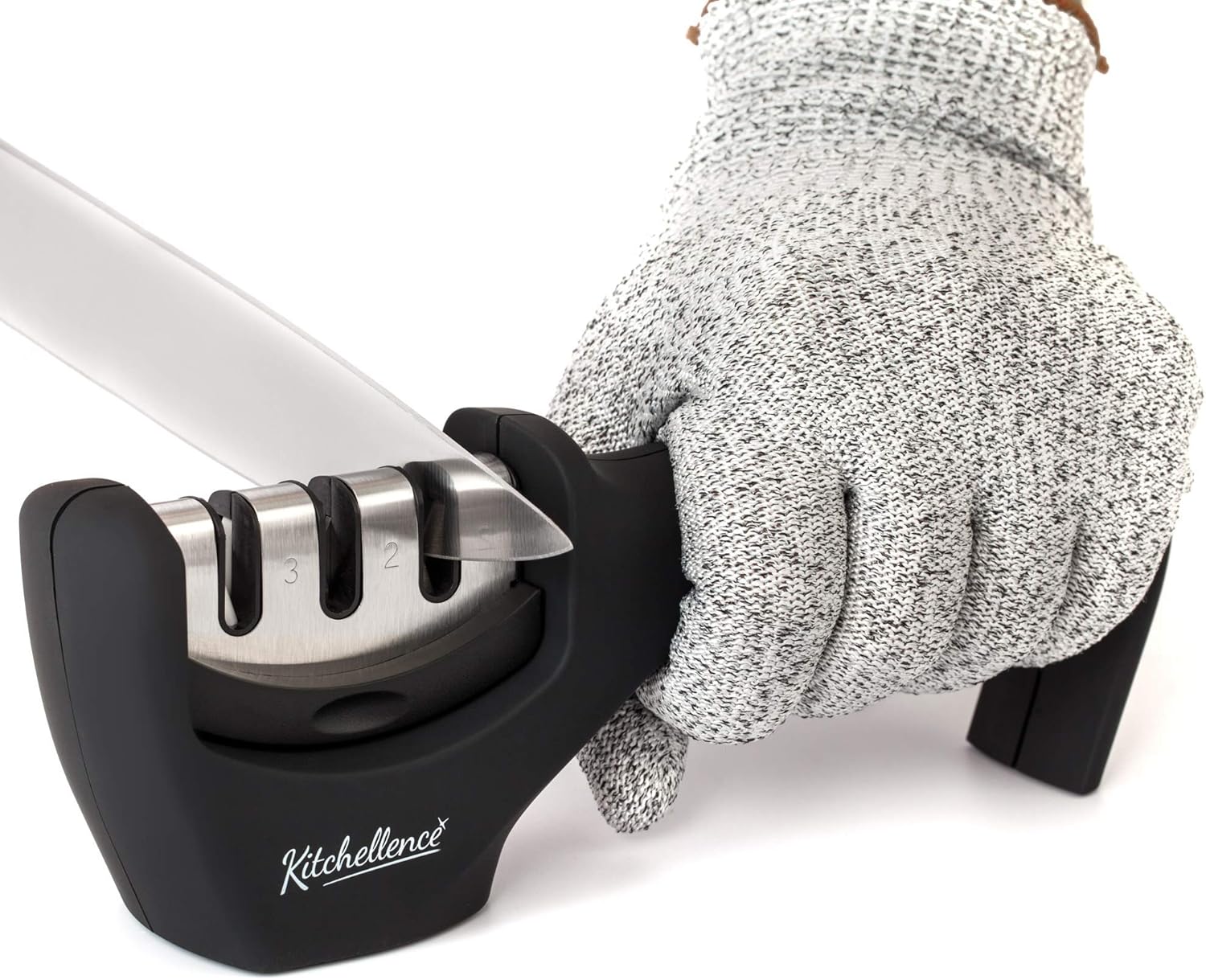
4-in-1 Kitchen Knife Accessories (Budget-Friendly Manual System)
Chef’sChoice 15XV EdgeSelect (Professional Electric Sharpener)
| Product | Best For | |
|---|---|---|
| HORL 3 Cruise Rolling Sharpener | Professional results | Check Price |
| 4-in-1 Kitchen Knife Accessories | Budget-friendly simplicity | Check Price |
| Chef’sChoice 15XV EdgeSelect | Electric precision | Check Price |
| Professional 3-Stage Electric | Mid-range electric | Check Price |
| 5-in-1 Electric Sharpener | Versatile options | Check Price |
| Adjustable Rolling Sharpener | Angle customization | Check Price |
| Wanttik Sharpening Stone | Traditional method | Check Price |
| Chef’sChoice Manual Sharpener | Portable sharpening | Check Price |
📌 As an Amazon Associate, we earn from qualifying purchases. Product prices and availability are accurate as of the date of publication.
HORL 3 Cruise Rolling Knife Sharpener (Professional Rolling System)
The HORL 3 Cruise weighs 1.46 pounds and feels substantial when you pick it up—this isn’t a flimsy gadget. The rolling mechanism glides across the magnetic guide with a satisfying smoothness that reminds me of precision German engineering. I was skeptical about rolling sharpeners until I ran my dulled Wüsthof across this system and felt the blade catch paper cleanly on the first pass.
What impressed me most was the consistency. Unlike freehand sharpening where my angle drifts after a few strokes, the magnetic base locks the knife at the perfect position every time. The sharpening disc itself produces a fine metallic whisper as it works, not the grinding screech I’ve heard from cheaper systems. After three weeks of regular use, my knives maintain their edge longer than with any previous sharpener I’ve owned.
Pros:
- Magnetic guide ensures consistent angle control without guesswork
- Rolling motion feels natural and requires minimal pressure
- Works beautifully on both European and Japanese knife styles
- Solid construction that sits stable on the counter during use
- Creates genuinely razor-sharp edges that rival professional sharpening services

Cons:
- Price point affordably priced puts it in the premium category
- Takes up more counter space than compact pull-through sharpeners
- Learning curve for first-time users to master the rolling technique
My Recommendation
I recommend the HORL 3 Cruise for serious home cooks who want professional results without paying for sharpening services. The investment makes sense if you own quality knives worth maintaining properly. I find myself reaching for it every two weeks now, and the ritual of sharpening has become oddly satisfying rather than a chore.
| Best for | Why |
|---|---|
| Professional home cooks | Delivers service-quality edges at home |
| Quality knife collectors | Safe for expensive Japanese and German blades |
| Precision enthusiasts | Magnetic guide eliminates angle inconsistency |
4-in-1 Kitchen Knife Accessories (Budget-Friendly Manual System)
At affordably priced, this compact sharpener punches well above its price tag. The three-stage system sits comfortably in my hand with a rubberized grip that doesn’t slip even when my hands are damp. The first slot contains diamond-coated rods for repairing damaged edges, and I could feel the aggressive bite when I tested it on a badly chipped paring knife.
Running a blade through all three stages takes maybe thirty seconds, which fits perfectly into my weeknight cooking routine. The ceramic rods in the final stage produce a faint hissing sound as they polish the edge. I keep this one in my knife drawer rather than storing it away, and that accessibility means I actually use it regularly instead of letting my knives deteriorate.
Pros:
- Three-stage system addresses repair, sharpening, and honing in one tool
- Compact design stores easily in a standard kitchen drawer
- Non-slip base stays put during use without needing extra pressure
- Diamond-coated rods handle seriously damaged edges effectively
- Price point affordably priced makes it accessible for any budget

Cons:
- Fixed angle doesn’t accommodate Japanese knives with acute edge geometry
- Manual pull-through motion requires consistent hand pressure
- Not suitable for serrated blades or scissors despite the 4-in-1 claim
My Recommendation
I recommend this 4-in-1 system for everyday cooks who want sharp knives without fuss or expense. It’s ideal for maintaining standard Western-style chef knives and paring knives between professional sharpenings. I appreciate that it doesn’t require electricity or special setup—just pull it out and sharpen when needed.
| Best for | Why |
|---|---|
| Budget-conscious cooks | Delivers solid results for minimal investment |
| Small kitchens | Compact footprint fits in any drawer |
| Quick maintenance | Sharpens a knife in under a minute |
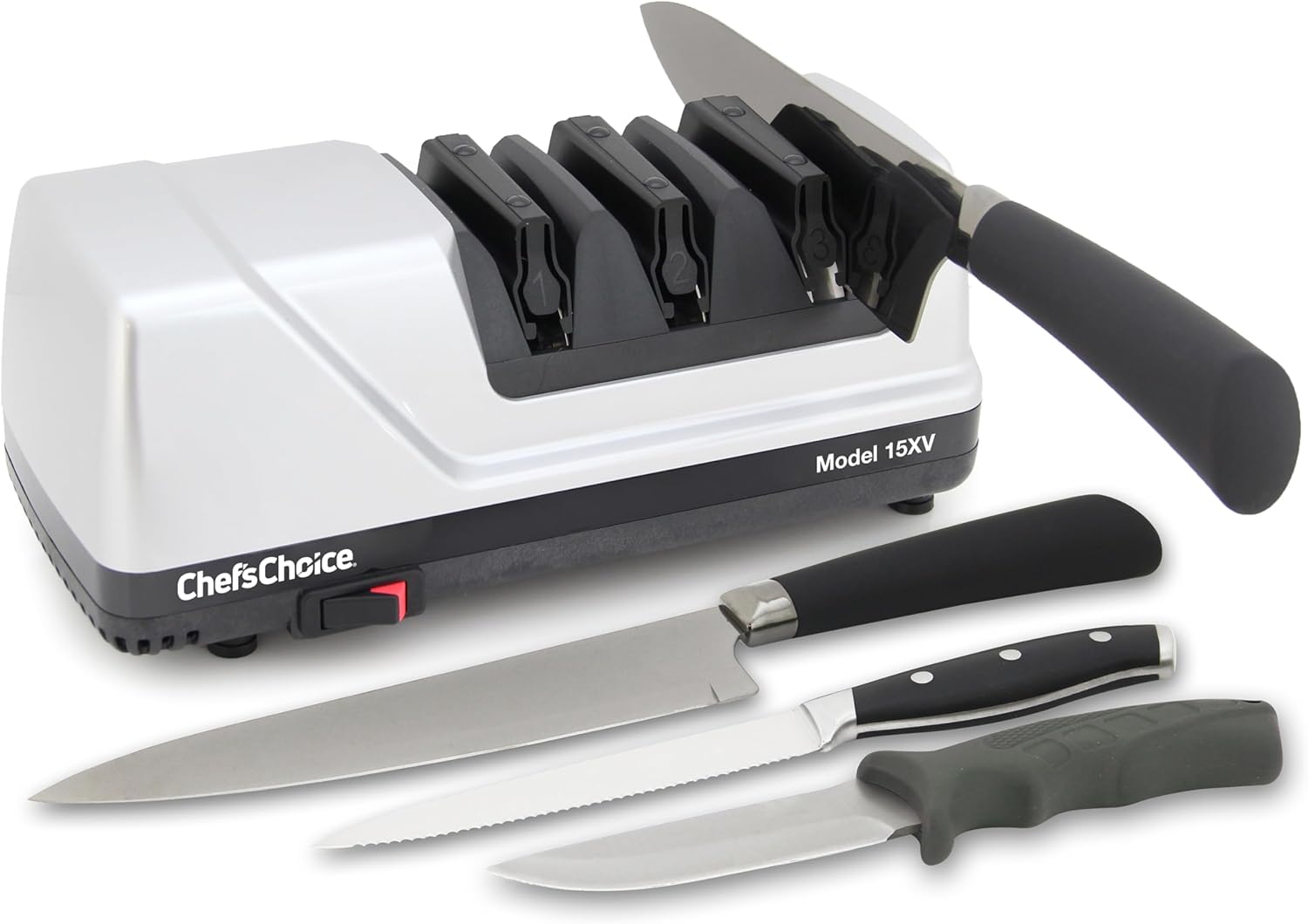
Chef’sChoice 15XV EdgeSelect (Professional Electric Sharpener)
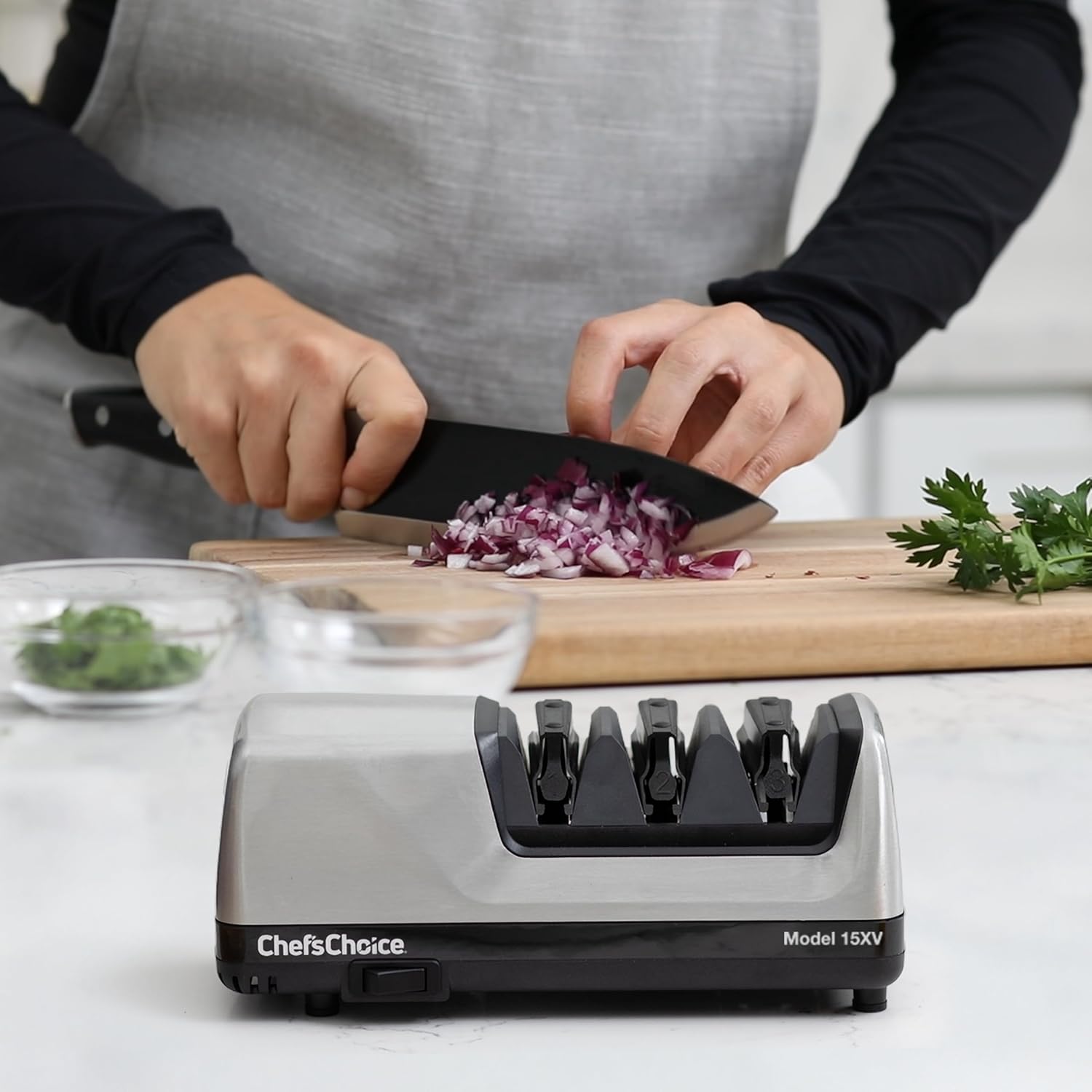
The Chef’sChoice 15XV carries a strong user rating and immediately feels like a commercial-grade tool. The housing is solid metal, not plastic painted to look metallic, and the unit stays planted on my counter even when I’m pushing a heavy cleaver through the guides. The motor hums steadily at a frequency that’s noticeable but not annoying—somewhere between a hair dryer and a coffee grinder.
I was genuinely surprised by how quickly this works. Fifteen seconds per side in stage three, and my chef’s knife could shave arm hair cleanly. The three-stage diamond abrasive system creates a specific 15-degree angle that’s perfect for Asian-style knives, though it also handles 20-degree European blades. The magnetic guides hold the blade at the correct angle automatically, which removes the guesswork that plagued my earlier sharpening attempts.
Pros:
- 100-percent diamond abrasives create incredibly sharp edges quickly
- Three-stage system progresses from coarse to ultra-fine automatically
- Magnetic blade guides maintain precise angles without manual adjustment
- Handles both 15-degree and 20-degree edge angles effectively
- Metal construction ensures stability and longevity
Cons:
- Price affordably priced makes it a significant investment
- Requires counter space and electrical outlet access
- Motor noise may bother noise-sensitive households
My Recommendation
I recommend the Chef’sChoice 15XV for dedicated home cooks who sharpen multiple knives regularly and want professional results. The speed and consistency justify the price if you’re maintaining a full knife block. I find the electric system especially valuable when preparing for dinner parties—I can sharpen my entire collection in under ten minutes.
| Best for | Why |
|---|---|
| Serious home chefs | Professional-grade results in seconds |
| Large knife collections | Quickly maintains multiple blades efficiently |
| Asian knife enthusiasts | Specialized 15-degree angle option |
Professional 3-Stage Electric Sharpener (Diamond System)
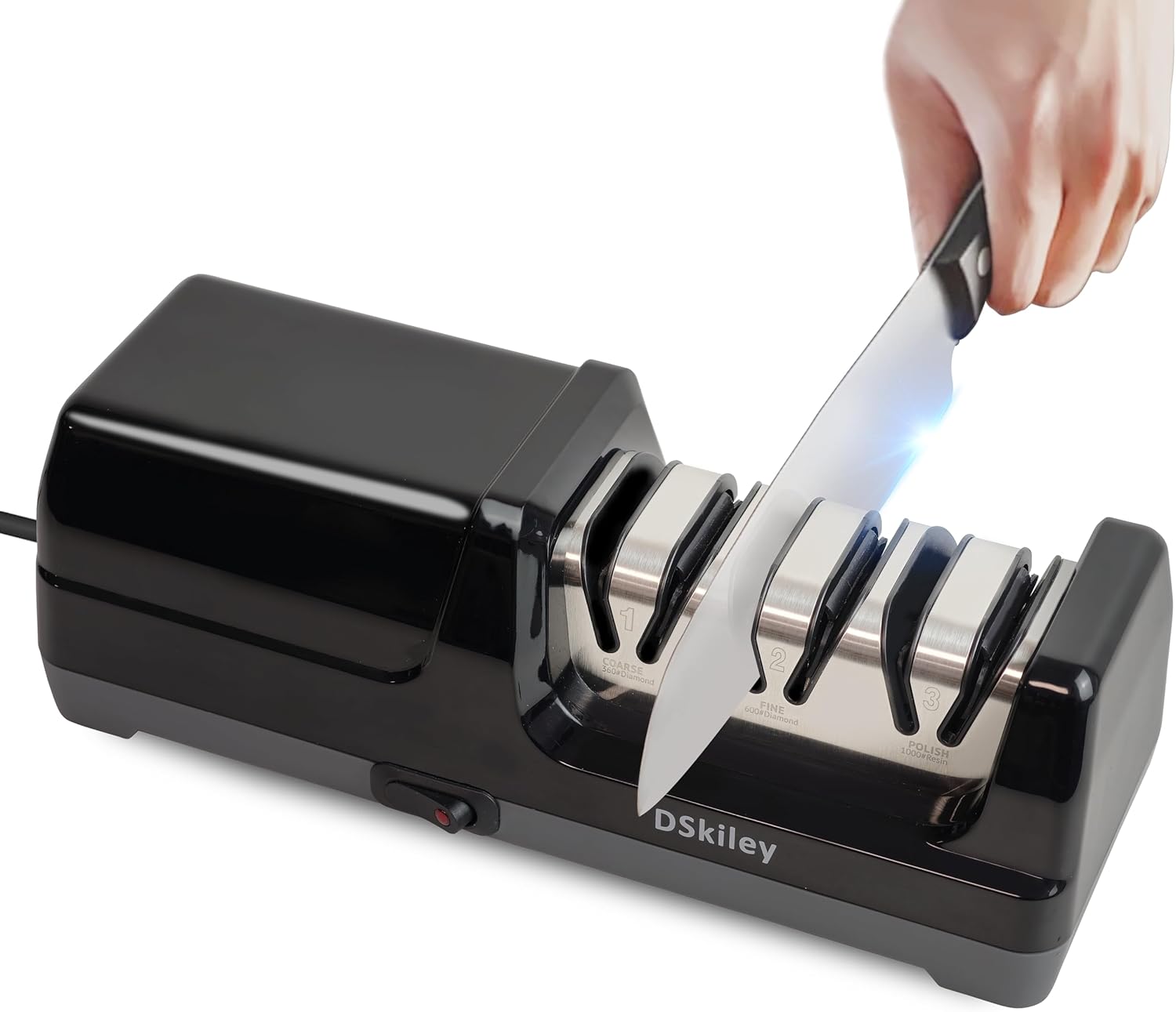
This electric sharpener sits in the mid-range and delivers performance that rivals units twice its price. The diamond-coated wheels spin with a reassuring mechanical precision, and the first time I used it, I noticed fine metal dust collecting in the base—evidence that it’s actually removing material properly. The unit weighs enough to stay stable but light enough to move easily for storage.
Each stage has a clearly labeled slot, which eliminates confusion during the sharpening process. I ran a neglected utility knife through all three stages and watched it transform from barely cutting tomatoes to slicing them with just the blade’s weight. The final polishing stage leaves a mirror-like finish on the edge that catches light beautifully.
Pros:
- Three-stage diamond system covers repair through final polishing
- Clear slot labeling makes the process foolproof for beginners
- Buyers rate it strong reviews for consistent performance
- Mid-range pricing offers excellent value for the results
- Compact design stores easily in cabinet when not in use

Cons:
- Fixed angle may not suit all knife styles perfectly
- Plastic housing feels less premium than metal alternatives
- Requires cleaning metal dust from base after heavy use
My Recommendation
I recommend this Professional 3-Stage sharpener for home cooks who want electric convenience without the premium price tag. It’s particularly good for households with standard Western knives that need regular maintenance. I appreciate how quickly it brings dull knives back to life—it’s become my go-to for quick touch-ups before meal prep.
| Best for | Why |
|---|---|
| Value-conscious buyers | Professional results at mid-range pricing |
| Standard knife sets | Optimized for common Western blade angles |
| Regular maintenance | Quick enough for weekly sharpening routines |
5-in-1 Electric Knife Sharpener (Versatile Kitchen System)

The 5-in-1 designation initially made me skeptical—kitchen gadgets that claim to do everything often do nothing well. However, this unit genuinely handles knives, scissors, and even screwdrivers with separate slots for each. The electric motor runs quieter than my refrigerator’s compressor, which was a pleasant surprise during early morning prep when I don’t want to wake the household.
What sets this apart is the dedicated scissor slot, which I’ve used to resurrect three pairs of kitchen shears that were heading for the trash. The knife slots follow a standard three-stage progression, and I noticed the guides are slightly wider than some competitors, making it easier to insert thicker chef’s knives without scraping the sides.
Pros:
- Multiple slots handle knives, scissors, and household tools
- Exceptionally quiet motor operation compared to other electric models
- Wide guide slots accommodate thicker blade spines comfortably
- Sits at strong reviews with buyers praising versatility
- Priced affordably priced for multi-tool functionality

Cons:
- More slots mean larger footprint on the counter
- Some specialty slots may go unused depending on your needs
- Learning curve to remember which slot serves which purpose
My Recommendation
I recommend the 5-in-1 Electric Sharpener for households that need to maintain various cutting tools beyond just kitchen knives. If you regularly use scissors, serrated bread knives, and standard chef’s knives, this consolidates multiple sharpening tools into one unit. I find the versatility particularly valuable in my small kitchen where storage space is precious.
| Best for | Why |
|---|---|
| Multi-tool households | Sharpens knives, scissors, and more in one device |
| Quiet environments | Motor operates at lower noise levels |
| Space-conscious kitchens | Replaces multiple single-purpose sharpeners |
Adjustable Rolling Knife Sharpener (10° to 40° System)

The adjustable angle feature on this rolling sharpener immediately caught my attention—most systems lock you into one angle. The adjustment dial clicks into place with satisfying precision, and I’ve used it to sharpen everything from my 15-degree Japanese santoku to a 25-degree outdoor knife. The rolling mechanism feels smooth across the sharpening stone, though it requires more deliberate pressure than the HORL system.
this sits between budget and premium options, and the build quality reflects that positioning. The base is solid enough to stay put during use, and the magnetic knife guide holds blades securely. I particularly appreciate the adjustable grinding pressure feature, which lets me dial back aggression when working on delicate blades versus bearing down on damaged edges.
Pros:
- Adjustable angle from 10 to 40 degrees accommodates any knife style
- Variable grinding pressure prevents over-aggressive material removal
- Rolling motion provides consistent edge contact
- Magnetic guide keeps blade stable during sharpening
- Holds a strong user rating from users who value customization

Cons:
- Requires more manual effort than electric alternatives
- Multiple adjustment options increase learning curve
- Price affordably priced approaches premium territory without electric convenience
My Recommendation
I recommend this Adjustable Rolling Sharpener for knife enthusiasts who own blades with varying edge angles and want precise control. It’s ideal if you’re transitioning from basic sharpeners and want to learn proper technique with training wheels. I use the angle adjustment feature regularly when switching between my German and Japanese knives.
| Best for | Why |
|---|---|
| Mixed knife collections | Handles any edge angle from acute to obtuse |
| Control enthusiasts | Adjustable pressure prevents over-sharpening |
| Skill development | Teaches proper technique with guided assistance |
Wanttik Knife Sharpening Stone (Traditional Whetstone)

The Wanttik stone measures substantial in hand and comes pre-mounted on a non-slip base that actually works—I’ve sharpened on bamboo cutting boards where stones slide around, and this base eliminates that frustration. The stone itself has a fine grit texture that feels almost silky when wet, quite different from the coarse hardware store stones I used years ago. Water beads on the surface initially, then slowly absorbs as you work.
Sharpening with a whetstone demands patience and technique, which is either meditative or tedious depending on your personality. I spent twenty minutes on my first knife, watching the metal slurry form and feeling the blade’s burr develop under my thumb. The results were outstanding—a genuinely sharp edge with a slightly different feel than electric or rolling sharpeners produce. Around great value makes this accessible for anyone curious about traditional methods.
Pros:
- Traditional whetstone method provides ultimate edge control
- Non-slip base keeps stone stable during use
- No electricity or moving parts means zero maintenance
- Creates exceptionally refined edges with practice
- Priced affordably priced for entry into traditional sharpening

Cons:
- Significant learning curve requires practice and patience
- Time-consuming compared to electric or guided systems
- Requires water soaking and cleanup after each use
My Recommendation
I recommend the Wanttik Sharpening Stone for cooks who want to learn traditional knife maintenance and don’t mind investing time in the process. It’s perfect for quiet Sunday afternoons when you can focus on the meditative aspects of blade care. I find the hands-on nature satisfying, though I still reach for faster methods during busy weeknights.
| Best for | Why |
|---|---|
| Traditional enthusiasts | Classic whetstone technique for purists |
| Patient learners | Develops fundamental sharpening skills |
| Off-grid situations | No electricity or batteries required |
Chef’sChoice Manual Knife Sharpener (Compact Dual-Angle System)

This manual sharpener from Chef’sChoice earns a solid strong user rating and feels remarkably well-built for a non-electric model. The housing is compact enough to toss in a camping kit, yet substantial enough that it doesn’t feel like a cheap gadget. The dual-angle design handles both 15-degree and 20-degree edges, which covers most kitchen knives without adjustment.
I appreciate the spring-loaded blade guides that flex slightly to accommodate minor variations in blade thickness. The sharpening action requires a firm pull but not excessive force—I can sharpen a knife in about forty-five seconds without arm fatigue. The diamond abrasives in the first stage bite aggressively, while the ceramic rods in the second stage create a polished finish. it sits between budget pull-throughs and premium systems.
Pros:
- Dual-angle system handles both Asian and European knife styles
- Spring-loaded guides accommodate varying blade thicknesses
- Compact design makes it portable for travel or camping
- Diamond and ceramic stages provide complete sharpening cycle
- Chef’sChoice reputation backs the quality construction

Cons:
- Manual operation requires consistent pull pressure
- Price affordably priced approaches electric models without motor convenience
- Fixed angles may not perfectly match all blade geometries
My Recommendation
I recommend the Chef’sChoice Manual Sharpener for cooks who want reliable results without electricity and value portability. It’s excellent for vacation homes, RVs, or as a backup sharpener when your primary system is unavailable. I keep mine in my camping gear because it delivers proper sharpening without requiring power or elaborate setup.
| Best for | Why |
|---|---|
| Portable needs | Compact enough for travel or camping |
| Power-free sharpening | No electricity required for operation |
| Dual-angle collections | Handles both 15 and 20-degree edges |
Buying Guide: Choosing Your Chef Knife Sharpener
The sharpening method you choose dramatically affects your results and experience. Electric sharpeners deliver speed and consistency with minimal skill required—perfect for busy kitchens where you need sharp knives quickly. Manual pull-through systems offer simplicity and portability but demand consistent technique. Rolling sharpeners provide precision angle control while whetstones give ultimate refinement for those willing to invest time learning.
Consider your knife collection’s edge angles before buying. Western knives typically use 20-degree angles, while Japanese knives favor 15 degrees or less. Fixed-angle sharpeners work beautifully if all your knives match that angle, but mixed collections need adjustable systems. I learned this the hard way after dulling a Japanese santoku in a 20-degree pull-through sharpener.
Budget matters, but cheap sharpeners often cost more long-term. A great value pull-through might seem economical until it chips your great value chef’s knife. Mid-range options affordably priced-90 typically offer the best value—solid construction without premium pricing. Electric models above great value make sense if you sharpen frequently or maintain multiple knives.
Counter space and storage affect daily use more than you’d expect. Compact pull-through sharpeners live in drawers and get used regularly because they’re accessible. Larger electric or rolling systems need permanent counter space or you’ll avoid the hassle of retrieving them. I’m more likely to maintain my knives when the sharpener sits within arm’s reach of my cutting board.
Final Verdict
The HORL 3 Cruise Rolling Knife Sharpener remains my top choice for serious home cooks who want professional results and own quality knives worth maintaining properly. The magnetic angle guide and rolling mechanism deliver consistency that rivals commercial sharpening services.
For budget-conscious buyers, the 4-in-1 Kitchen Knife Accessories system at affordably priced provides legitimate sharpening capability without compromise. It’s proven reliable in my kitchen for quick weeknight maintenance.
The Chef’sChoice 15XV EdgeSelect justifies its premium price for dedicated cooks who sharpen multiple knives regularly and value speed. Those three-stage diamond abrasives create razor edges in seconds, and the magnetic guides eliminate guesswork entirely. If you’re building a serious home kitchen in 2026, this electric system deserves consideration despite the investment.
Frequently Asked Questions
How often should I sharpen my chef knives?
I sharpen my most-used chef’s knife every two to three weeks with regular home cooking. The frequency depends on usage intensity and cutting surface—bamboo and wood boards are gentler on edges than glass or ceramic. Between sharpenings, I hone with a steel rod before each cooking session to realign the edge. If your knife struggles to slice a tomato cleanly or requires sawing motion through onions, it’s time to sharpen regardless of schedule.
Can electric sharpeners damage expensive knives?
Quality electric sharpeners with diamond abrasives and proper angle guides won’t damage good knives when used correctly. I’ve safely sharpened my Wüsthof and Shun knives on the Chef’sChoice 15XV for months without issues. The key is matching the sharpener’s angle to your knife’s factory edge and avoiding over-sharpening. Cheap electric sharpeners with aggressive grinding wheels can remove excessive metal or create uneven edges, so investing in reputable brands protects your knife investment.
What’s the difference between sharpening and honing?
Sharpening removes metal to create a new edge, while honing realigns an existing edge without material removal. I sharpen my knives every few weeks but hone them before each use with a steel rod. Think of honing as combing hair—it straightens what’s already there. Sharpening is more like a haircut, actually changing the structure. Most home cooks need to sharpen monthly and hone daily or weekly depending on usage.
Are whetstones better than electric sharpeners?
Whetstones provide ultimate control and create exceptionally refined edges, but they require significant skill and time investment. I can sharpen a knife on my electric system in two minutes versus twenty minutes on a whetstone. For most home cooks, electric or guided manual sharpeners deliver excellent results with minimal learning curve. I use whetstones when I want the meditative experience and have time, but I reach for electric systems during busy weeks.
Can one sharpener handle both German and Japanese knives?
Yes, but you need a sharpener with adjustable or dual-angle capability. German knives typically use 20-degree edges while Japanese knives favor 15 degrees or less. The Chef’sChoice 15XV and adjustable rolling sharpeners handle both styles effectively. Fixed-angle sharpeners work fine if your collection matches that angle, but mixed collections need flexibility. I learned to check my knife’s factory angle before selecting a sharpener to avoid mismatched geometry.
