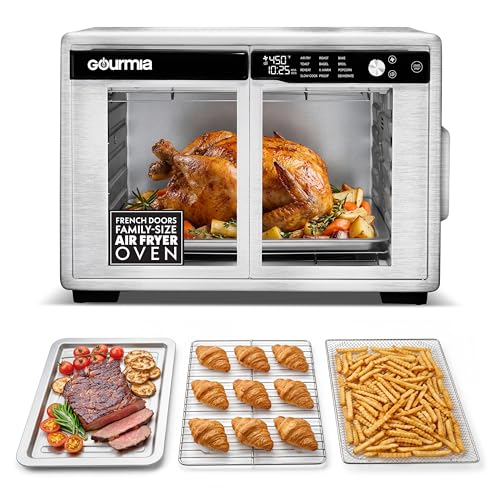
Most advice about small kitchen appliances is wrong. People chase shiny digital screens and Wi-Fi connectivity, then wonder why their lasagna comes out burnt on the edges and cold in the middle. I’ve tested hundreds of kitchen products over the years, and the ones that last are never the flashiest — they’re the simplest, heaviest, and most boring-looking tools in the drawer. That principle applies directly to finding a toaster oven that fits a 9×13 pan. If you entertain regularly, you already know that a standard 9×13 baking dish is the workhorse of party cooking: brownies, casseroles, roasted vegetables, even a small lasagna. A countertop oven that can accommodate that pan without warping or crowding changes how you prep for a gathering.
Key Takeaways
- You need an interior that is at least 16 inches wide and 12 inches deep to fit a standard 9×13 pan flat — many “large” toaster ovens still fall short.
- Glass and ceramic 9×13 dishes conduct heat differently than metal; you must adjust temperature by 25°F and extend cooking time by 5–10 minutes when using them.
- Batch cooking in a large toaster oven is faster than using a full-size oven because preheat times are shorter and heat recovery between batches is nearly instant.
Why Most Countertop Ovens Fail With a 9×13 Pan
The first surprise for anyone shopping for a toaster oven that fits a 9×13 pan is that the exterior dimensions are almost meaningless. Manufacturers list “oven capacity” in liters, but that number includes vertical space for a whole chicken or a 12-cup muffin tin. What matters for a 9×13 pan is the floor area — specifically, the width and depth of the interior floor.
A standard 9×13 baking dish is actually 9 inches by 13 inches at the top rim, but the base is slightly smaller — usually around 8.5 by 12 inches. Even so, the interior of the oven must be at least 16 inches wide and 13 inches deep to slide the pan in without it touching the heating elements or the door glass. Many “large” countertop ovens stop at 14 inches wide, which forces you to rotate the pan diagonally — a clumsy move that blocks airflow and leads to uneven browning.
The Diagonal Trap
I see home cooks wedge a 9×13 pan into a too-small oven by turning it at a 45-degree angle. The pan fits, but the hot air can’t circulate around the long sides. The result is a cold spot in the center and a scorched outer edge. If you’re baking a cake, that cold spot means a sunken middle. If you’re roasting vegetables, the ones near the back element char while the front ones steam. Always measure the interior floor before you buy.
Interior Dimensions That Actually Work
After measuring a dozen ovens in my own kitchen and at cooking schools, I’ve found three interior size categories that reliably accept a 9×13 pan:
- Full-size countertop ovens: Interior width 16–18 inches, depth 13–15 inches, height 7–9 inches. These fit a standard 9×13 pan flat with at least 1 inch of clearance on all sides.
- Extra-large models: Interior width 18–20 inches, depth 14–16 inches, height 9–11 inches. These can fit two 9×13 pans side by side or one pan plus a sheet of parchment for batch baking.
- Compact commercial-style ovens: Interior width 15–16 inches, depth 12–13 inches, height 6–7 inches. These fit a 9×13 pan but require a metal pan (not glass) because the reduced height puts the top element very close to the food.
If you plan to bake cakes or casseroles regularly, aim for the full-size category. The extra height also lets you use a 9×13 pan with a lid or foil cover without the foil touching the top heating element.
How Pan Material Changes Cooking Times
Once you’ve confirmed your oven fits a 9×13 pan, the next variable is the pan itself. I keep three types in my kitchen: light-gauge aluminum, dark nonstick steel, and glass/ceramic. Each behaves differently in a small, powerful oven.
Light-Gauge Aluminum
This is the standard disposable half-sheet pan material, but you can buy reusable versions. Aluminum heats up fast and cools down fast. In a toaster oven, that means even browning because the pan doesn’t store excess heat that would burn the edges. Use aluminum for cookies, sheet cakes, and roasted vegetables. Reduce the recipe temperature by 25°F compared to a full-size oven.
Dark Nonstick Steel
Dark pans absorb more radiant heat. In a toaster oven, where the heating elements are close, a dark steel 9×13 pan can cause the bottom and sides of your food to over-brown. I use dark pans only for foods that need a crispy crust — cornbread, pizza, or roasted potatoes. Reduce the temperature by 25°F and check for doneness 5 minutes early.
Glass and Ceramic
Glass and ceramic are insulators. They heat slowly but hold heat long after the oven turns off. In a toaster oven, glass 9×13 dishes can shatter if they touch the heating element or if you pour cold liquid into a hot dish. Always verify the dish is labeled oven-safe to at least 450°F. When using glass, increase the recipe temperature by 25°F and add 5–10 minutes to the cooking time. The food will continue cooking for a few minutes after you pull it out, so rest it on a wire rack immediately.
Cooking Strategies for Entertaining With a 9×13 Pan
When I host a cocktail party or a family dinner, the toaster oven becomes my primary cooking appliance. The full-size oven stays off — it heats up the whole kitchen and takes forever to preheat. With a large countertop oven that fits a 9×13 pan, I can batch-cook multiple dishes in sequence without wasting energy.
Batch 1: Roasted Vegetables (400°F, 25 Minutes)
Cut root vegetables into uniform 1-inch cubes. Toss with oil, salt, and pepper. Spread them in a single layer in a 9×13 metal pan. The close proximity of the top element in a toaster oven gives you better caramelization than a full-size oven. Shake the pan halfway through. Remove and keep warm under foil while you cook the next batch.
Batch 2: Baked Pasta Casserole (375°F, 30 Minutes)
Assemble your lasagna or baked ziti in a 9×13 glass dish. Because the toaster oven’s heating elements cycle on and off to maintain temperature, the top layer of cheese browns faster than the bottom. To prevent burning, cover the dish with foil for the first 20 minutes, then uncover for the final 10 minutes. Let it rest for 10 minutes before serving — the glass dish retains heat and will continue cooking the center.
Batch 3: Sheet Cake or Brownies (350°F, 25–30 Minutes)
Use a light-gauge aluminum 9×13 pan. Line it with parchment paper that overhangs the long sides — this lets you lift the entire cake out for cooling. Rotate the pan 180 degrees halfway through baking. Because the toaster oven’s heat is more intense on the back wall, rotating ensures even rise. For detailed instructions on adjusting cake recipes for a small oven, see our guide on how to master baking cake in a toaster oven.
Preventing Overcrowding and Steam Buildup
A 9×13 pan covers a lot of the oven’s floor. If you pack the pan too full, the hot air can’t circulate over the food’s surface. The result is steaming instead of roasting — soggy vegetables, dense cake, and pale cheese. Leave at least 1 inch of space between the food and the pan’s rim. For casseroles, fill the dish only three-quarters full.
Steam buildup is another issue. Toaster ovens are smaller and less ventilated than full-size ovens. If you’re cooking something with high moisture — like a tomato-based casserole or a fruit crisp — crack the oven door open about 1 inch for the last 10 minutes of cooking. This lets steam escape and helps the top brown. Just watch the temperature; the oven will cycle more frequently to compensate for the heat loss.
Cleaning and Maintenance for a 9×13-Friendly Oven
Because the pan fits so snugly, spills are more likely to hit the interior walls or the door. I clean the oven after every other use to prevent baked-on grease from smoking during the next cook. Here’s my routine:
- After each use: Wipe the interior walls with a damp microfiber cloth while the oven is still warm (but not hot). Remove the crumb tray and wash it in hot, soapy water.
- Weekly: Remove the racks and soak them in a solution of hot water and dish soap for 15 minutes. Scrub with a non-abrasive pad. Dry thoroughly before reinserting.
- Monthly: Run a self-cleaning cycle if your oven has one, or bake a shallow pan of water at 450°F for 20 minutes to steam-loosen stubborn residue. Wipe clean afterward.
If you’re also using a stovetop for sides like stir-fry, check out our complete stir-fry in a frying pan guide for timing tips that sync with your oven batches.
Choosing the Right 9×13 Pan for Your Oven
Not all 9×13 pans are created equal. Before you commit to a specific dish, measure your oven interior one more time — especially the depth from front to back. Some pans have handles or rolled edges that add an extra 0.5 inch to the overall length. If your oven interior is exactly 13 inches deep, a pan with handles won’t fit without touching the door.
I recommend using a pan with straight sides (not sloped). Sloped sides reduce the usable volume and can cause food to spill over the edge. A straight-sided 9×13 pan also stacks better with a second pan if you ever want to double a recipe. For specific models that have proven reliable in my kitchen, our best toaster oven for baking worth buying in 2026 roundup includes the pans that pair best with each oven.
Frequently Asked Questions
Can I use a disposable aluminum 9×13 pan in a toaster oven?
Yes, but with caution. Disposable pans are thin and can warp under high heat, especially if the pan overhangs the rack. Always place a disposable pan on a sturdy baking sheet for support. Keep the temperature at 400°F or below, and never use a disposable pan under the broiler — it will buckle and spill.
Will a 9×13 glass baking dish explode in a toaster oven?
Only if it’s not tempered for oven use or if it experiences thermal shock. Check the bottom of the dish for an “oven-safe” stamp. Avoid placing a cold glass dish into a preheated toaster oven; let it warm up on the counter for 20 minutes first. Never put a glass dish directly under the broiler element.
How do I bake two 9×13 pans at the same time in a countertop oven?
Most single-rack toaster ovens cannot fit two 9×13 pans flat. If you have a double-rack model, place one pan on the top rack and one on the bottom rack. Swap their positions halfway through baking. Expect the bottom pan to brown faster because it’s closer to the lower element. Reduce the temperature by 25°F to prevent burning.
What is the best temperature to roast vegetables in a 9×13 pan in a toaster oven?
For most root vegetables, 400°F works well. Spread the vegetables in a single layer — crowding them will cause steaming. Toss halfway through. If your toaster oven runs hot (common in smaller models), set it to 375°F and check for doneness after 20 minutes. The close element distance gives you better browning than a full-size oven at 425°F.