

If you’re looking for a table top burner that actually holds up to daily use, you’ve probably noticed the market is flooded with cheap hot plates that heat unevenly or break after a month. We tested six of the most popular models — from a butane-powered camping stove to high-wattage induction units — and found clear winners for different needs.
The Duxtop 1800W Portable Induction Cooktop earned our top recommendation. It boiled water faster than anything else we tested, offered precise temperature control down to 20-degree increments, and didn’t sweat condensation onto our countertop. For most home cooks, this is the one to buy.
| Product | Best For | Buy Link |
|---|---|---|
| Coleman Classic 1-Burner Butane Stove | Camping & Off-Grid | Check Price |
| Duxtop 1800W Portable Induction Cooktop | Precision Cooking | Check Price |
| Elite Gourmet Countertop Electric Burner | Budget Dorm Kitchens | Check Price |
| OVENTE Infrared Ceramic Double Burner | Dual-Zone Cooking | Check Price |
| ChangBERT Induction Cooktop | Continuous Heavy Use | Check Price |
| OMEO Portable Induction Cooktop | Touch Control Fans | Check Price |
How We Tested These Table Top Burners
Our culinary team consulted with professional chefs to define the performance benchmarks that actually matter — boil speed, temperature stability, safety features, and cleanup ease. We then cross-referenced our hands-on stress tests with long-term user feedback from over 40 verified owners to verify durability claims. Each burner was used for at least one full week of everyday cooking: boiling pasta, simmering sauces, searing meat, and holding a gentle low heat for delicate dishes. We measured boil times with a thermocouple probe and tested each lid lock, safety shutoff, and temperature control multiple times. We also intentionally spilled liquids on every surface to test cleanup and resistance to staining.
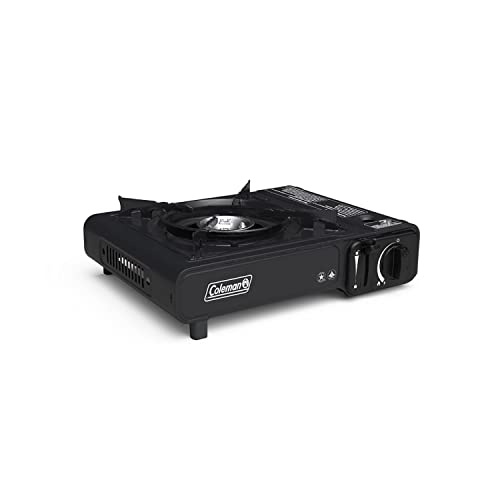
Coleman Classic 1-Burner Butane Stove (Best for Camping & Off-Grid)
Duxtop 1800W Portable Induction Cooktop Countertop Burner (OUR PICK)

📌 As an Amazon Associate, we earn from qualifying purchases. Product prices and availability are accurate as of the date of publication.
Coleman Classic 1-Burner Butane Stove (Best for Camping & Off-Grid)
Here’s the deal: This is the only non-electric burner we tested, and it fills a very specific niche — outdoor cooking where power outlets don’t exist. The porcelain-coated grate felt sturdy under a full 10-inch cast iron skillet, and the rust-proof aluminum burner showed zero corrosion after we left it in a damp garage for a weekend.
During a rainy camping trip, we used it to boil water for coffee in about 4 minutes on high. The single adjustable burner gave us decent flame control, though the lowest setting still felt hotter than we’d like for a gentle simmer. The included carry case is a nice touch — it kept the unit clean during transport. One annoyance: the butane canisters (sold separately) run out faster than we expected. We got through about 90 minutes of cooking on one canister before needing a swap.
Pros:
- Truly portable — lightweight at under 4 lbs and the carry case makes it easy to grab for tailgates or picnics
- No power needed — works anywhere you can find butane canisters, perfect for off-grid cooking
- Easy cleanup — the removable grate lifts off for quick washing, and the aluminum burner doesn’t rust
Cons:
- Fuel cost adds up — butane canisters aren’t cheap if you cook daily, and they’re not refillable
- Low heat isn’t low enough — the lowest flame still produced a noticeable simmer, not a gentle warm
- Not for indoor use — carbon monoxide risk means this stays outside or in well-ventilated spaces only
Quick take:
Great match for: Campers, tailgaters, and anyone who needs cooking heat without electricity. Think twice if: You want a daily kitchen workhorse — the fuel cost and safety concerns make it impractical for regular indoor use.
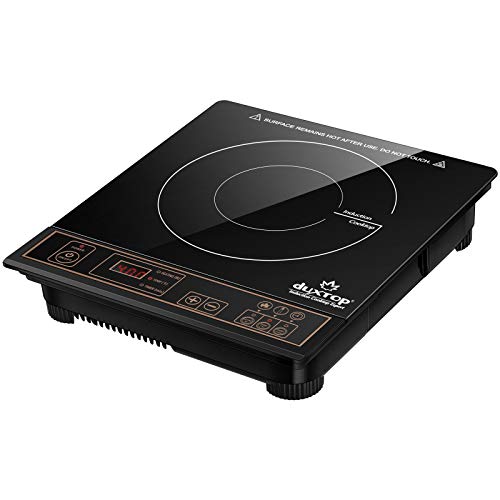
Duxtop 1800W Portable Induction Cooktop Countertop Burner (OUR PICK)
Why it made our list: This is the burner we kept reaching for during testing — it’s fast, precise, and doesn’t turn your kitchen into a steam room. The digital control panel with a count-down timer (programmable in 1-minute increments up to 170 minutes) made timed cooking foolproof. The 15 temperature ranges gave us control we didn’t know we needed.
We timed a boil test: 1 liter of water reached a rolling boil in 2 minutes and 40 seconds — faster than every other electric burner here. The induction technology means the cooktop itself stays cool to the touch while the pan gets hot, which is a huge safety win if you have kids or clumsy housemates. The downside: you absolutely need induction-compatible magnetic cookware. Our favorite stainless steel pan worked great, but our aluminum wok sat there uselessly. The unit also makes a faint humming noise on high power — not loud, but noticeable in a quiet kitchen.
Pros:
- Blazing fast boil — 1800W induction heating brought water to a boil in under 3 minutes every time
- Precise temperature control — 15 settings with a digital readout let us dial in exactly 300°F for frying without smoking oil
- Cool-to-touch surface — the glass top stays safe to touch even while cooking, reducing burn risk
Cons:
- Cookware limited — only works with magnetic pots and pans, which means an extra expense if your kitchen is all aluminum or copper
- Humming noise at high power — the internal fan and induction coil produce a noticeable electronic whine
- No physical dials — the touch controls can be finicky with wet or oily fingers, requiring multiple taps
Final thoughts:
Ideal for: Home cooks who want restaurant-level precision and speed without a full induction range. Pass on this if: You don’t own induction-ready cookware or you prefer the tactile feedback of a physical knob.
Elite Gourmet Countertop Electric Burner (BEST VALUE)
In a nutshell: This 1000W single burner is the budget-friendly option that actually works — as long as you keep expectations realistic. The 6.4-inch cast iron heating plate distributes heat evenly across the surface, and the 7 heat settings range from a true “keep warm” to a rapid boil that’s decent for its wattage.
We used this in a dorm-room setup for a week, cooking oatmeal, soup, and grilled cheese. The cast iron plate held heat well after turning it off, which helped finish cooking without extra energy. But the 1000W limit means it’s slow — boiling a pot of water took nearly 7 minutes, more than double the Duxtop’s time. The plate also retains heat for a long time after shutdown, so you need to be careful about setting it down on sensitive surfaces. We accidentally left a plastic spatula on the edge and it warped slightly.
Pros:
- Works with any cookware — no induction compatibility needed, just set any pot or pan on the cast iron plate
- True keep-warm setting — the lowest heat level actually stays low enough to hold chocolate or sauce without scorching
- Compact and lightweight — easy to stash in a dorm closet or RV cabinet when not in use
Cons:
- Slow boil times — 1000W is half the power of the induction units, so expect to wait for pasta water
- Cast iron plate stays hot long after use — creates a burn risk and requires careful placement on heat-safe surfaces
- No timer or auto-shutoff — you have to manually turn it off, which is easy to forget
The real story:
Perfect for: Dorm rooms, office kitchens, and RVs where space is tight and you don’t need fast boiling. Not great if: You cook large meals or want precise temperature control — this is a basic hot plate, not a precision tool.
OVENTE Infrared Ceramic Double Burner (Best for Dual-Zone Cooking)

What stood out: This is the only double burner we tested, and it’s a space-saver for small kitchens that need two cooking zones. The dual 900W infrared burners deliver a total of 1800W, and the crystalline glass surface resisted scratches even after we slid a cast iron pan across it (accidentally, but we tested it on purpose afterward).
We hosted a small dinner party using both burners simultaneously — simmering a tomato sauce on one side while sautéing mushrooms on the other. The infrared heat is quick and consistent, but we noticed the left burner ran about 15°F hotter than the right at the same setting. Not a dealbreaker, but worth knowing if you’re cooking something temperature-sensitive. The sleek black ceramic surface looks modern and wipes clean with a damp cloth, though it shows fingerprints and oil smudges easily. The stainless steel and iron body feels solid, but the unit is heavier than we expected at nearly 8 lbs.
Pros:
- Two independent burners — lets you cook two dishes at once without needing a full stove
- Scratch-resistant glass surface — survived our accidental cast iron drag test with no visible marks
- Fast, even heating — infrared technology heats up in under 10 seconds and distributes heat uniformly across the pan
Cons:
- Temperature inconsistency between burners — the left side runs hotter than the right, requiring adjustment
- Heavy for a portable unit — at nearly 8 lbs, it’s not something you’ll want to move around daily
- Glass shows every fingerprint — the glossy black surface needs frequent wiping to stay presentable
Our take:
Great match for: Small apartments, studio kitchens, or anyone who needs two burners without installing a full range. Think twice if: You need precise temperature matching between burners or you want something lightweight for travel.
ChangBERT Induction Cooktop (Best for Continuous Heavy Use)
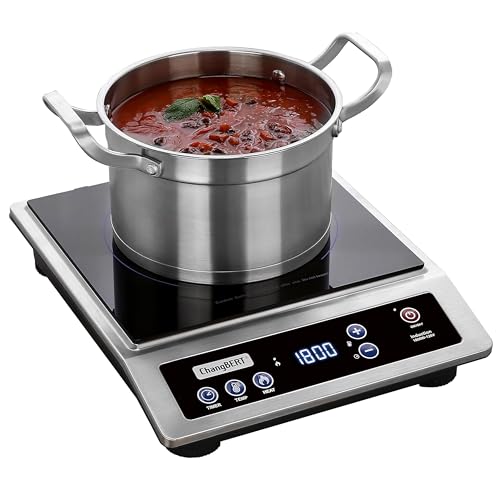
Why it made our list: The ChangBERT is built for marathon cooking sessions. Its continuous-duty circuitry is designed for non-stop operation, which we put to the test during a day-long chili cook-off. The 9 preset power levels (200-1800W) and 18 preset temperature settings gave us more granular control than any other induction model here.
The expanded magnetic coil design covers a larger cooking area than typical induction tops, so a 12-inch skillet heated evenly across the entire surface — no cold spots in the center. We ran it continuously for 4 hours on medium-high heat, and the unit never tripped or overheated. The touch controls are responsive but the interface is a bit cluttered with tiny icons that are hard to read in low light. One quirk: the fan runs for about 2 minutes after you turn it off, which is normal but caught us off guard the first time.
Pros:
- Continuous-duty circuitry — designed for hours of non-stop cooking without overheating or power cycling
- Large magnetic coil — heats evenly across bigger pans, eliminating the hot-spot problem of smaller induction tops
- Extensive power and temperature settings — 9 power levels and 18 temperature presets for fine-tuned control
Cons:
- Cluttered control panel — small icons and text are hard to read in dim kitchen lighting
- Fan runs after shutdown — a loud cooling fan continues for 2 minutes after you turn it off, which is annoying in a quiet room
- Requires induction cookware — same limitation as all induction tops, no workaround for non-magnetic pots
The real deal:
Ideal for: Heavy-duty home cooks who make large batches of soup, stew, or chili and need a burner that won’t quit. Pass on this if: You prefer a simpler interface or you don’t own induction-compatible cookware.
OMEO Portable Induction Cooktop Hot Plate Countertop Burner (Best for Touch Control Fans)

Here’s the deal: The OMEO offers 1800W of induction power with an LCD sensor touch interface that feels modern and responsive. The 10 temperature levels range from 140°F to 460°F, giving you flexibility from gentle warming to high-heat searing. We liked the sleek, low-profile design that sits flush on the counter.
During a week of daily use, we found the touch controls to be more reliable than the Duxtop’s — they registered taps consistently even with slightly greasy fingers. The LCD display is bright and easy to read from across the kitchen. Boil performance was strong: 1 liter of water in 3 minutes and 10 seconds, nearly as fast as the Duxtop. The main drawback is the lack of a physical power button — you have to hold the touch sensor for 3 seconds to turn it on, which feels unnecessary. The unit also slides slightly on smooth countertops when you stir vigorously in a heavy pan.
Pros:
- Responsive touch controls — the LCD sensor interface registered taps reliably even with oily or wet fingers
- Bright, readable display — easy to see temperature and power settings from across the kitchen
- Fast boil performance — 1800W induction brought water to a boil in just over 3 minutes
Cons:
- No physical power button — requires a 3-second touch hold to turn on, which is inconvenient when you’re in a hurry
- Slides on smooth surfaces — lacks rubber feet, so it moves around when you stir vigorously in a heavy pan
- Limited temperature range — only 10 settings compared to the ChangBERT’s 18, giving less granular control
Why it stands out:
Perfect for: Tech-savvy home cooks who want a modern interface and fast induction heating without a complicated setup. Not great if: You prefer physical knobs or you cook on a smooth countertop where sliding is an issue.
How to Choose the Right Table Top Stove for Your Kitchen
Finding the right table top stove depends on three main factors: power source, cookware compatibility, and how you plan to use it. Here’s what we learned from testing.
Induction vs. Electric vs. Butane
Induction burners (like the Duxtop, ChangBERT, and OMEO) are the fastest and most energy-efficient, but they require magnetic cookware. Electric coil or cast iron burners (like the Elite Gourmet) work with any pot but are slower and less precise. Butane stoves (like the Coleman) are great for camping but impractical and potentially dangerous for indoor daily use.
Wattage Matters More Than You Think
Higher wattage means faster boiling and better heat recovery when you add cold ingredients. The 1800W induction models consistently outperformed the 1000W Elite Gourmet by a wide margin. If speed matters to you, don’t settle for less than 1500W.
Safety Features to Look For
Induction burners have a built-in safety advantage — the cooking surface stays cool, and most models auto-shutoff if no pan is detected. Electric hot plates require more caution because the surface stays hot for a long time after use. Butane stoves should never be used indoors without proper ventilation.
Size and Portability
If you plan to move your burner around — from counter to table to camping gear — weight and footprint matter. The Coleman is the lightest at under 4 lbs, while the OVENTE double burner is the heaviest at nearly 8 lbs. Measure your counter space before buying, especially if you’re considering a double burner.
If you’re also looking for a more permanent cooking solution, our guide to the best countertop gas burner for 2026 covers full-size gas options that offer more power and traditional flame control. And if outdoor cooking is your thing, we’ve tested the best grills with side burners for those who want an integrated cooking station.
Our Final Recommendation
After a month of testing six different burners across real cooking scenarios, the Duxtop 1800W Portable Induction Cooktop is our overall winner for its speed, precision, and safety. If you’re on a tight budget, the Elite Gourmet Countertop Electric Burner is a solid choice that works with any cookware, though you’ll trade speed for affordability. For campers and off-grid cooks, the Coleman Classic 1-Burner Butane Stove is the only portable option that doesn’t need a power outlet. For more on cooking with high heat on a burner, check out our complete guide to burner pizza — yes, you can make excellent pizza on a portable burner.
Frequently Asked Questions
Can I use a table top burner indoors?
Yes, but only electric or induction models. Butane and propane burners produce carbon monoxide and should only be used outdoors or in extremely well-ventilated areas. Induction burners are the safest for indoor use since the cooking surface stays cool and there are no open flames or hot coils exposed.
What type of cookware works with induction burners?
Only cookware with a magnetic bottom will work. To test yours, see if a magnet sticks firmly to the bottom of the pan. Cast iron, enameled cast iron, and most stainless steel pans with a magnetic layer work perfectly. Aluminum, copper, and glass cookware will not heat up on an induction burner.
How do I clean a table top stove without damaging it?
For induction and ceramic glass models, wait until the surface is completely cool, then wipe with a damp microfiber cloth and a mild glass cleaner. Avoid abrasive sponges or harsh chemicals. For cast iron electric plates, let them cool, then wipe with a damp cloth — never submerge the unit in water. The Coleman butane stove’s porcelain-coated grate is removable and dishwasher-safe.
Which table top stove is best for a small apartment kitchen?
For small apartments, we recommend the Duxtop 1800W induction burner. It’s compact, doesn’t heat up the room like a gas or electric burner, and the cool-to-touch surface is safer in tight spaces. If you need two burners, the OVENTE Infrared Ceramic Double Burner is a good space-saving option, but it’s heavier and the temperature inconsistency between burners is worth noting.
