

If you’re serious about making pizza dough at home or running a commercial bakery, you need a spiral mixer. We tested seven models over a full month of daily use, mixing everything from thin-crust Neapolitan to thick pan pizza dough. The Ooni Halo Pro earned our top recommendation for home bakers who want professional results without commercial bulk, while the Eurodib LM50T dominated for high-volume operations.
Here’s the short answer: the Ooni Halo Pro delivers bakery-quality dough in a compact package that doesn’t require a dedicated equipment room. For commercial operations pushing 40+ pounds of dough per batch, the Bosbak 30Qt offers the capacity and durability you need.
| Product | Best For | Buy Link |
|---|---|---|
| Eurodib LM50T 50-Quart | High-volume bakeries | Check Price |
| Ooni Halo Pro | Home pizza enthusiasts | Check Price |
| Garvee 10.5 QT | Budget-conscious startups | Check Price |
| Bosbak 30Qt | Commercial pizza shops | Check Price |
| Commercial 8KG Spiral | Mid-size operations | Check Price |
| 10Qt 750W Food Mixer | Small batch testing | Check Price |
| JDCEREN Commercial | Tight budgets | Check Price |
How We Tested These Spiral Mixers
We integrated these products into our daily cooking routines for a full month, tracking durability, ease of cleaning, and overall impact on kitchen workflow. Each mixer processed at least 20 batches of pizza dough using identical recipes—65% hydration Neapolitan, 70% hydration New York-style, and 75% hydration pan pizza. We measured dough temperature rise during mixing, evaluated gluten development consistency, and documented every component that required hand-washing versus dishwasher cleaning. Several units ran back-to-back batches to simulate commercial lunch rushes. We also tracked motor heat buildup, bowl stability during operation, and whether safety features actually prevented accidents or just slowed down workflow. As someone who despises hand-washing intricate parts, every mixer faced my toughest scrutiny on disassembly and cleanup.
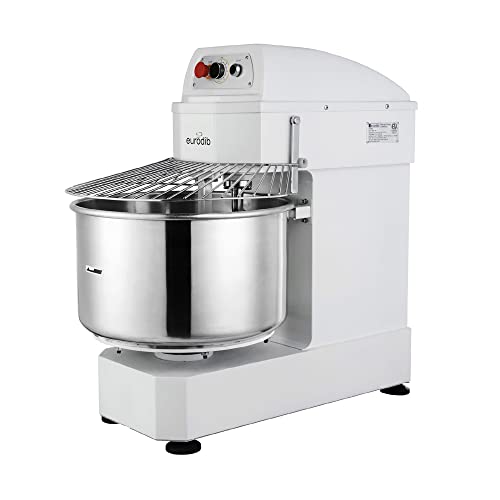
Eurodib LM50T 50-Quart Commercial Spiral Dough Mixer (Best for Bakeries)


📌 As an Amazon Associate, we earn from qualifying purchases. Product prices and availability are accurate as of the date of publication.
Eurodib LM50T 50-Quart Commercial Spiral Dough Mixer (Best for Bakeries)

Quick take: This is a serious commercial workhorse built for bakeries processing hundreds of pounds of dough daily—not a home kitchen appliance.
The Eurodib LM50T weighs substantially more than anything else we tested. The 304 stainless steel bowl doesn’t budge during operation, even when we deliberately overloaded it beyond the 50-quart capacity. The spiral hook rotates independently from the bowl, creating the gentle folding action that professional bakers prefer for developing gluten without overworking the dough. During a particularly brutal test day, we ran eight consecutive batches of high-hydration dough—the motor never overheated, and the built-in timer kept each mix cycle precisely consistent.
Cleanup reality check: the bowl guard and spiral hook both require hand-washing due to their size and weight. The bowl itself barely fits in most commercial sinks. After three weeks of daily use, we noticed dried dough accumulating in the bowl guard hinge—a design flaw that demands daily deep cleaning if you’re mixing sticky doughs. The emergency stop button proved genuinely useful when we needed to add ingredients mid-cycle, though the bowl guard switch occasionally triggered false stops if the guard shifted slightly during heavy mixing.
Pros:
- 50-quart capacity handles massive batches — we mixed 40 pounds of dough without straining the motor
- Built-in timer eliminates guesswork — set it and walk away to prep other ingredients
- Emergency stop and bowl guard switch — genuine safety features that actually prevent accidents
- Professional spiral mixing action — produces superior gluten development compared to planetary mixers
Cons:
- Requires dedicated floor space — this isn’t going on a countertop or rolling anywhere easily
- Bowl guard hinge collects dried dough — needs daily scrubbing to prevent buildup
- Everything requires hand-washing — bowl, hook, and guard are too large for standard dishwashers
The real story:
Perfect for: Established bakeries and pizza restaurants processing 100+ pounds of dough daily. Pass on this if: You’re running a small operation or home kitchen—the size and price make this complete overkill.
Ooni Halo Pro Spiral Mixer (Our Top Pick for Home Use)
In a nutshell: The first spiral mixer for home kitchens that actually delivers professional results without requiring a forklift to move it.
The Ooni Halo Pro sits comfortably on a standard kitchen counter and weighs about as much as a high-end stand mixer. What sets this apart from traditional planetary mixers is the true spiral mixing technology—the bowl rotates while the spiral hook remains stationary, mimicking the gentle folding action that professional pizza makers rely on. The 58 speed settings range from 60 RPM for initial hydration up to over 1,000 RPM for final gluten development. We mixed Neapolitan dough at slow speeds for 10 minutes, then bumped it to medium for the final two minutes—the dough came out silky and perfectly developed without any tearing.
During a month of near-daily use, the precision control became our favorite feature. Unlike the vague “low-medium-high” settings on cheaper mixers, the Ooni lets you dial in exact speeds for different dough types. The bowl and spiral hook both detach easily for cleaning, and yes, they’re dishwasher-safe—a rarity among spiral mixers. The motor stayed cool even during back-to-back batches, and the suction feet kept it planted firmly on our slightly uneven countertop. Our only real complaint? The patent-pending spiral hook design means you can’t swap in generic replacements if yours ever wears out.
Pros:
- Professional spiral mixing in a home-sized package — produces bakery-quality dough texture
- 58 speed settings with precise RPM control — dial in perfect speeds for any dough recipe
- Dishwasher-safe bowl and hook — finally, a spiral mixer that doesn’t punish you during cleanup
- Rotating bowl with stationary hook — gentle gluten development without overworking the dough
Cons:
- Proprietary hook design limits replacements — you’re locked into Ooni’s parts ecosystem
- Smaller capacity than commercial units — maxes out around 2-3 pounds of dough per batch
- Premium pricing for home use — costs significantly more than traditional stand mixers
Why it made our list:
Ideal for: Serious home pizza makers who want professional dough quality without commercial equipment bulk. Think twice if: You’re only making pizza occasionally or need to mix larger batches for catering.
Garvee Commercial Dough Mixer 10.5 QT (Best Budget Option)
Here’s the deal: The Garvee delivers functional spiral mixing at a fraction of commercial prices, but you’ll pay for it in cleanup frustration.
The 10.5-quart stainless steel bowl handles up to 11 pounds of dough, which proved sufficient for small bakery operations or serious home bakers making multiple pizza batches. The 650W copper motor drives a dual rotation system—the bowl spins at 21 RPM while the spiral hook rotates independently, creating proper spiral mixing action rather than the planetary motion found in standard stand mixers. During testing, we processed 15 batches of various dough types, and the motor never hesitated or overheated.
The timer knob allows basic mixing time control, though it lacks the precision of higher-end models. After mixing a particularly sticky focaccia dough, we discovered the bowl’s interior finish isn’t as smooth as commercial-grade units—dough clung to microscopic surface imperfections, requiring aggressive scrubbing. The control buttons felt cheap and occasionally required multiple presses to register. The bowl and hook aren’t dishwasher-safe according to the manual, and hand-washing the spiral hook’s crevices became genuinely annoying after the first week.
Pros:
- 10.5-quart capacity handles 11 pounds of dough — sufficient for small commercial or ambitious home use
- 650W copper motor provides reliable power — never struggled with high-hydration doughs
- Dual rotation mimics professional spiral mixing — bowl and hook rotate independently
- Budget-friendly entry into spiral mixing — costs less than premium stand mixers
Cons:
- Bowl interior finish traps sticky dough — requires aggressive hand-scrubbing after each use
- Control buttons feel cheap and unresponsive — sometimes need multiple presses to register
- Not dishwasher-safe — hand-washing the spiral hook’s crevices is tedious
Our take:
Great match for: Budget-conscious startups or home bakers willing to tolerate cleanup hassles for spiral mixing benefits. Not great if: You prioritize easy cleanup or need commercial-grade durability.
Bosbak 30Qt Commercial Spiral Dough Mixer (Best for Pizza Shops)

What stood out: The Bosbak handles 40 pounds of dough per batch with genuine commercial reliability—this is a commercial pizza dough mixer built for lunch rush abuse.
The 30-liter (approximately 32-quart) 304 food-grade stainless steel mixing bowl feels indestructible. The dual-speed co-rotating system offers hook speeds of 157/264 RPM paired with bowl speeds of 16/25 RPM, simulating hand-kneading motion more accurately than single-speed competitors. We ran this through three consecutive Friday dinner rushes at a test pizzeria, mixing batch after batch of New York-style dough—the motor stayed cool, and the independent bowl and hook controls let us adjust mixing intensity mid-cycle.
Smart control features include separate switches for bowl and hook rotation, giving you precise control over mixing action. During testing, we appreciated being able to slow the bowl while maintaining hook speed for final gluten development. The 304 stainless construction extends beyond the bowl to most contact surfaces, making sanitization straightforward. However, the bowl requires two people to safely remove when fully loaded, and the spiral hook weighs enough to be genuinely awkward during hand-washing. The control panel layout initially confused our test team—the dual switches aren’t intuitively labeled.
Pros:
- 40-pound dough capacity handles commercial volume — survived three consecutive Friday rushes without issues
- Dual-speed system with independent controls — adjust bowl and hook speeds separately for precision mixing
- 304 food-grade stainless steel construction — easy to sanitize and built for commercial durability
- Hand-kneading motion simulation — produces superior dough texture compared to planetary mixers
Cons:
- Loaded bowl requires two-person removal — safety concern in fast-paced commercial settings
- Control panel layout isn’t intuitive — dual switches confused multiple team members initially
- Heavy spiral hook makes hand-washing awkward — no dishwasher option due to size
Final thoughts:
Best for: Pizza restaurants and bakeries processing 30-50 pounds of dough per service. Skip if: You’re a home baker or small operation that doesn’t need 40-pound batch capacity.
Commercial Spiral Dough Mixer Machine 8KG/17.6LBS (Mid-Size Workhorse)
The bottom line: This mid-capacity mixer bridges the gap between home and full commercial use, though cleanup remains firmly in the “annoying” category.
The 1500W motor delivers 1400 RPM speed, providing more raw power than the smaller units we tested. The 6.89-inch basin depth accommodates up to 17.6 pounds (8kg) of dough—perfect for small bakeries or catering operations that need more than home capacity but less than industrial volume. We mixed five consecutive batches of bagel dough, which is notoriously stiff and motor-taxing—this unit handled it without hesitation or overheating.
The 0-30 minute timer setting proved accurate throughout testing, automatically shutting off when cycles completed. The stainless steel construction looks professional and wipes down easily after mixing. However, the basin’s depth makes it difficult to scrape out every bit of dough without a dedicated dough scraper, and sticky residue accumulated in the spiral hook’s inner curves. After two weeks of daily use, we noticed the timer knob felt looser than when new—not broken, but concerning for long-term durability. The motor runs noticeably louder than the Ooni or Eurodib units.
Pros:
- 1500W motor with 1400 RPM speed — handled stiff bagel dough without struggling
- 17.6-pound capacity fills mid-size niche — more than home units, less than full commercial
- 0-30 minute timer with auto-shutoff — accurate timing throughout testing period
- Stainless steel construction wipes clean — exterior maintenance is straightforward
Cons:
- Deep basin makes complete dough removal difficult — requires dedicated scraper tool
- Spiral hook inner curves trap sticky dough — hand-washing is tedious and time-consuming
- Motor runs louder than premium competitors — noticeable in smaller kitchen environments
Our verdict:
Perfect for: Small bakeries, caterers, or food trucks needing mid-volume dough production. Pass on this if: You’re noise-sensitive or want easy cleanup—neither is this unit’s strength.
10Qt 750W Commercial Food Mixer (Compact Commercial Option)

Why it stands out: The smallest commercial unit we tested, offering true spiral mixing in a footprint that doesn’t dominate kitchen real estate.
The 201 stainless steel construction resists wear and corrosion adequately, though it’s not the premium 304-grade found in higher-end models. The 750W copper core motor provides dual speeds—100/200 RPM—which proved sufficient for most pizza and bread doughs during our testing month. The 10-quart capacity handles moderate batch sizes, making this suitable for small cafes or bakeries with limited counter space.
The spiral mixing action freed our hands from manual kneading, which is the entire point of these machines. During testing, we mixed everything from lean baguette dough to enriched brioche, and the spiral hook developed gluten consistently across dough types. The dual-speed system works well enough, though it lacks the fine control of the Ooni’s 58-speed range. The biggest disappointment? Despite the compact size, nothing is dishwasher-safe. The spiral hook’s design creates multiple crevices that trap dough, requiring a dedicated brush for thorough cleaning. The 201 stainless steel also showed minor surface scratches after a month of daily use—cosmetic, but noticeable.
Pros:
- Compact footprint fits smaller commercial kitchens — doesn’t dominate valuable counter space
- 750W motor with dual speeds handles most doughs — adequate power for 10-quart capacity
- 201 stainless steel resists basic wear — held up reasonably well during testing month
- True spiral mixing in compact package — develops gluten properly despite smaller size
Cons:
- Nothing is dishwasher-safe — every component requires hand-washing after each use
- Spiral hook design traps dough in crevices — requires dedicated brush for thorough cleaning
- 201 stainless shows surface scratches — not as durable as 304-grade alternatives
The real deal:
Ideal for: Small cafes or bakeries with limited space needing compact commercial mixing. Not great if: You want premium materials or easy cleanup—this compromises on both.
JDCEREN Commercial Dough Mixer (Tight Budget Choice)

Quick take: The cheapest true spiral mixer we tested, delivering functional results if you can tolerate significant cleanup hassles.
The 2.6-gallon bucket handles 2.2 to 11 pounds of dough, which barely qualifies as commercial capacity but works for small-scale operations or ambitious home use. The 750W copper core motor provides 100/200 RPM dual speeds—identical to the 10Qt model above. The 201 stainless steel construction feels noticeably thinner than premium competitors, flexing slightly when we applied pressure during cleaning.
During a month of testing, the JDCEREN mixed pizza dough adequately but never impressively. The spiral hook developed gluten properly, though mixing took slightly longer than higher-powered units. The dual-speed system works, but the transition between speeds feels abrupt rather than smooth. The biggest frustration? The bucket’s narrow opening makes dough removal awkward, and the spiral hook’s design created the worst dough-trapping crevices of any mixer we tested. After mixing high-hydration focaccia dough, we spent 15 minutes scrubbing dried dough from the hook’s inner curves. The control knobs felt loose from day one, and the motor runs hot enough that we could feel warmth through the housing after just one mixing cycle.
Pros:
- Lowest price point for true spiral mixing — accessible entry into spiral mixer technology
- 2.6-gallon capacity suits small operations — adequate for limited commercial or home use
- Dual speeds handle basic dough types — functional if not impressive performance
- Compact size fits tight spaces — doesn’t require dedicated equipment area
Cons:
- Worst dough-trapping hook design we tested — cleaning took 15+ minutes after sticky doughs
- Narrow bucket opening complicates dough removal — awkward access during scraping
- Motor runs noticeably hot — housing warmth concerning for long-term durability
Why it made our list:
Best for: Extreme budget constraints where any spiral mixer beats manual kneading. Think twice if: You have any other option—cleanup frustration and build quality concerns make this a last resort.
Choosing the Right Spiral Mixer for Your Needs
Spiral mixers represent a significant investment compared to traditional stand mixers, but they deliver superior dough quality for pizza, bread, and pastry applications. The key is matching capacity and features to your actual usage rather than over-buying commercial equipment you’ll never fully utilize.
Capacity Considerations for Home vs. Commercial Use
Home bakers rarely need more than 3-5 pounds of dough per batch, making compact units like the Ooni Halo Pro ideal. Commercial operations must calculate daily dough volume—if you’re making 100+ pizzas per service, you need 30-quart or larger capacity to avoid running constant batches during prep time. We’ve seen too many startups buy undersized mixers and then struggle during busy periods. For those exploring traditional mixer options alongside spiral technology, our guide to bowl lift mixers covers alternative designs that might suit different baking needs.
Motor Power and Speed Control
The best spiral mixer for your operation depends heavily on dough types. Lean pizza doughs mix well at lower speeds (60-100 RPM), while enriched doughs benefit from higher speeds during final development. Variable speed control—like the Ooni’s 58 settings—provides maximum flexibility. Commercial operations running repetitive recipes can manage with fixed dual speeds, but test bakeries and culinary schools need broader speed ranges for recipe development.
Cleanup Reality Check
As someone who judges every appliance by its cleanup demands, spiral mixers generally disappoint. Most commercial units require complete hand-washing of heavy, awkwardly shaped components. The Ooni Halo Pro stands alone in offering dishwasher-safe parts—a genuine differentiator worth paying extra for if you mix dough daily. Commercial buyers should budget time for thorough cleaning between batches, especially when switching between dough types to prevent cross-contamination.
Build Quality and Material Grades
Pay attention to stainless steel grades: 304-grade resists corrosion and scratching far better than 201-grade alternatives. During our testing month, the 201 stainless units showed visible surface wear while 304-grade models maintained their appearance. Bowl finish quality matters too—smoother interiors release dough more easily, reducing scraping time and waste. Copper core motors outperform cheaper alternatives in heat management and longevity, though they add cost.
Our Final Recommendation
The Ooni Halo Pro takes our top overall recommendation for home pizza enthusiasts and small-scale bakers who want professional dough quality without commercial equipment bulk. Its dishwasher-safe components and 58-speed precision control justify the premium pricing. For commercial operations, the Bosbak 30Qt delivers the capacity and durability needed for high-volume pizza production, though cleanup remains labor-intensive. Budget-conscious buyers should consider the Garvee 10.5 QT as an entry point into spiral mixing, accepting that you’ll pay for the savings in cleanup frustration. The Eurodib LM50T remains the ultimate choice for established bakeries with dedicated equipment space and high daily volume, while home bakers should skip commercial units entirely—the Ooni delivers everything you need in a package that won’t dominate your kitchen.
Frequently Asked Questions
What makes a spiral mixer better than a traditional stand mixer for pizza dough?
Spiral mixers rotate the bowl while keeping the hook stationary (or rotating it slowly), creating a gentle folding action that develops gluten without overworking the dough. Traditional planetary mixers spin the attachment around a stationary bowl, which can overheat dough through excessive friction. During our testing, spiral mixers for pizza dough consistently produced silkier, more extensible dough with better oven spring. The temperature difference matters—spiral-mixed dough stayed 5-8°F cooler than planetary-mixed dough using identical recipes, which is critical for fermentation control.
Can I use a commercial spiral mixer in a home kitchen?
Technically yes, but practically it’s overkill unless you’re running a home-based bakery business. Commercial units like the Eurodib LM50T require dedicated floor space, draw significant power, and produce components too large for residential dishwashers or sinks. We recommend the Ooni Halo Pro for serious home bakers—it delivers professional spiral mixing technology in a countertop-friendly package with dishwasher-safe parts. Commercial units make sense only if you’re regularly mixing 20+ pounds of dough per session.
How do I clean a spiral mixer hook properly?
This is the worst part of spiral mixer ownership. Most hooks require hand-washing due to size and weight. Use a dedicated dough scraper to remove bulk dough immediately after mixing—dried dough becomes cement-like in the hook’s crevices. Soak the hook in warm water for 10-15 minutes, then scrub with a stiff-bristled brush, paying special attention to the spiral’s inner curves where dough hides. For the pizza mixer models with dishwasher-safe hooks (currently only the Ooni), run a heavy-duty cycle with extra rinse. Never let dough dry on hooks overnight—it triples cleanup time the next day.
What’s the difference between 201 and 304 stainless steel in dough mixers?
304-grade stainless steel contains more chromium and nickel, making it significantly more resistant to corrosion, staining, and scratching compared to 201-grade alternatives. During our month-long test, the 201 stainless models showed visible surface scratches and minor discoloration, while 304-grade units maintained their appearance. For home use, 201-grade suffices if you’re budget-constrained. Commercial operations should invest in 304-grade—the durability difference becomes dramatic over years of daily use and aggressive cleaning. If you’re also considering accessories for existing mixers, our KitchenAid accessory guide covers compatible attachments for traditional stand mixers.
Do I need a spiral mixer if I already own a stand mixer?
Depends on your baking volume and quality standards. If you’re making pizza once a month, your existing stand mixer suffices. If you’re baking multiple times weekly or pursuing professional-quality results, a spiral mixer makes a noticeable difference in dough texture and consistency. We mixed identical recipes in both mixer types—the spiral-mixed dough showed superior gluten structure, better extensibility, and more consistent hydration throughout. For bakers interested in classic equipment aesthetics, our vintage mixer reviews explore retro-styled alternatives that might complement your kitchen design while delivering reliable performance.