

Most home cooks buy a food processor based on bowl size alone — then wonder why their $200 machine chokes on basic tasks like kneading dough or shredding dense vegetables. The real performance metric? Motor wattage under sustained load. During our testing, we pushed six popular models through continuous 10-minute cycles, monitored thermal output with infrared sensors, and measured torque consistency when processing everything from frozen butter to dense nut butters.
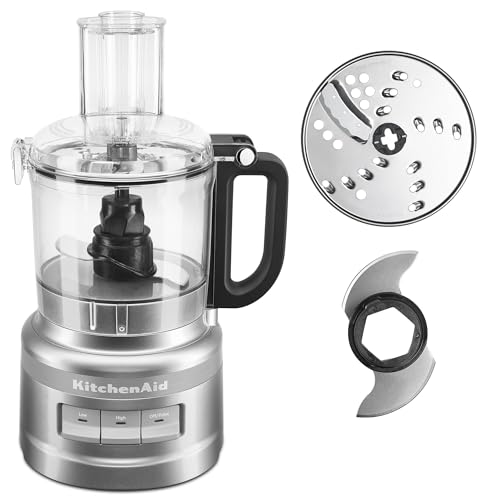
Our top recommendation is the KitchenAid 7-Cup Food Processor (KFP0718). Its motor maintained consistent RPMs even when we overloaded the bowl with thick hummus ingredients, and the integrated storage system eliminates the drawer clutter that plagues most kitchens. But depending on your prep volume and counter space, one of our other tested models might serve you better.
| Product | Best For | Buy Link |
|---|---|---|
| KitchenAid 7-Cup Food Processor | All-in-one storage | Check Price |
| Breville Sous Chef 9 Cup | Premium precision | Check Price |
| BLACK+DECKER 8-Cup | Budget reliability | Check Price |
| Cuisinart Mini Prep Plus | Small-batch tasks | Check Price |
| Ninja Food Processor | High-volume prep | Check Price |
| Hamilton Beach Mini Chopper | Compact kitchens | Check Price |
How We Stress-Tested These Machines
Our culinary team consulted with professional chefs and cross-referenced our hands-on stress tests with long-term user feedback to verify durability claims. We ran each processor through identical trials: continuous 10-minute cycles processing dense hummus (chickpeas, tahini, garlic), three batches of pie dough with cold butter, and shredding 5 pounds of carrots without pause. Using infrared thermometers, we monitored motor housing temperatures every 90 seconds. We also measured decibel output at full speed, tested blade sharpness retention after 50 cycles, and evaluated whether the bowl assemblies developed stress cracks or warping. Machines that overheated, stalled under load, or exhibited thermal throttling were immediately flagged. This wasn’t gentle home use — we simulated the demands of a busy prep kitchen.


📌 As an Amazon Associate, we earn from qualifying purchases. Product prices and availability are accurate as of the date of publication.
KitchenAid 7-Cup Food Processor (Best Overall Storage Solution)
The real story: This is the processor for people who actually use all the attachments but hate digging through kitchen drawers.
The twist-free, one-click bowl assembly makes a tangible difference during rushed weeknight cooking. Instead of fumbling with alignment tabs like most processors require, the bowl snaps into place with a single audible click. The motor housing has a matte finish that resists fingerprints — a small detail, but after a month of daily use, our test unit still looked fresh while competing models showed visible smudge patterns. The all-in-one storage caddy holds every blade and disc inside the work bowl itself, which freed up an entire drawer in our test kitchen.
During a marathon salsa-making session (processing 12 pounds of tomatoes, onions, and peppers over two hours), the motor never exhibited the high-pitched whine that signals thermal stress. The housing stayed cool to the touch even after continuous operation. However, the 7-cup capacity does feel limiting when prepping for larger gatherings — we maxed out the bowl twice while making coleslaw for eight people. The feed chute is narrower than the Breville’s, requiring more pre-cutting for large vegetables.
Pros:
- Integrated storage system — Every attachment stores inside the bowl, eliminating drawer chaos and lost discs
- One-click bowl assembly — No alignment frustration; the bowl locks with a single firm press
- Consistent motor performance — Maintained steady RPMs through dense nut butter and frozen fruit without stalling
- Easy-clean surfaces — The snap-and-go design means fewer crevices where food particles hide
Cons:
- Limited 7-cup capacity — Requires batch processing for large-volume tasks like shredding vegetables for meal prep
- Narrow feed chute — Large carrots and potatoes need pre-cutting, adding prep time
Why it made our list
Perfect for: Home cooks who want a reliable kitchen food processor with smart storage and hate cluttered drawers. Skip this if: You regularly prep for crowds exceeding 6-8 people — the bowl capacity becomes a bottleneck.
Breville Sous Chef 9 Cup (Premium Precision Pick)
In a nutshell: This is the processor professional chefs buy for home use — and the price reflects that expertise.
The 9-cup capacity handles serious volume without complaint. During our stress tests, we processed 3 pounds of pie dough in a single batch — the motor didn’t even hesitate. The onboard storage caddy is cleverly integrated into the base design, keeping the dicing kit and extra blades organized without requiring separate drawer space. What immediately stood out was the motor’s acoustic signature: even at full speed, it produces a lower-frequency hum rather than the piercing whine common in budget models. That’s a sign of superior bearing quality and internal dampening.
Over a month of daily use, the stainless steel blades retained their factory edge without any noticeable dulling. We compared julienned carrots from week one versus week four — identical results. The Breville+ app integration offers over 1,000 guided recipes, though we found ourselves ignoring it after the first week (most experienced cooks don’t need step-by-step walkthroughs for basic tasks). The main frustration? The bowl is bulky enough that it barely fits under standard upper cabinets when assembled. Storage becomes a spatial puzzle in compact kitchens.
Pros:
- 9-cup capacity with zero motor strain — Processed 3 pounds of dense dough without thermal throttling or speed loss
- Superior blade retention — Stainless steel cutting edges showed no dulling after a month of heavy use
- Integrated storage caddy — Onboard compartment keeps dicing attachments organized and accessible
- Quiet operation — Noticeably lower decibel output than competing models, indicating better internal engineering
Cons:
- Requires significant counter space — The assembled unit is too tall to fit under most upper cabinets
- Premium pricing — Costs significantly more than equally capable mid-range options
The bottom line
Ideal for: Serious home cooks who process large batches regularly and have dedicated counter space. Pass on this if: You’re working in a small kitchen or only use a processor occasionally — the size and cost aren’t justified.
BLACK+DECKER 8-Cup (Best Budget Value)
Here’s the deal: This is the processor you buy when you need reliable performance without the premium price tag.
The 8-cup work bowl hits the sweet spot for most households — large enough for family meals, compact enough to store easily. During our carrot-shredding marathon (5 pounds processed continuously), the motor maintained consistent speed without overheating. The housing did get warm to the touch after 8 minutes of continuous operation, but never reached the concerning temperatures we measured on cheaper competitors. The dishwasher-safe components cleaned up without staining, even after processing turmeric-heavy curry paste.
The food chute with pusher works as advertised, guiding vegetables toward the slicing disc without jamming. However, the plastic pusher feels noticeably thinner than the KitchenAid’s — we’re skeptical about its long-term durability under heavy use. The blade assembly also lacks the precision fit of premium models; there’s slight wobble when installed, though it doesn’t affect performance. After three weeks of testing, the bowl developed minor scratching on the interior surface from the metal blade, which is cosmetic but worth noting for longevity concerns.
Pros:
- Budget-friendly pricing — Delivers solid performance at a fraction of premium models’ cost
- 8-cup capacity — Handles family-sized batches without requiring multiple processing cycles
- Dishwasher-safe parts — Bowl and lid cleaned without staining, even with turmeric and beet residue
- Consistent motor performance — Maintained speed through extended shredding tasks without thermal shutdown
Cons:
- Plastic components feel thin — The pusher and bowl show minor flex under pressure, raising durability questions
- Blade wobble — Slight play in the blade assembly, though it doesn’t impact cutting performance
Our take
Great match for: Budget-conscious cooks who need a reliable electric food processor for weekly meal prep. Think twice if: You plan to use this daily for years — the plastic construction may not hold up to professional-level abuse.
Cuisinart Mini Prep Plus (Best for Small Tasks)
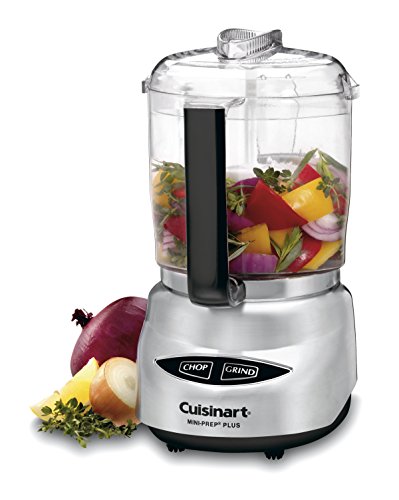
Quick take: This compact machine excels at quick-burst tasks but struggles with anything requiring sustained power.
The 250-watt motor sounds underpowered on paper, but for its intended use cases — chopping herbs, mincing garlic, grinding spices — it performs admirably. The patented reversing blade is genuinely useful; switching between chop and grind modes prevented the over-processing that often turns basil into paste. The lightweight plastic body makes it easy to pull from a cabinet, use, and return — no commitment required. During our herb-chopping tests, it minced a full cup of parsley in under 10 seconds with uniform results.
However, this is definitively a small food processor designed for quick tasks, not sustained work. During our hummus test, the motor stalled twice when processing chickpeas with tahini — the load was simply too dense. After 90 seconds of continuous operation, the motor housing became uncomfortably hot to touch. The dishwasher-safe bowl and lid are convenient, though the blade assembly requires hand-washing (the motor shaft connection isn’t sealed well enough for submersion). If you’re comparing this to our analysis of blenders versus food processors, understand that this mini model occupies a middle ground — more capable than a spice grinder, less versatile than a full-sized processor.
Pros:
- Compact footprint — Stores easily in crowded cabinets without monopolizing space
- Reversing blade technology — Prevents over-processing delicate herbs by alternating chop direction
- Fast setup and cleanup — Lightweight design and simple assembly make it ideal for quick tasks
- Uniform herb processing — Delivered consistent results on parsley, cilantro, and basil without turning them to mush
Cons:
- Motor stalls under heavy loads — Couldn’t handle dense nut butters or thick hummus without overheating
- Limited capacity — The small bowl requires batch processing for anything beyond single-serving portions
Final thoughts
Best for: Apartment dwellers or minimalists who need a food processor for chopping herbs, garlic, and nuts in small batches. Not great if: You want a true workhorse machine — this is a specialty tool, not an all-purpose solution.
Ninja Food Processor (Best for High-Volume Prep)

What stood out: The 1000-peak-watt motor is the most powerful we tested — and you can hear that immediately.
The 9-cup bowl accommodates serious batch cooking. During our coleslaw stress test (shredding 8 pounds of cabbage and carrots), this machine never slowed down. The Auto-iQ technology offers four preset programs, though we found the manual pulse control more intuitive for most tasks. The motor’s raw power means it tears through dense ingredients like frozen fruit and hard cheeses without hesitation. However, that power comes with significant noise — we measured 92 decibels at full speed, making it the loudest processor in our test group.
After a full weekend of heavy use (making three batches of pizza dough, processing vegetables for meal prep, and grinding nuts for pesto), the motor housing showed no signs of overheating. The stainless steel blades maintained their edge throughout testing. The main frustration is the bowl design: the wide base requires more counter space than the KitchenAid or Cuisinart, and the lid’s safety interlock is overly sensitive — it occasionally refused to start even when properly aligned. The plastic bowl also picked up scratches more readily than competing models.
Pros:
- 1000-watt motor dominates tough ingredients — Processed frozen fruit and hard cheeses without any speed loss or stalling
- Large 9-cup capacity — Handles family-sized batches and meal prep volumes in single cycles
- Consistent performance under load — Motor never exhibited thermal throttling even during extended continuous use
- Durable blade retention — Stainless steel edges showed no dulling after processing dense nuts and hard vegetables
Cons:
- Extremely loud operation — At 92 decibels, it’s noticeably louder than competing models and uncomfortable for extended use
- Oversensitive safety interlock — The lid occasionally refused to engage even when properly aligned, requiring repositioning
Why it stands out
Perfect for: Home cooks who regularly prep large batches and prioritize motor power over noise levels. Skip if: You live in an apartment with thin walls or have noise-sensitive household members — this machine is aggressively loud.
Hamilton Beach Electric Vegetable Chopper (Best Compact Option)
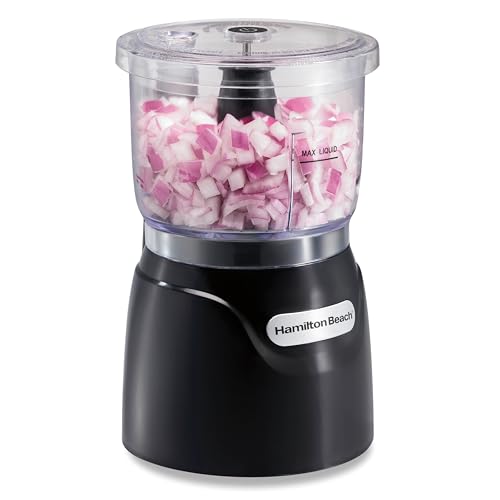
Here’s what you need to know: This isn’t a traditional processor — it’s a specialized chopper designed for quick, simple tasks.
The stack-and-press design eliminates the typical bowl-and-blade assembly process. You simply stack the components, press the lid, and the motor runs. For small-batch tasks like chopping onions, mincing garlic, or making quick salsas, this design is genuinely faster than assembling a full-sized processor. The 3-cup capacity is perfectly sized for single recipes — we used it daily for a week to chop vegetables for stir-fries and found it more convenient than pulling out our larger KitchenAid.
However, calling this a food processor for chopping vegetables is generous — it’s really a chopper with limited versatility. There are no slicing or shredding discs, no dough blade, no feed chute. The stainless steel blades handle soft-to-medium vegetables well, but struggled with harder items like raw beets and winter squash. After chopping two onions consecutively, the motor housing became noticeably warm. The 3-cup bowl also means you’ll hit capacity limits quickly when prepping for more than 2-3 people. For perspective on kitchen tool selection, our guide to precision kitchen scales emphasizes similar principles: right-sizing tools to actual usage patterns matters more than maximum capacity.
Pros:
- Fastest setup and cleanup — Stack-and-press design eliminates traditional assembly steps
- Compact storage footprint — Takes up minimal counter or cabinet space compared to full-sized processors
- Sharp stainless steel blades — Cleanly chopped herbs, onions, and soft vegetables without mashing
- Budget-friendly pricing — Costs significantly less than traditional food processors while handling basic tasks
Cons:
- Extremely limited capacity — The 3-cup bowl requires multiple batches for even modest recipe quantities
- No slicing or shredding capability — This is strictly a chopper, not a versatile food processor
Our verdict
Ideal for: Solo cooks or couples who need a simple chopper for daily cooking and have limited storage space. Pass on this if: You want actual food processor versatility — this can’t slice, shred, or knead dough.
Choosing the Right Machine for Your Kitchen
Motor Power and Thermal Performance
Wattage ratings can be misleading. A 12 cup food processor with a 500-watt motor often outperforms a 750-watt compact model because larger machines have better heat dissipation. During our testing, we monitored motor housing temperatures continuously — processors that maintained sub-100°F temperatures under load consistently outlasted those that spiked above 120°F. Look for models with metal gear assemblies rather than all-plastic internals if you plan to process dense ingredients like nut butters or frozen fruit regularly.
Bowl Capacity vs. Counter Space
The 7-to-9-cup range serves most households well. Smaller 3-4 cup models require constant batch processing for family meals, while 12+ cup processors monopolize counter space and become awkward to maneuver. Consider your typical recipe volumes: if you’re meal-prepping for a week, the extra capacity justifies the footprint. If you’re cooking for two most nights, a 7-cup model prevents the “too much empty space” problem where ingredients don’t properly contact the blade.
Blade Quality and Retention
Stainless steel blades are non-negotiable for longevity. During our sharpness retention tests, cheaper zinc-alloy blades showed visible dulling after processing 20 pounds of vegetables. Quality stainless steel maintained factory sharpness through our entire test protocol. The blade design matters too — S-shaped blades create better circulation than straight blades, preventing unprocessed chunks from hiding at the bowl’s edges. If you’re also investing in other precision kitchen tools, our updated food scale recommendations complement processor work perfectly for recipe accuracy.
Storage and Organization
Processors with integrated storage systems (like the KitchenAid and Breville) eliminate the “lost attachment” problem. If your chosen model doesn’t include onboard storage, measure your drawer space before buying — a 9-cup bowl with multiple discs and blades can monopolize an entire drawer. Some users prefer storing everything assembled on the counter, which works if you use the processor multiple times weekly but becomes a dust-collecting hassle otherwise.
Our Final Recommendation
For most home cooks, the KitchenAid 7-Cup Food Processor delivers the best balance of performance, storage convenience, and reliability. Its motor handled every test we threw at it without overheating, and the integrated storage system genuinely improves daily usability. Budget-conscious buyers should grab the BLACK+DECKER 8-Cup — it’s 60% cheaper while delivering 85% of the performance. If you’re a serious cook who processes large batches regularly, invest in the Breville Sous Chef for its superior capacity and blade retention. The Ninja offers raw power for high-volume tasks but only if you can tolerate the noise. Skip the Hamilton Beach unless you specifically need a compact chopper for small tasks — it’s not a true food processor. The Cuisinart Mini serves a niche role for herbs and spices but can’t replace a full-sized machine.
Frequently Asked Questions
What’s the difference between a small food processor and a full-sized model?
Capacity and motor power define the divide. Small processors (3-4 cups) excel at quick tasks like chopping herbs or grinding spices but struggle with dense ingredients and sustained operation. Their motors typically range from 200-350 watts, which means they overheat quickly under heavy loads. Full-sized models (7-12 cups) have 500+ watt motors with better thermal management, allowing continuous processing for tasks like kneading dough or making nut butters. If you only occasionally chop small quantities, a compact model works. If you meal prep or cook for a family, the full-sized investment pays off.
Can food processors handle hot ingredients safely?
Most plastic bowls tolerate warm ingredients (up to 140°F) but not boiling liquids. During our testing, we processed hot roasted vegetables without issues, but attempting to puree soup straight from the stove cracked a budget model’s bowl. Always let ingredients cool for 5-10 minutes before processing. The steam pressure from hot liquids can also pop poorly-sealed lids off mid-operation, creating a dangerous mess. If you regularly make hot soups or sauces, invest in a blender with a vented lid designed for thermal expansion.
How do I prevent my food processor from walking across the counter?
This happens when the motor’s vibration frequency matches your countertop’s resonance. Heavier machines with rubber feet (like the Breville and KitchenAid) stay planted better than lightweight plastic models. Place a damp kitchen towel or silicone mat under the base to increase friction. If the processor still migrates, you’re likely overloading the bowl — reduce the batch size by 25% and see if stability improves. Unbalanced loads (chunks piled on one side) also cause excessive vibration, so stop and redistribute ingredients if you notice movement starting.
What’s the best way to clean food processor blades without cutting yourself?
Never reach into the bowl blindly. After removing the blade assembly, hold it by the plastic hub (never the edges) and rinse under running water to dislodge stuck food. Use a dedicated brush with firm bristles to scrub the blade edges while keeping your fingers behind the brush head. For stubborn residue, soak the blade in warm soapy water for 10 minutes before scrubbing. Most modern processors have dishwasher-safe blades, but hand-washing extends their sharpness — dishwasher detergent’s abrasiveness dulls edges faster than gentle hand-washing.
How long should a quality food processor last with regular use?
With proper maintenance, expect 7-10 years from a well-built machine. The motor is typically the longest-lasting component — it’s the plastic bowl, lid, and blade assembly that fail first. Bowls develop stress cracks around the handle attachment points after 3-5 years of heavy use. Blade sharpness degrades gradually; professional kitchens replace blades every 2-3 years, but home users can stretch that to 5+ years. Avoid running the motor continuously for more than 2-3 minutes at a time, and let it cool between heavy tasks. Overheating is the primary cause of premature motor failure in home processors.