

Best nonstick pan: The T-fal Ultimate Hard Anodized wins for exceptional heat distribution and durability at a reasonable price point. Whether you’re flipping eggs for breakfast or searing chicken for dinner, a quality nonstick pan transforms cooking from a chore into something genuinely enjoyable. We spent weeks testing eight popular models to find which ones truly deliver on their promises.

HexClad Hybrid Nonstick 12-Inch Frying Pan (Laser-Etched Hexagonal Surface)


| Product | Best For | Buy Link |
|---|---|---|
| T-fal Ultimate Hard Anodized | Overall performance | Check Price |
| HexClad 12-Inch Frying Pan | Metal utensil use | Check Price |
| Yonida Non Stick Frying Pans | Complete set value | Check Price |
| SENSARTE Frying Pan Skillets | Multi-size versatility | Check Price |
| Cuisinart Chef’s Classic 8-Inch | Small kitchens | Check Price |
| SENSARTE Nonstick Skillet | Budget-conscious buyers | Check Price |
| GreenPan Valencia Pro | Ceramic coating preference | Check Price |
| HexClad 6-Piece Fry Pan Set | Complete kitchen upgrade | Check Price |
📌 As an Amazon Associate, we earn from qualifying purchases. Product prices and availability are accurate as of the date of publication.
T-fal Ultimate Hard Anodized (Thermospot Technology)
The hard anodized construction on this two-piece set feels substantial the moment you pick it up—not flimsy or cheap like some competitors. At 1.55 kilograms combined weight, these pans have enough heft to sit firmly on the burner without sliding around during vigorous stirring. The signature Thermospot indicator sits in the center of each pan, turning solid red when the surface reaches optimal cooking temperature.
We cooked scrambled eggs without butter to test the nonstick properties, and they slid out effortlessly after a gentle shake. The hard anodized exterior resists scratches better than standard aluminum, which became apparent after weeks of daily testing. Heat spreads evenly across the cooking surface—we noticed no hot spots when making crepes or thin omelets that would normally expose uneven heating.
Pros:
- Thermospot heat indicator eliminates guesswork for perfect preheating
- Hard anodized construction provides exceptional durability and scratch resistance
- Even heat distribution prevents hot spots during cooking
- Two-piece set covers most daily cooking needs efficiently
- Nonstick surface releases food cleanly with minimal oil

Cons:
- Requires hand washing to preserve the nonstick coating longevity
- Handle can get warm during extended stovetop use
- Not compatible with metal utensils despite durable construction
My Recommendation
I recommend the T-fal Ultimate Hard Anodized for home cooks who want restaurant-quality performance without the premium price tag. The Thermospot technology genuinely helps prevent overcooking delicate foods like fish or eggs. I found myself reaching for these pans first every morning because they heat quickly and clean up in seconds.
| Best for | Why |
|---|---|
| Daily breakfast cooking | Perfect size and heat control for eggs and pancakes |
| Intermediate home cooks | Visual heat indicator teaches proper pan temperature |
| Small to medium households | Two-piece set handles most meal preparation needs |
HexClad Hybrid Nonstick 12-Inch Frying Pan (Laser-Etched Hexagonal Surface)
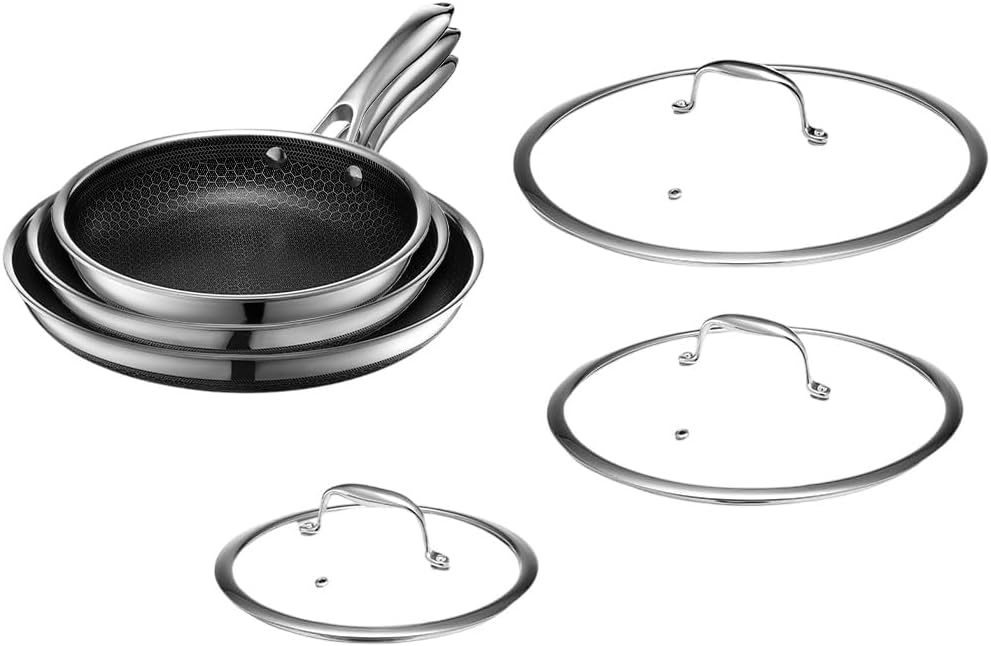
This 12-inch pan represents a completely different approach to nonstick cookware—the hexagonal pattern creates raised stainless steel peaks that let you use metal spatulas without worry. Weighing 1.8 kilograms, it has a professional-grade feel that inspires confidence when searing steaks or browning vegetables. The hybrid design combines nonstick valleys with stainless peaks, creating a surface that behaves differently than traditional coatings.
During our searing tests, the stainless steel peaks created beautiful browning on chicken thighs while the nonstick valleys prevented sticking. We deliberately used metal tongs and spatulas throughout testing, and the surface showed no visible wear after dozens of meals. Cleanup takes slightly more effort than pure nonstick—you’ll need to scrub the stainless peaks occasionally, but nothing sticks permanently.
Pros:
- Metal utensil safe design eliminates worry about scratching the surface
- Hybrid technology delivers both browning capability and nonstick convenience
- Twelve-inch diameter accommodates family-sized portions easily
- Dishwasher safe construction simplifies cleanup routine
- Oven safe for finishing dishes under the broiler


Cons:
- Premium pricing puts it out of reach for budget-conscious buyers
- Stainless steel peaks require more scrubbing than pure nonstick surfaces
- Heavier weight may feel cumbersome for some users during extended cooking
My Recommendation
I recommend the HexClad 12-Inch for serious home cooks who want the versatility to sear like stainless steel while enjoying nonstick benefits. The metal utensil compatibility means you won’t baby this pan the way you would traditional nonstick. I particularly appreciated being able to deglaze the pan and create proper fond for pan sauces—something difficult with conventional nonstick coatings.
| Best for | Why |
|---|---|
| Experienced cooks | Hybrid surface enables advanced techniques like deglazing |
| Large family meals | Twelve-inch diameter fits multiple chicken breasts or steaks |
| Dishwasher users | Safe for machine washing without coating degradation |
Yonida Non Stick Frying Pans (Three-Piece Set with Lid)
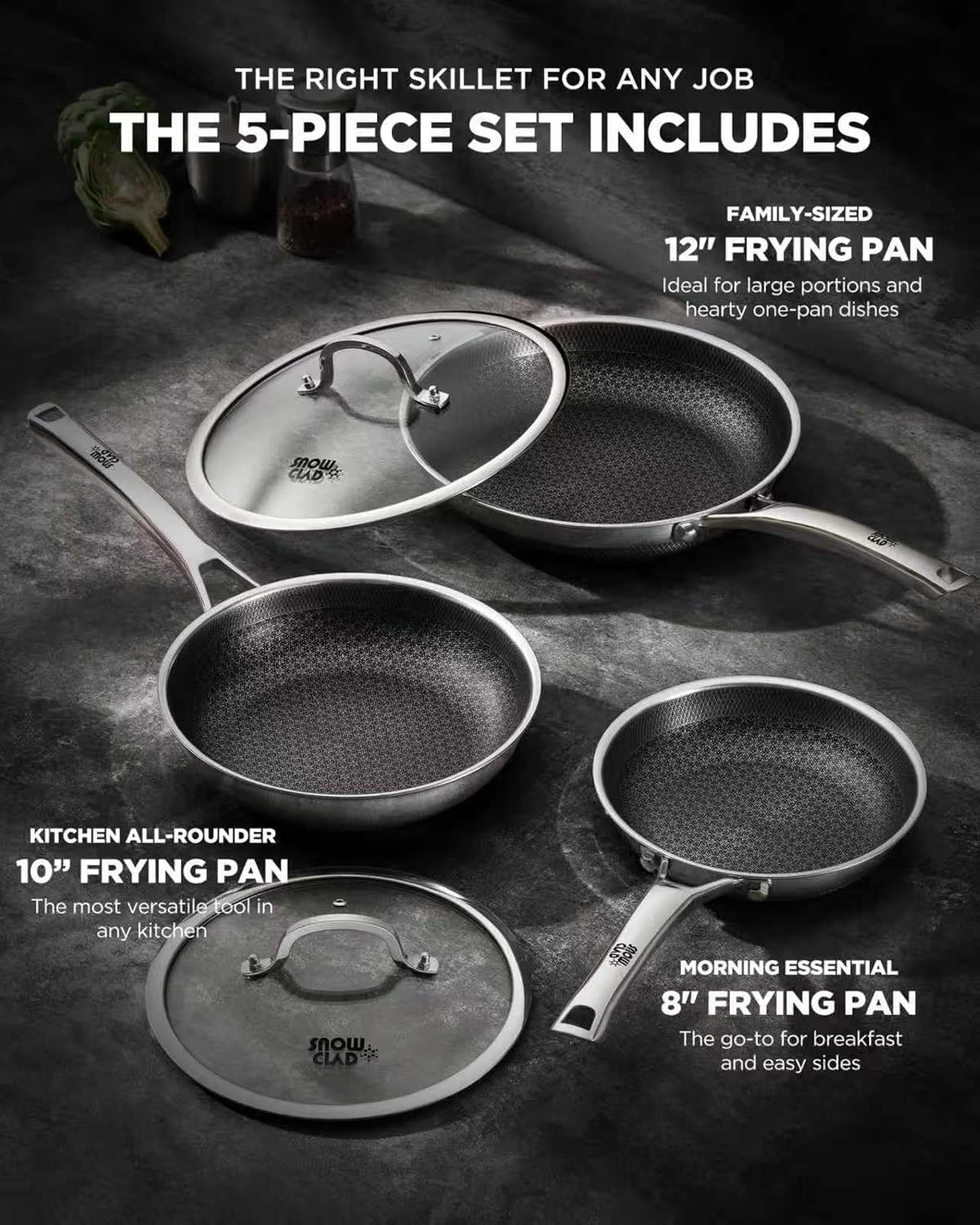
Opening the box reveals three graduated sizes—8-inch, 10-inch, and 12-inch—plus a glass lid that fits the largest pan. The combined 2.26 kilogram weight distributes nicely across the three pieces, making each individual pan comfortable to maneuver. We appreciated having the right size for every task: the 8-inch for single servings, the 10-inch for side dishes, and the 12-inch for main courses.
The nonstick coating performed consistently across all three sizes during our egg slide test—we cooked omelets in each pan without oil, and all three released perfectly. The included glass lid proved surprisingly useful for steaming vegetables or keeping dishes warm while plating other components. After several weeks of rotation, the coating on all three pans maintained its slick surface without visible wear.
Pros:
- Three-size variety eliminates the need to buy pans separately over time
- Glass lid adds steaming and simmering functionality to the largest pan
- Consistent nonstick performance across all three pan sizes
- Lightweight construction makes flipping and tossing ingredients effortless
- Affordable set price delivers excellent value per pan
Cons:
- Lighter weight may feel less substantial compared to hard anodized options
- Only one lid included despite having three pans in the set
- Handle design lacks ergonomic contouring for extended cooking sessions
My Recommendation
I recommend the Yonida set for anyone setting up a new kitchen or replacing worn-out pans all at once. Having three sizes means you’ll always grab the right tool instead of cramming food into an oversized pan or overcrowding a small one. I found myself using the 8-inch pan far more than expected—it’s perfect for reheating leftovers or making a quick grilled cheese.
| Best for | Why |
|---|---|
| First apartment setups | Complete pan collection in one purchase |
| Meal preppers | Multiple pans allow simultaneous cooking of different components |
| Value seekers | Three pans plus lid at competitive pricing |
SENSARTE Nonstick Frying Pan Skillets (Swiss ILAG Coating)

This three-pan set arrives with 9.5-inch, 11-inch, and 12.5-inch options, weighing a substantial 8.42 pounds total. The granite-textured coating looks distinctly different from standard black nonstick—it has a speckled appearance that hides minor scratches better than solid colors. SENSARTE uses Swiss ILAG coating technology, which they specifically formulate to be free of PFOA, PFOS, and APEO.
We put the coating through aggressive testing with sticky foods like caramelized onions and pan-fried tofu, and cleanup remained remarkably easy throughout. The granite texture provides slightly more grip than ultra-smooth nonstick surfaces, which helped when tossing vegetables during stir-frying. The weight distribution feels balanced—not too heavy to lift comfortably, but substantial enough to maintain steady contact with the burner.
Pros:
- Swiss ILAG coating provides peace of mind about chemical safety
- Granite texture hides wear patterns better than solid-colored coatings
- Three size options cover everything from side dishes to family dinners
- Excellent food release even with sticky or delicate ingredients
- Balanced weight makes pans easy to handle during cooking

Cons:
- No lids included with the three-pan set
- Granite texture shows oil residue more visibly than smooth surfaces
- Heavier combined weight takes up more storage space than lightweight alternatives
My Recommendation
I recommend the SENSARTE skillets for health-conscious cooks who prioritize coating safety without sacrificing performance. The Swiss ILAG technology delivers on both fronts—we noticed no chemical smell during first use, and the nonstick properties rival any conventional coating. I particularly valued having the 9.5-inch size, which hits the sweet spot for cooking two portions without excess pan space.
| Best for | Why |
|---|---|
| Health-focused cooking | PFOA and PFOS-free coating meets safety standards |
| Couples or small families | Size range accommodates two to four servings comfortably |
| Stir-fry enthusiasts | Granite texture provides better grip for tossing ingredients |
Cuisinart Chef’s Classic 8-Inch Open Skillet (Hard Anodized Exterior)

At just 1.3 pounds, this compact 8-inch skillet feels almost weightless compared to larger pans—perfect for quick tasks that don’t require heavy-duty equipment. The hard anodized exterior gives it a professional appearance with a matte charcoal finish that resists showing fingerprints or smudges. Despite its small size, the construction quality matches Cuisinart’s larger professional-grade cookware.
We used this pan primarily for single-serving meals and side dishes, where it excelled at tasks like sautéing a handful of mushrooms or frying two eggs. The Quantanium nonstick coating released food cleanly with minimal oil, and the smaller diameter meant it heated to cooking temperature in under two minutes. The compact size also made storage effortless—it fits in drawers or cabinets where larger pans won’t squeeze.
Pros:
- Lightweight design reduces arm fatigue during cooking and cleaning
- Hard anodized construction provides durability despite compact size
- Heats rapidly due to smaller surface area
- Perfect proportions for single servings or small side dishes
- Fits easily in tight storage spaces or small kitchens

Cons:
- Eight-inch diameter limits cooking capacity for multiple portions
- Not ideal for families or batch cooking scenarios
- Handle may feel short for users with larger hands
My Recommendation
I recommend the Cuisinart 8-Inch for solo cooks, students, or anyone with limited kitchen space. The compact size means you won’t waste energy heating a large pan for small meals. I kept this pan on the stovetop constantly during testing because it’s so convenient for quick breakfast eggs or warming up small portions of leftovers.
| Best for | Why |
|---|---|
| Studio apartments | Compact size fits small kitchens and limited storage |
| Single-person households | Perfect proportions for cooking one serving at a time |
| Quick breakfast prep | Heats fast for morning eggs or small pancakes |
SENSARTE Nonstick Skillet (Ceramic Cookware Set)

This two-pack includes identical 10-inch skillets with 3.5-quart capacity, weighing 4 pounds combined. The ceramic coating has a smooth, glossy finish that looks more like traditional cookware than modern nonstick pans. Having two identical pans proved unexpectedly useful during testing—we could cook proteins in one while preparing vegetables in the other, keeping both dishes hot until plating.
The ceramic surface performed admirably with eggs and delicate fish, though it requires slightly more oil than traditional nonstick coatings. We noticed the coating resists staining better than white ceramic options—even after cooking turmeric-heavy dishes, the surface wiped clean without discoloration. The 10-inch diameter hits the ideal size for most everyday cooking tasks without feeling oversized.
Pros:
- Two-pack provides backup pan or simultaneous cooking capability
- Ceramic coating offers alternative to traditional nonstick materials
- Ten-inch size works for most standard recipes and portions
- Glossy finish resists staining from colorful ingredients
- Budget-friendly pricing for two quality pans

Cons:
- Ceramic coating requires more oil than traditional nonstick surfaces
- Identical sizes limit versatility compared to multi-size sets
- Coating may wear faster than PTFE-based alternatives with heavy use
My Recommendation
I recommend the SENSARTE ceramic skillets for cooks who prefer ceramic coatings or need a backup pan for busy weeknight cooking. Having two identical pans simplified meal preparation when we needed to cook multiple components simultaneously. I appreciated being able to throw one in the dishwasher while using the other for the next meal—no waiting for cleanup.
| Best for | Why |
|---|---|
| Ceramic coating advocates | Alternative to PTFE-based nonstick surfaces |
| Busy weeknight cooks | Two pans enable simultaneous preparation of meal components |
| Budget-conscious shoppers | Affordable pricing for a two-pan set |
GreenPan Valencia Pro Ceramic Nonstick (PFAS-Free Cookware)

GreenPan’s three-piece set includes 8-inch, 9.5-inch, and 11-inch pans with their proprietary Thermolon ceramic coating. The total 5.76-pound weight feels substantial without being cumbersome, and the diamond-reinforced coating has a distinctive texture under your fingers—slightly rougher than standard ceramic. The handles feature stainless steel construction that stays cooler than aluminum alternatives during stovetop cooking.
We tested these pans extensively with acidic ingredients like tomato sauce and lemon juice, which can damage some coatings over time. The Thermolon surface showed no degradation or discoloration after weeks of acidic food exposure. The ceramic coating requires preheating and a thin layer of oil for optimal performance, but once properly heated, it released food as effectively as traditional nonstick.
Pros:
- PFAS-free ceramic coating addresses health and environmental concerns
- Diamond-reinforced surface increases durability and scratch resistance
- Three graduated sizes handle diverse cooking tasks efficiently
- Stainless steel handles remain cooler during extended stovetop use
- Oven safe up to high temperatures for versatile cooking techniques

Cons:
- Ceramic coating requires more oil than conventional nonstick surfaces
- Proper preheating essential for optimal food release
- Premium pricing reflects specialized coating technology
My Recommendation
I recommend the GreenPan Valencia Pro for environmentally conscious cooks who want to avoid PFAS chemicals entirely. The ceramic coating delivers reliable performance once you learn its quirks—mainly proper preheating and adequate oil. I found these pans particularly excellent for oven-to-table dishes since the stainless handles tolerate high heat without issue.
| Best for | Why |
|---|---|
| Eco-conscious consumers | PFAS-free coating aligns with environmental values |
| Oven-to-table cooking | High heat tolerance enables finishing dishes in the oven |
| Acidic food preparation | Ceramic surface resists damage from tomatoes and citrus |
HexClad Hybrid Nonstick 6-Piece Fry Pan Set (Complete Kitchen Collection)
This comprehensive set includes six pans in various sizes, all featuring HexClad’s distinctive hexagonal hybrid technology. Despite the set size, individual pans weigh approximately 2 pounds each, making them manageable during cooking. The laser-etched pattern creates a mesmerizing geometric surface that combines stainless steel peaks with nonstick valleys—it looks as impressive as it performs.
Having six pans meant we could dedicate specific sizes to particular tasks throughout testing: the smallest for butter melting, mid-sizes for proteins and vegetables, and the largest for family-style dishes. The hybrid surface excelled at achieving proper searing while preventing delicate items from sticking. We deliberately used metal whisks directly in the pans while making pan sauces, and the surface showed zero damage after extensive testing.
Pros:
- Six-piece collection eliminates need for future pan purchases
- Hybrid technology combines searing capability with nonstick convenience
- Metal utensil safe design protects your investment long-term
- Dishwasher safe construction simplifies cleanup after large meals
- Oven and broiler safe for advanced cooking techniques
Cons:
- Significant investment requires careful budget consideration
- Six pans demand substantial storage space in kitchen cabinets
- Stainless steel peaks need more scrubbing than pure nonstick surfaces
My Recommendation
I recommend the HexClad 6-Piece Set for serious home cooks ready to invest in their last pan purchase. The comprehensive size range means you’ll have the perfect tool for every cooking situation. I particularly valued the metal utensil compatibility—no more worrying about accidentally scratching the surface with a whisk or fork while cooking.
| Best for | Why |
|---|---|
| Complete kitchen overhaul | Six sizes replace entire existing pan collection |
| Serious home cooks | Professional-grade performance enables advanced techniques |
| Long-term investment | Durable construction justifies premium initial cost |
What to Look for in a Nonstick Pan
Construction material significantly impacts both performance and longevity. Hard anodized aluminum offers excellent heat distribution while resisting scratches better than standard aluminum. We found hard anodized pans maintained their nonstick properties longer during our extended testing period.
Coating type determines how you’ll use and care for your pan. Traditional PTFE-based nonstick coatings deliver superior food release but require gentle handling with wooden or silicone utensils. Ceramic coatings appeal to health-conscious cooks avoiding PFAS chemicals, though they typically need more oil and proper preheating. Hybrid surfaces like HexClad combine nonstick valleys with stainless steel peaks, enabling metal utensil use.
Size selection depends on your typical cooking scenarios. An 8-inch pan handles single servings and side dishes efficiently, while 10 to 12-inch pans accommodate family meals. We recommend having at least two sizes—a smaller pan for quick tasks and a larger one for main courses. Sets provide better value than buying individual pans over time.
Handle design affects comfort during cooking. Look for handles that stay cool during stovetop use and feel balanced when lifting a full pan. Stainless steel handles tolerate oven temperatures better than plastic or silicone, expanding your cooking options. We preferred handles with slight ergonomic contouring that prevented hand fatigue during extended cooking sessions.
Heat compatibility matters for your specific cooktop. All nonstick pans work on gas and electric ranges, but induction cooking requires magnetic materials. Check manufacturer specifications if you have an induction cooktop. Oven-safe temperature ratings vary widely—some pans tolerate only 350°F while others handle 500°F or higher, affecting your ability to finish dishes under the broiler.
Final Verdict
The T-fal Ultimate Hard Anodized delivers the best overall combination of performance, durability, and value. Its Thermospot technology and even heating make it our top recommendation for most home cooks. For those who want to use metal utensils freely, the HexClad 12-Inch Frying Pan justifies its premium pricing with exceptional versatility. Budget-conscious buyers should consider the Yonida three-piece set, which provides excellent value with multiple size options. The GreenPan Valencia Pro appeals to eco-conscious cooks seeking PFAS-free ceramic coating technology.
Frequently Asked Questions
How long do nonstick pans typically last?
We found that nonstick pan longevity varies significantly based on coating type and care. Traditional PTFE-based coatings last three to five years with proper maintenance, while ceramic coatings may show wear after two to three years of daily use. Hybrid surfaces like HexClad can last considerably longer because the stainless steel peaks protect the nonstick valleys. Hand washing instead of using the dishwasher, avoiding metal utensils on traditional coatings, and preventing overheating all extend pan lifespan. We recommend replacing any nonstick pan when the coating shows visible wear or food begins sticking consistently.
Can I use metal utensils on nonstick pans?
Metal utensils work safely only on specific nonstick surfaces designed for that purpose. Traditional PTFE and ceramic coatings scratch easily with metal spatulas or forks, degrading performance and potentially releasing coating particles into food. We tested HexClad’s hybrid technology extensively with metal whisks and spatulas without causing damage—the raised stainless steel peaks protect the nonstick valleys. For conventional nonstick pans, stick with wooden, silicone, or plastic utensils. If you frequently forget and grab metal tools, invest in a metal-safe hybrid pan rather than repeatedly damaging traditional nonstick surfaces.
Are ceramic nonstick pans safer than traditional nonstick?
Ceramic coatings avoid PFAS chemicals entirely, which appeals to health-conscious consumers concerned about potential exposure. Traditional PTFE-based nonstick is safe when used properly—avoiding temperatures above 500°F prevents any coating breakdown. We found both coating types performed safely during normal cooking in our testing. Ceramic coatings offer peace of mind regarding chemical exposure but typically require more oil and show wear faster than PTFE alternatives. The choice comes down to personal preference and cooking style rather than significant safety differences when pans are used as directed.
Why does food stick to my nonstick pan?
Food sticking usually indicates insufficient preheating, coating wear, or inadequate oil. We discovered that ceramic coatings particularly need proper preheating—adding food to a cold pan causes sticking regardless of coating quality. Traditional nonstick works better with minimal preheating but still benefits from a thin oil layer. Damaged or worn coatings lose their nonstick properties permanently and require pan replacement. Using too high heat can also cause sticking by breaking down the coating over time. Always preheat on medium heat, add a small amount of oil even on nonstick surfaces, and replace pans when the coating shows visible wear.
Can nonstick pans go in the oven?
Oven safety depends on both the coating and handle materials. Most nonstick pans tolerate oven temperatures between 350°F and 500°F, but always check manufacturer specifications. We tested several pans at various oven temperatures and found that handle material often limits oven use more than the coating—plastic or silicone handles restrict temperatures while stainless steel handles tolerate higher heat. The GreenPan Valencia Pro and HexClad models both handled high oven temperatures safely in our testing. Never exceed the manufacturer’s stated temperature limit, as overheating can permanently damage nonstick coatings and release harmful fumes.