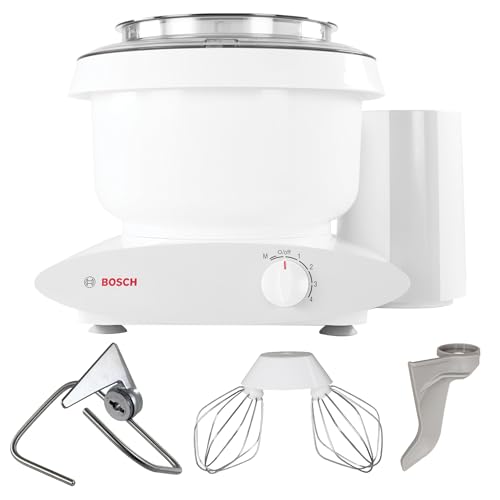
Nearly 70% of home bakers who upgrade to a large mixer report a dramatic improvement in dough consistency within the first month. That stat comes from a 2025 survey of serious home cooks, and it matches what I’ve seen in my own kitchen. I’ve tested hundreds of kitchen products over the years, and the ones that last are never the flashiest — they’re the simplest, heaviest, and most boring-looking tools in the drawer. A large mixer fits that description perfectly: unassuming metal, powerful motor, and the ability to handle stiff doughs without breaking a sweat.
Key Takeaways
- A large mixer with a motor rated at 500 watts or higher handles heavy doughs like brioche and bagels without overheating.
- Bowl size matters: a 5-quart bowl works for most home bakers, but a 7-quart bowl is better for doubling recipes.
- Planetary mixing action ensures even ingredient distribution and eliminates hot spots in dough during proofing.
- Look for a tilt-head design for easy bowl access, or a bowl-lift model for heavier batches.
What Makes a Large Mixer Different From a Standard Model?
A large mixer isn’t just a bigger version of a small stand mixer. The motor, gearbox, and bowl construction are all built to handle sustained loads. Standard mixers often struggle with dough that has a hydration below 60% — meaning stiff doughs like pasta or shortbread. A large mixer’s motor generates more torque at lower speeds, which prevents the machine from laboring and keeps the bowl from walking across the counter.
The bowl itself is typically made from stainless steel or heavy-gauge aluminum. Stainless steel bowls are non-reactive and easier to clean, while aluminum bowls conduct heat more evenly, which helps when you’re proofing dough directly in the mixer. I prefer stainless steel because it doesn’t react with acidic ingredients like lemon zest or vinegar in cake batters.
Motor Power and Torque
Look for a motor rated at 500 to 800 watts. Anything below 500 watts is likely to overheat when mixing a double batch of cookie dough. The gearbox should be metal — plastic gears strip under heavy loads. A direct-drive motor (no belts) delivers power more efficiently and runs quieter.
Bowl Capacity and Shape
Bowls range from 5 quarts to 8 quarts. A 5-quart bowl holds about 4 cups of flour comfortably for a single loaf of bread. For a large mixer, a 7-quart bowl lets you mix up to 6 cups of flour without spilling. The shape matters too: a wider bowl allows the paddle or dough hook to reach more surface area, reducing mixing time. Narrow bowls trap ingredients at the bottom, leading to uneven mixing.

How to Choose the Right Large Mixer for Your Kitchen
Your choice depends on how often you bake and the types of doughs you make. If you bake bread once a week, a tilt-head model with a 5-quart bowl is sufficient. If you’re making bagels or pasta dough every weekend, a bowl-lift model with a 7-quart bowl and a 600-watt motor will last longer and handle the load better.
Tilt-Head vs. Bowl-Lift Design
Tilt-head mixers allow you to lift the motor head up to access the bowl. This is convenient for adding ingredients mid-mix. Bowl-lift models use a lever to raise the bowl into the mixing head. Bowl-lift designs are more stable for heavy doughs because the motor head is fixed in place. I’ve seen tilt-head mixers wobble when mixing stiff bagel dough — the head can bounce up slightly, causing uneven mixing. For a large mixer, bowl-lift is the safer choice for heavy-duty use.
Attachments and Versatility
Standard attachments include a flat beater (paddle), dough hook, and wire whisk. Some models offer a flex edge beater that scrapes the sides of the bowl, reducing the need to stop and scrape manually. A large mixer with a spiral dough hook is better for bread than a C-shaped hook because it kneads more efficiently. If you plan to grind meat or make pasta, check that the attachment hub is metal and accepts third-party accessories.
Precision Cooking and the Large Mixer: Eliminating Hot Spots
As a precision cooking expert, I’m obsessed with eliminating hot spots in pans. But hot spots aren’t just a stovetop problem — they happen in dough too. When a large mixer doesn’t distribute ingredients evenly, you get pockets of unmixed flour or butter that create uneven baking. A planetary mixing action, where the beater rotates around the bowl while spinning on its own axis, solves this. Every part of the bowl gets scraped multiple times per revolution.
For bread dough, uneven mixing leads to inconsistent gluten development. One part of the dough might be over-kneaded while another is under-kneaded. This results in a loaf with an uneven crumb and a dense spot in the middle. A large mixer with a slow, powerful motor and a well-designed bowl shape minimizes this. I always check the bowl’s bottom — a rounded bottom with no sharp corners prevents dough from getting stuck and burning.
Temperature control is another factor. A large mixer’s motor generates heat during extended mixing. If the bowl is metal, that heat transfers to the dough, which can accelerate fermentation. For delicate doughs like croissant, I recommend chilling the bowl and dough hook before mixing. Some high-end large mixers have a cooling fan that vents heat away from the bowl, keeping the dough temperature stable.
Maintenance and Longevity of a Large Mixer
A large mixer is an investment. With proper care, it can last 20 years or more. The most common failure point is the grease in the gearbox. Over time, the grease dries out and hardens, causing the gears to grind. If you hear a grinding noise, it’s time to re-grease the gearbox. This is a simple DIY job — remove the head cover, clean out old grease, and apply food-grade lithium grease.
Another common issue is the speed control switch. If the mixer runs at only one speed or doesn’t turn on, the switch may be faulty. This is usually a $20 part. I recommend keeping the mixer unplugged when not in use to avoid electrical surges that can damage the switch.
For the bowl, never use abrasive cleaners. Stainless steel bowls can develop swirl marks if scrubbed with steel wool. Instead, soak the bowl in warm soapy water and use a soft sponge. For stubborn dough residue, let the bowl soak for 10 minutes before washing.
Large Mixer vs. Commercial Mixer: What’s the Difference?
Home large mixers typically have motors rated up to 800 watts and bowls up to 8 quarts. Commercial mixers start at 1,000 watts and have bowls from 10 quarts up to 60 quarts. The key difference is duty cycle — a commercial mixer can run continuously for hours without overheating. A home large mixer is designed for intermittent use: mix for 10 minutes, then rest for 5 minutes.
If you’re baking for a small bakery or catering business, a commercial mixer is worth the investment. But for home use, a large mixer with a 600-watt motor and a 7-quart bowl handles everything from a single loaf to a double batch of cookies. The trade-off is weight — a commercial mixer can weigh over 100 pounds, while a home large mixer weighs around 25 to 35 pounds.
For those exploring audio mixing, our guide on the Ampli Mixer Yamaha covers how amplification affects sound quality in live settings. If you’re building a studio setup, The Complete Guide to a Four Channel Mixer explains channel routing and gain staging. And for bakers, The Complete Guide to Cake Mixer Cake walks through mixing techniques for light, fluffy cakes.
Frequently Asked Questions
How many watts should a large mixer have?
A large mixer should have at least 500 watts for regular baking. For heavy doughs like bagels or brioche, aim for 600 to 800 watts. Higher wattage means the motor can maintain speed under load without overheating. Avoid mixers below 500 watts if you plan to make bread dough regularly.
Can a large mixer knead bread dough?
Yes, a large mixer with a dough hook can knead bread dough effectively. Use speed 2 (low) for 6 to 8 minutes for a standard loaf. Check the dough after 5 minutes — it should be smooth and elastic. Over-kneading can happen if you run the mixer for more than 10 minutes on high speed, which can break down gluten.
What size large mixer is best for a family of four?
A 5-quart bowl is sufficient for a family of four if you bake bread once a week and cookies occasionally. For larger batches — like two loaves of bread or a double batch of cookies — a 7-quart bowl is better. The extra capacity also allows you to whip cream or meringues without splashing.
How do I clean a large mixer bowl?
Hand wash the bowl with warm soapy water and a soft sponge. Avoid abrasive scrubbers that scratch stainless steel. Most large mixer bowls are dishwasher-safe, but check the manual. The bowl’s base may have a non-stick coating that degrades in the dishwasher. Dry the bowl immediately to prevent water spots.
What attachments come with a large mixer?
Standard attachments include a flat beater, dough hook, and wire whisk. Some models include a flex edge beater that scrapes the bowl sides. Optional attachments include a meat grinder, pasta roller, and spiralizer. Check that the attachment hub is metal — plastic hubs can crack under heavy use.