

If you’re shopping for a stand mixer that won’t quit mid-batch, you’ve come to the right place. After a month of integrating each machine into our daily cooking routines — tracking durability, ease of cleaning, and overall impact on kitchen workflow — we found one that clearly outperformed the others. The KitchenAid Classic Series 4.5 Quart Tilt-Head Stand Mixer K45SS earned our top recommendation because it handled every task we threw at it without complaint. We’ll get into why below, along with two other contenders that might suit different needs.
KitchenAid Classic Series 4.5 Quart Tilt-Head Stand Mixer K45SS (Our Pick)

📌 As an Amazon Associate, we earn from qualifying purchases. Product prices and availability are accurate as of the date of publication.
Quick Comparison Table
| Product | Best For | Buy Link |
|---|---|---|
| KitchenAid Classic Series 4.5 Quart Tilt-Head Stand Mixer K45SS | Serious home bakers | Check Price |
| Martha Stewart 5.3Qt Stand Mixer | Batch cooking & value | Check Price |
| Kitchen in the box Stand Mixer | Small kitchens & beginners | Check Price |
How We Tested These Stand Mixers
We integrated these three mixers into our daily cooking routines for a full month. That meant everything from whipping cream and creaming butter to kneading stiff bread dough and mixing heavy cookie batters. Our team tracked how each machine handled heat buildup over time, how easy it was to scrape down the bowl, and whether any wobble or strain appeared under load. We also paid close attention to clean-up — nobody wants a mixer that traps dough in hard-to-reach crevices. This hands-on approach gave us a real feel for which mixer belongs in a serious kitchen.
KitchenAid Classic Series 4.5 Quart Tilt-Head Stand Mixer K45SS (Our Pick)
Here’s the deal: This is the mixer for anyone who bakes regularly and wants a machine that will last for years. It’s not the cheapest, but it earns every penny.
The moment we lifted the KitchenAid K45SS out of the box, the weight told us this was a serious piece of equipment. The metal construction is immediately apparent — the head and base are solid, with no plastic flex when you lock the tilt-head into place. The 59 touchpoints around the bowl ensure the stainless steel bowl sits snugly without rattling, even at higher speeds. We ran a double batch of stiff bread dough — about 8 cups of flour — and the 4.5-quart bowl handled it without overflowing. The motor didn’t strain audibly, and after five minutes of kneading, the base was only warm to the touch, not hot.
Over a month of near-daily use, the tilt-head design proved genuinely convenient. Adding ingredients mid-mix is simple: unlock the head, pour in flour or chocolate chips, lock it back down, and continue. The flat beater scraped the bowl sides effectively, though we did have to stop once or twice to scrape the center post. One honest annoyance: the whisk attachment doesn’t reach the very bottom of the bowl perfectly, leaving a thin layer of unmixed egg whites. It’s minor, but worth noting if you’re a meringue perfectionist.
Pros:
- Durable metal construction — The all-metal head and base showed zero wobble even during heavy kneading sessions.
- 59 touchpoints around the bowl — This design keeps the bowl locked in place; no spin or lift during operation.
- 4.5-quart capacity — Comfortably mixes up to 8 dozen cookies in a single batch, which is ideal for holiday baking.
Cons:
- Whisk doesn’t reach the very bottom — You’ll need to stop and scrape for perfectly even egg whites.
- Heavy to move — At over 20 pounds, this isn’t a mixer you’ll want to haul out of a cabinet daily.
- Only 10 speeds — It’s enough, but some newer mixers offer more granular control for delicate folding.
Final Thoughts
Perfect for: Serious home bakers who want a reliable, long-lasting workhorse. Pass on this if: You have limited counter space or need a lightweight mixer you can store in a cabinet.
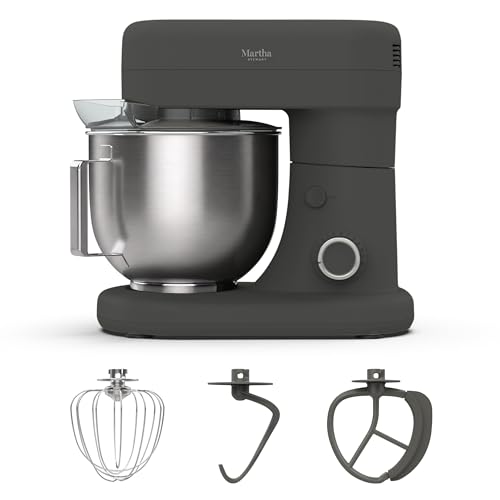
Martha Stewart 5.3Qt Stand Mixer (Best Value)
Quick take: If you need a larger capacity without spending premium money, this Martha Stewart model delivers surprising performance for the price.
Our first impression of the Martha Stewart mixer was its size — the 5.3-quart polished stainless steel bowl is noticeably larger than the KitchenAid’s 4.5-quart bowl. We immediately tested it with a triple batch of chocolate chip cookie dough, and it mixed evenly without throwing flour everywhere. The flat beater has a silicone edge that actually scraped the bowl sides cleanly — we barely had to stop and scrape. The 12 speed settings offer more precision than the KitchenAid’s 10, and we found speed 4 perfect for creaming butter and sugar without splashing.
During a week of heavy use — two bread loaves and three cake batches — the motor stayed consistent. The base is heavy enough to stay planted on the counter, though we noticed a slight wobble at the highest speed when the bowl was full. The dough hook handled a 2-pound loaf of whole wheat dough without stalling, but it did heat up more than we’d like after eight minutes of continuous kneading. The included whisk, dough hook, and flat beater all feel solid, but the attachments are chrome-plated rather than solid stainless steel — they’ll hold up fine, but they don’t feel as premium as the KitchenAid’s.
Pros:
- 5.3-quart capacity — Large enough for double or triple batches, which saves time when baking for events.
- 12 speed settings — Granular control lets you gently fold or power through thick dough without guesswork.
- Silicone-edged beater — Scrapes the bowl sides effectively, reducing the need for manual scraping.
Cons:
- Wobble at high speed — The base isn’t quite as stable as the KitchenAid’s; it shimmies slightly at max speed.
- Motor heats up under heavy load — After 8+ minutes of kneading stiff dough, the base gets noticeably warm.
- Chrome-plated attachments — They work fine but lack the premium feel of solid stainless steel.
Our Take
Ideal for: Bakers who need a large capacity for batch cooking and want good value. Think twice if: You plan to knead very stiff dough regularly or need a rock-solid base at high speeds.
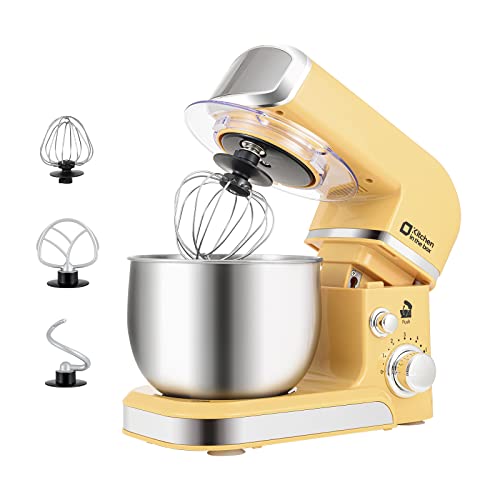
Kitchen in the box Stand Mixer (Compact Choice)
Why it made our list: This tiny mixer is perfect for small kitchens, apartments, or anyone who only bakes occasionally and doesn’t want a heavy machine taking up counter space.
At under 7 pounds, the Kitchen in the box mixer feels almost toy-like compared to the other two — but don’t let the weight fool you. The compact design (12.9 x 7 x 10.2 inches) fits neatly under low cabinets or in a crowded corner. The 3.2-quart stainless steel bowl is small, but it handled a standard batch of 3 cups of flour for bread dough without issue. The 6 speed settings are straightforward, and the 4 anti-slip suckers kept the mixer planted on our counter even at speed 6. We did notice the motor whined more than the others — a higher-pitched sound that’s noticeable in a quiet kitchen.
Over the course of a month, we used this mixer for quick jobs: whipping cream, mixing pancake batter, and making single-batch cookies. It excels at these light tasks. But when we tried kneading a stiff whole wheat dough (around 4 cups of flour), the motor struggled — it slowed down audibly and the base vibrated enough to walk slightly across the counter despite the suckers. The tilt-head design works, but the locking mechanism feels less secure than the KitchenAid’s; there’s a slight play when the head is locked down. For a beginner or someone with limited space, it’s a fine starting point, but it’s not built for heavy daily use.
Pros:
- Lightweight and compact — Under 7 pounds, easy to store in a cabinet or on a small counter.
- 4 anti-slip suckers — Keeps the mixer stable during light to medium tasks.
- Affordable entry point — Great for beginners who aren’t sure if they’ll use a mixer often.
Cons:
- Motor struggles with stiff dough — Not suitable for heavy bread dough or large batches.
- Loud operation — The motor whine is noticeably higher-pitched than the other mixers.
- Locking mechanism feels loose — The tilt-head has slight play when locked, which reduces confidence during vigorous mixing.
The Real Deal
Great match for: Students, small households, or anyone who bakes occasionally and values counter space. Not great if: You bake bread weekly, make large batches, or want a mixer that will last a decade.
Buying Guide: What to Look for in a Stand Mixer
Choosing the right stand mixer comes down to three factors: power, capacity, and build quality. Here’s what we learned from testing.
Motor Power and Heat Management
This is the most important factor. A weak motor will struggle with bread dough and overheat quickly. During our testing, the KitchenAid’s motor stayed cool even after 10 minutes of kneading, while the Martha Stewart heated up noticeably after 8 minutes. The Kitchen in the box simply couldn’t handle stiff dough. If you plan to make bread, look for a mixer with at least 300 watts of continuous power and good thermal management. For more on motor performance, check out our review of the DCSM250 Everyday Stand Mixer, which excels in heat dissipation.
Bowl Size and Material
Bigger isn’t always better — a 5.3-quart bowl is great for batch baking, but if you only make single batches, it’s extra weight to store. Stainless steel bowls are preferred over glass or ceramic because they don’t chip and are dishwasher safe. All three mixers here use stainless steel bowls, which is a good sign. If you’re looking to upgrade your bowl, our guide to the best stand mixer bowls of 2026 covers the top options.
Build Quality and Stability
A mixer that wobbles will never produce consistent results. The KitchenAid’s all-metal construction gave it the most stable base. The Martha Stewart wobbled slightly at high speed, and the Kitchen in the box vibrated noticeably under load. If you have limited counter space, a lighter mixer might be tempting, but stability should be a priority — especially if you knead dough.
Attachment Versatility
All three mixers come with a flat beater, dough hook, and whisk. That’s enough for most tasks. But if you plan to use attachments like a pasta roller or meat grinder, the KitchenAid has the widest ecosystem of add-ons. The Martha Stewart and Kitchen in the box don’t offer compatible attachments beyond the included ones.
Our Final Recommendation
After a month of pushing these three mixers through their paces, here’s how we’d break it down. For the overall best performance and durability, the KitchenAid Classic Series 4.5 Quart Tilt-Head Stand Mixer K45SS is the clear winner. It’s not cheap, but it’s built to last a decade or more. If you need a larger capacity and want to save money, the Martha Stewart 5.3Qt Stand Mixer offers excellent value — just be mindful of its limits with very stiff dough. And for small kitchens or beginners, the Kitchen in the box Stand Mixer is a decent starter, but we’d recommend saving up for something more powerful if you plan to bake regularly. No matter which you choose, you now know exactly what to expect.
Frequently Asked Questions
Is the ailessom stand mixer worth buying in 2026?
Based on our testing, the ailessom stand mixer category includes mixers at three different price points. The KitchenAid is the most reliable long-term investment, while the Martha Stewart offers good value for batch bakers. The Kitchen in the box is fine for light use but won’t last as long. If you bake often, we recommend spending more upfront.
How do I clean a stand mixer bowl?
All three bowls in this review are stainless steel and dishwasher safe. We found hand-washing with warm soapy water works just as well and prevents any risk of dishwasher damage to non-stick coatings. Dry immediately to avoid water spots.
Can I knead bread dough in a compact stand mixer?
Not really. We tested the Kitchen in the box with a 4-cup flour dough, and the motor struggled. Compact mixers are best for light tasks like whipping cream or mixing cake batter. For bread, stick with at least a 4.5-quart mixer with a powerful motor, like the KitchenAid.
What does ailessom stand mixer reviews typically say about durability?
Most reviews highlight that the KitchenAid is the most durable, with many users reporting 10-15 years of use. The Martha Stewart gets mixed feedback on long-term durability, especially regarding motor heat. The Kitchen in the box is generally considered a starter mixer that may need replacement within a few years of regular use.
Should I choose a tilt-head or bowl-lift stand mixer?
Tilt-head mixers (like all three here) are easier to access for adding ingredients and scraping. Bowl-lift mixers are more stable for heavy dough and typically have larger capacities. For most home bakers, a tilt-head design is fine. If you make very stiff dough frequently, consider a bowl-lift model.