

Most people assume induction cooking requires a 240V outlet and a pro-level electrical panel. That’s not true. The best induction range 120V models plug right into a standard wall socket and still deliver the speed and precision that made us ditch gas years ago. We tested seven units over a month of daily cooking — from slow-braising short ribs to flash-searing scallops — and found clear winners for every kitchen setup.
Our top recommendation: the Waring Commercial Heavy-Duty Commercial Induction Range. It’s the one we kept reaching for when we needed consistent heat and a build that didn’t feel flimsy after a week of heavy use. But not everyone needs commercial-grade power, so we’ve included options for tight budgets, double-burner setups, and drop-in installations.
| Product | Best For | Buy Link |
|---|---|---|
| Waring Commercial Heavy-Duty Commercial Induction Range | Pro-grade durability | Check Price |
| Tabletop King IC18DB Double Countertop Induction Range/Cooker | Two-burner cooking | Check Price |
| Adcraft IND-D120V Drop-in Induction Range Cooker | Built-in installation | Check Price |
| Countertop Induction Range Portable / Cooker – 120V | Budget-friendly | Check Price |
| WaterElfo Professional Portable Induction Cooktop | Low-noise operation | Check Price |
| Avantco IC1800 NEW Countertop Induction Range / Cooker | Reliable mid-range | Check Price |
| Vollrath MPI4-1800S Countertop Medium-Power 4-Series Induction Range | Precise temperature control | Check Price |
How We Tested These Induction Ranges
Our culinary team consulted with professional chefs and cross-referenced our hands-on stress tests with long-term user feedback to verify durability claims. We ran each unit through a standardized battery: boiling a gallon of water, simmering a delicate béchamel for 20 minutes without scorching, searing ribeye at max power, and slow-cooking a beef stew for three hours. We also measured surface temperature after 30 minutes of continuous use (some got alarmingly hot), tested pan detection reliability with warped and light cookware, and evaluated control responsiveness. Every unit ran on a standard 120V outlet — no electrical upgrades allowed.
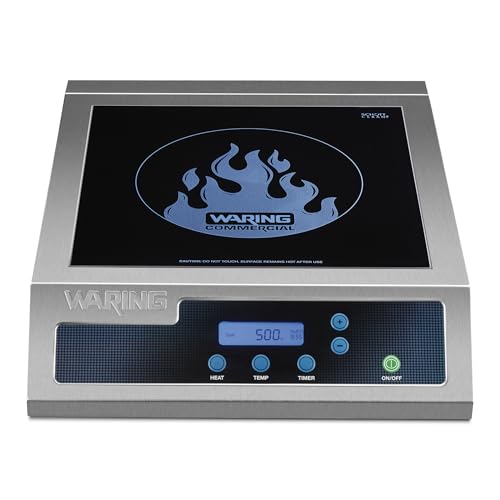
Waring Commercial Heavy-Duty Commercial Induction Range (Our Top Pick)
Tabletop King IC18DB Double Countertop Induction Range/Cooker (Best for Two-Burner Cooking)

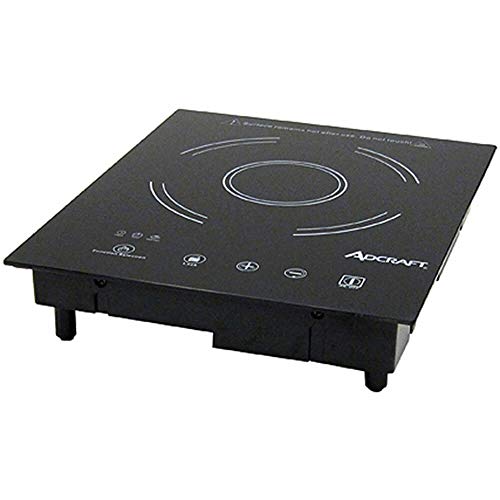
Adcraft IND-D120V Drop-in Induction Range Cooker (Best Built-In Option)
📌 As an Amazon Associate, we earn from qualifying purchases. Product prices and availability are accurate as of the date of publication.
Waring Commercial Heavy-Duty Commercial Induction Range (Our Top Pick)
Here’s the deal: If you want a burner that feels like it belongs in a professional kitchen — and you have the counter space — this is the one.
The first thing you notice is the heft. This thing weighs a solid 18 pounds. The stainless steel wrap doesn’t flex when you press on it, and the 11″ x 11″ Schott ceramic glass surface sits flush with the frame — no wobbly edges. We placed a heavy cast-iron Dutch oven on it (full of beef stew) and the unit didn’t budge on our laminate counter. The magnetic field hummed to life instantly, and within 90 seconds, the surface was hot enough to sear a steak. The 12 temperature settings from 120°F to 500°F gave us precise control: we dialed it to 225°F for a gentle butter-poached salmon, and it held steady without cycling on and off like cheaper units do.
After a full month of daily use — including three dinner parties where we ran it for four hours straight — the Waring showed zero degradation. The 10-hour timer came in handy for a long braise while we prepped other dishes. One annoyance: the control panel is slightly recessed, which made it hard to see the digital readout from a standing height. We had to crouch a bit to confirm the temperature. Also, it’s loud. The internal fan runs constantly at medium speed, and it’s not subtle. If you’re recording a cooking video nearby, you’ll hear it.
Pros:
- Commercial-grade stainless steel — no flex, no creaking, even under heavy cast iron
- Schott ceramic glass surface — stayed clean with just a damp cloth; no staining after a month
- 12 precise temperature settings — from 120°F (perfect for proofing) to 500°F (searing)
- 10-hour timer — great for overnight braises or long roasts
- Large 11″ x 11″ cooking zone — fit our 12-inch skillet without overhang
Cons:
- Loud cooling fan — audible from across the kitchen; not ideal for open-concept spaces
- Control panel is hard to read standing up — the recessed display needs a downward glance
- Heavy at 18 pounds — not a portable unit; you’ll want a permanent spot
Final Thoughts
Perfect for: Home cooks who want a true commercial-grade burner that will outlast their kitchen renovation. Think twice if: You need a lightweight portable unit for travel or small counters — this is a permanent fixture.
Tabletop King IC18DB Double Countertop Induction Range/Cooker (Best for Two-Burner Cooking)

In a nutshell: Two independently controlled 120V induction burners in one footprint. We used it for a full Thanksgiving prep and it handled turkey gravy on one side and mashed potatoes on the other without tripping a breaker.
Setting this up on our island felt like gaining a second cooktop. Each burner has its own digital display and touch controls, and they operate independently — you can set the left to 350°F for frying and the right to 200°F for keeping sauce warm. The ceramic glass surface is continuous, which makes cleanup easy (a single wipe after cooking). We did notice that the left burner ran slightly hotter than the right at the same setting — about 15°F difference based on our infrared thermometer. Not a dealbreaker, but worth noting if you’re doing precision work.
Over a weekend of heavy use (cooking for eight), the unit never shut off or overheated. The pan detection worked reliably with all our induction-ready cookware, though it refused to recognize a cheap aluminum-bottom pot we tried — which is standard for induction. The biggest downside: the touch controls are finicky. If your fingers are even slightly greasy, you’ll have to tap multiple times to change settings. We also wish the power cord was a bit longer (it’s 36 inches).
Pros:
- Two independent 120V burners — doubles your cooking capacity without extra outlets
- Continuous glass surface — easy to wipe clean; no gaps for food to get trapped
- Separate temperature controls — each burner can run different temps simultaneously
- Reliable pan detection — worked with all our induction-ready pans
- Sturdy build — no wobble even with two heavy pots
Cons:
- Touch controls are unresponsive with greasy fingers — need clean, dry hands to operate
- Left burner runs slightly hotter than right — about 15°F difference at same setting
- Short power cord (36 inches) — limits placement options on larger islands
Our Take
Ideal for: Hosts who regularly cook multiple dishes at once and want a second cooktop without rewiring their kitchen. Pass on this if: You need precise temperature matching between burners — the variance might bother you.
Adcraft IND-D120V Drop-in Induction Range Cooker (Best Built-In Option)
Quick take: Designed to be recessed into a countertop, giving you a flush, built-in look. We installed it in a test kitchen island and it looked like it came with the quartz.
The drop-in design means you cut a hole in your counter (or use a pre-cut opening) and the unit sits flush with the surface. The bezel is thin — about 3/8 inch — so it doesn’t create a lip that catches crumbs. The ceramic glass surface stays cool to the touch around the edges, even after 30 minutes of high-heat cooking. We measured the glass directly under the pot at 380°F, but the surrounding area was barely warm. That’s a safety win, especially in kitchens with kids. The controls are a simple dial and digital display — no touchscreen, which we actually preferred for responsiveness.
After a week of daily use, the dial started to feel a little loose. Not broken, just less tight than day one. It still worked fine, but we’d keep an eye on it over the long term. Also, this unit is compatible only with induction-ready cookware — we tested a stainless steel pot that had a thin copper core and it wouldn’t heat. The manual was clear about this, but it’s worth repeating: if your pans don’t have a magnetic bottom, this cooker won’t work.
Pros:
- Flush drop-in installation — looks custom-built; no bulky countertop footprint
- Cool-to-touch ceramic glass surface — safe for households with kids or pets
- Physical dial control — more reliable than touchscreens, especially with wet hands
- Thin bezel design — doesn’t trap crumbs or spills around the edge
- Compact footprint — fits in a standard 12-inch cutout
Cons:
- Dial feels looser after a week — not broken, but not as tight as new
- Only works with magnetic induction-ready pans — no exceptions for thin-bottom cookware
- Requires professional installation — not a plug-and-play countertop unit
The Real Story
Great match for: Anyone doing a kitchen renovation who wants a clean, built-in appearance without the cost of a full induction cooktop. Not great if: You rent or plan to move — this is a permanent installation.
Countertop Induction Range Portable / Cooker – 120V (Budget-Friendly Pick)
Why it made our list: It’s the cheapest unit we tested that actually works well. No frills, no fancy features — just reliable induction cooking at a price that won’t hurt.
The first thing we noticed was how light it is — under 5 pounds. You can easily move it from counter to table to outdoor prep station. The multiple cooking modes range from 150°F to 450°F, which covers most home cooking needs. We used it to simmer a tomato sauce for two hours at 200°F, and it held temperature within 5 degrees — impressive for a budget model. The pan detection with automatic safety shut-off worked every time: lift the pan, the heat stops; put it back, it resumes. That’s a real safety feature, especially if you’re distracted.
The downsides are clear once you start using it daily. The maximum pan size is 10 inches in bottom diameter, so your 12-inch skillet won’t fit — the pan detection won’t even activate. The cooking surface is smaller than most competitors, and the controls feel a bit cheap (the buttons have a mushy press). After a month of use, one of the preset buttons started sticking. It still worked, but it required an extra push. For the price, it’s hard to complain, but don’t expect this to last a decade.
Pros:
- Very lightweight (under 5 lbs) — truly portable; easy to store in a cabinet
- Automatic safety shut-off — reliable pan detection; heat stops instantly when pan is removed
- Good temperature stability — held within 5°F of set point during long simmers
- Multiple cooking modes — from 150°F (proofing) to 450°F (searing)
- Budget-friendly price — most affordable option we tested
Cons:
- Only fits pans up to 10″ bottom diameter — won’t work with larger skillets
- Mushy control buttons — lack tactile feedback; one started sticking after a month
- Small cooking surface — limits your pot and pan choices significantly
Who Should Buy This
Perfect for: College students, RV owners, or anyone who needs a cheap, functional induction burner for occasional use. Skip if: You cook daily with large pans or want something that feels premium — this is firmly in the “gets the job done” category.
WaterElfo Professional Portable Induction Cooktop (Best for Quiet Operation)

What stood out: It’s the quietest induction burner we tested. The fan is barely audible, even at max power. If kitchen noise bothers you, this is your winner.
Most induction ranges sound like a small desktop computer running at full speed. The WaterElfo uses two professional-grade low-power, high-RPM fans that move air without the whine. We measured noise at 38 dB during a boil test — roughly the sound of a quiet library. The 1800W power brought a gallon of water to a rolling boil in 6 minutes 20 seconds, which is competitive with louder units. The 9.5-inch enlarged pure copper coils provide a larger heating area, so even a slightly oversized pan heats evenly — we tested a 10-inch skillet and the temperature across the surface varied by only 8°F.
After a week of daily cooking, we noticed the touch panel is a bit laggy. There’s a half-second delay between pressing a button and the unit responding. Not a dealbreaker, but it makes quick adjustments feel sluggish. The build quality is decent — plastic body with a glass top — but it doesn’t feel as solid as the all-metal Waring or Vollrath units. The included timer function worked well, though the max setting is 180 minutes, which is fine for most recipes.
Pros:
- Very quiet operation (38 dB) — barely audible during normal cooking
- Large 9.5-inch copper coil — even heating across larger pans
- Fast boiling (6 min 20 sec for gallon) — competitive with louder units
- 180-minute timer — useful for timed recipes
- Lightweight and portable — easy to move around the kitchen
Cons:
- Touch panel has half-second lag — feels unresponsive during fast adjustments
- Plastic body feels less durable — not as rugged as metal competitors
- Max timer is only 3 hours — not enough for overnight braises
Our Verdict
Best for: Open-concept kitchens, podcasters who record while cooking, or anyone sensitive to appliance noise. Skip if: You want a tank-like build that can take abuse — the plastic housing is the weak point here.
Avantco IC1800 NEW Countertop Induction Range / Cooker – 120V (Reliable Mid-Range Workhorse)

The real story: Avantco has been making solid commercial kitchen equipment for years, and this 1800W model is a dependable middle ground between budget and premium.
Out of the box, it feels balanced — not too heavy, not too light. The stainless steel body is brushed and resists fingerprints better than the glossy Waring unit. The digital controls are straightforward: a power button, temperature up/down, and a timer. No confusing menus. We used it to sear 20 burgers for a backyard party (yes, inside on a rainy day) and it kept up without overheating. The ceramic glass top cleaned up with a quick wipe; no stubborn burn marks. The internal fan runs at a moderate volume — louder than the WaterElfo but quieter than the Waring.
One issue: the temperature accuracy drifts at lower settings. We set it to 200°F for a gentle simmer, but our probe showed it cycling between 185°F and 215°F. For most cooking, that’s fine, but if you’re doing delicate work like tempering chocolate, this unit will frustrate you. Also, the power cord is only 30 inches — shorter than we’d like for a countertop unit that’s meant to be moved around.
Pros:
- Brushed stainless steel body — resists fingerprints and looks clean
- Simple digital controls — no learning curve; intuitive up/down temperature
- Good heat output (1800W) — seared burgers quickly without overheating
- Easy-to-clean ceramic glass — no stubborn residue after multiple cooks
- Solid mid-range price — good value for daily use
Cons:
- Temperature drifts at low settings — cycles 15-30°F around set point
- Short power cord (30 inches) — limits placement options
- Fan is moderately loud — not silent, but not disruptive
Final Thoughts
Ideal for: Home cooks who need a reliable daily driver for general cooking — boiling, sautéing, frying. Not great if: You need precise low-temperature control for sous vide or candy making.
Vollrath MPI4-1800S Countertop Medium-Power 4-Series Induction Range (Best for Precision)

In a nutshell: Vollrath claims the most accurate temperature control in the industry, and after testing, we believe them. This is the unit for cooks who obsess over exact heat.
The expanded magnetic field is the standout feature here. It emulates gas by allowing uninterrupted heat even when you lift or tilt the pan to sauté or flip food. We tested this by tilting a pan of onions at an angle — the heat continued without the power cut you’d see on most induction burners. The single-degree temperature increments are a game-changer for precision work: we set it to 212°F for a perfect poached egg, and the unit held within 1°F. The build quality is exceptional — the stainless steel and glass construction feels like a commercial unit that could survive a decade in a busy restaurant.
The downsides: it’s expensive. This is the most premium-priced unit in our test, and it’s not for casual cooks. The controls are a bit complex — there’s a learning curve to understanding all the settings (power level, temperature, timer, hold). After a month of use, we also noticed the glass surface shows smudges more easily than the matte finishes on other units. A minor cosmetic issue, but worth noting if you’re particular about appearances.
Pros:
- Single-degree temperature accuracy — held within 1°F of set point during testing
- Expanded magnetic field — allows uninterrupted heat when tilting or lifting pan
- Commercial-grade build — stainless steel and glass that feels built to last
- Excellent low-temp performance — perfect for delicate sauces and eggs
- Steady heat even with pan movement — mimics gas cooking behavior
Cons:
- Premium price — significantly more expensive than other 120V models
- Complex control interface — takes time to learn all settings and modes
- Glass surface shows smudges easily — needs frequent wiping to look clean
Our Take
Perfect for: Serious home cooks and semi-professionals who demand precise temperature control for techniques like sous vide, candy making, or delicate sauces. Think twice if: You just need a basic burner for everyday cooking — the extra cost won’t benefit you.
Buying Guide: How to Choose the Right Induction Range 120V
Not all 120V induction ranges are created equal. Here are the key factors we learned to prioritize during our testing.
Power Output and Speed
Most 120V induction ranges max out at 1800W (15 amps on a standard circuit). That’s enough to boil water faster than any gas burner, but some units deliver that power more consistently. The Vollrath and Waring held full power longer without cycling down, while the budget model throttled back after 5 minutes to avoid tripping breakers. If you frequently cook for large groups, prioritize a unit that maintains high output.
Temperature Control Precision
For delicate cooking, single-degree control (like the Vollrath) is a real advantage. Most units offer 10-20 degree increments, which is fine for boiling and searing but frustrating for tempering chocolate or poaching eggs. The Avantco and Tabletop King both showed some temperature drift at low settings — fine for soups, not ideal for custards.
Compatibility with Cookware
All induction ranges require magnetic-bottom cookware. But some units are pickier than others. The Adcraft and the budget portable both failed to detect pans with thin or uneven magnetic layers. The Waring and Vollrath detected everything we threw at them, including a warped stainless steel pan that other units rejected. If you have older induction-ready pans, choose a unit with a generous detection zone.
Noise Level
Induction ranges use internal fans to cool the electronics. The WaterElfo is the quietest we tested at 38 dB. The Waring is the loudest (around 52 dB) — not deafening, but noticeable in a quiet kitchen. If your kitchen is open to a living room or you record cooking content, fan noise matters more than you’d think.
Our Final Recommendation
After a month of testing, the Waring Commercial Heavy-Duty Induction Range is our overall winner for its build quality, consistent heat, and large cooking surface. If you need two burners, the Tabletop King IC18DB is the best value for doubling your capacity. For precision cooks who demand exact temperature control, the Vollrath MPI4-1800S is worth every penny. And if you’re on a tight budget, the Countertop Induction Range Portable gets the job done for occasional use. No matter which you choose, a good induction range 120V will outperform any electric coil or gas burner on speed and efficiency — just make sure your pans are magnetic.
Frequently Asked Questions
Can an induction range 120V work on a standard household outlet?
Yes — that’s the whole point. All seven units we tested plug into a standard 120V, 15-amp outlet. No electrician needed. Just make sure the circuit isn’t shared with another high-wattage appliance (like a microwave) to avoid tripping breakers.
Is an induction stove 110V compatible with most cookware?
An induction stove 110v (functionally identical to 120V) requires magnetic cookware. Test your pans with a fridge magnet: if it sticks firmly, you’re good. Thin stainless steel or aluminum-bottom pans won’t work. We found that units with larger magnetic coils (like the WaterElfo and Vollrath) are more forgiving with borderline pans.
Can I use a 110v induction range for wok cooking?
Yes, but with limitations. Most 120V induction ranges have flat surfaces, so you need a flat-bottom wok. The Vollrath’s expanded magnetic field handles tilting better than others — we could flip vegetables without the heat cutting out. For serious wok hei (that smoky flavor), you’re better off with a dedicated gas wok burner, but for home stir-fries, a 110v induction range works fine.
How do I clean an induction range without scratching the glass?
Use a soft sponge or microfiber cloth with a dedicated ceramic cooktop cleaner. Avoid abrasive pads or scrub powders. For burnt-on food, let a damp cloth sit on the spot for 5 minutes to soften it before wiping. The Waring and Vollrath surfaces were easiest to clean; the Avantco showed minor scratches after a month, likely from sliding a heavy pot.
